
Matrix Group International

Tag: Matrix Group

  • Why I Traded in My Black Belt for a White Belt

    Why I Traded in My Black Belt for a White Belt

    HapKiDoA couple of weeks ago, I took the plunge and signed up for HapKiDo. HapKiDo is sometimes called the “anti-martial art” because it emphasizes deflection and leverage. HapKiDo techniques use joint locks, strikes and dynamic kicking.

    I’m a black belt in TaeKwonDo. Why embark on another martial art, especially when my TKD journey has just begun and I’m far from expert on the many TKD techniques?  Or, as my husband asks, “Why embark on a whole new journey of pain?”

    The short answer is that I’m curious. The HapKiDo workouts are really intense, the HKD students are really good friends and they have this stance that says “don’t mess with me.” Yeah, I want some of that.

    This isn’t the interesting part of this story.

    What’s more interesting is the story behind my decision to finally sign up. You see, I had been flirting with the idea about six months ago. I took a couple of trial classes, and they were hard, but they were terrific. But I just couldn’t bring myself to sign up. My excuses were myriad and valid to anyone who inquired: “I’m busy enough, the classes are too late, the HKD guys are always injured, yada, yada.”

    But in my quiet moments, when I was honest with myself, those excuses sounded lame. The real reasons were deeper and had more to do with my sense of who I am than with anything else. You see, starting a new martial art means becoming a white belt all over again. It means not knowing anything, making lots of mistakes, looking silly, feeling embarrassed, feeling slow, standing at the end of the line. Was I ready for that? It was going to be uncomfortable and a lot of hard work – who needs that?

    Turns out my martial arts journey parallels my professional journey in many ways. You see, Matrix Group is getting disrupted. A little background: We build fantastic, effective, user-friendly websites, e-commerce sites, customer/member portals, intranets, etc. We’ve been doing this a long time, we’re great at it, you could even say we’re black belts at it, maybe even 2nd- or 3rd-degree black belts. Trouble is, there are about a zillion agencies in the DC area, indeed the country, that look like us. So over the past couple of years, we’ve been undergoing a process of reinvention. Not only have we been asking, “what’s next?” we’ve been working on ways to bake “what’s next?” in to our day-to-day lives. This process has been hard, uncomfortable, even heartbreaking at times. It has meant closing down product lines, saying good-bye to people, and testing out new products and services that will resonate with the company, my staff and our clients.

    In essence, a couple of years ago, we had to become white belts, learn some new skills and get beat up in the process. In the past few years, as we’ve been developing our mobile offerings, we’ve had fits and starts. We’ve changed frameworks, made mistakes, and done things the “wrong” way. But now we’re cruising with mobile. Every website is responsive by default, responsive isn’t taking as much time as it used to and testing is easier. Our mobile app business is booming.

    Being a white belt is hard and frustrating, but it’s also exhilarating. At work and at the dojang (martial arts studio in Korean), I’m learning fast, I’m feeling good, and I’m feeling strong. And it turns out my TKD experience is coming in handy. I have good endurance, I know a lot of the kicks, and I can take a hit. So I’m not exactly  starting from ground zero. And so it goes at work. Our expertise in design, user experience, browsers, database development, and membership databases only benefit us when we build new association membership experiences for a phone. This experience will be a good foundation when we start building virtual reality apps in the next year or so.

    So, what’s my martial arts week like these days? It’s TKD 2-3 times a week (where I’m a black belt and building on what I know) and HKD 2 times a week (where I’m a white belt and everything is new.) It’s a mix that works for me.

    How about you? What will be your white belt experience this year?

  • What Does Kung Fu Panda Have To Do With a Performance Review Process?

    What Does Kung Fu Panda Have To Do With a Performance Review Process?

    What Does Kung Fu Panda Have To Do With a Performance Review Process? | www.TheMatriXFiles.netA couple of months ago, I was on YouTube, and I came across a trailer for the upcoming “Kung Fu Panda 3“. The opening lines are by Master Shifu, who says, “Po, if you only do what you can do, you’ll never be more than you are.”

    I have always been a “Kung Fu Panda” fan, but I was blown away by this line. I’ll repeat it: If you only do what you CAN do, you’ll never be more than you are.

    What the heck does this mean?

    Well, it’s performance review time at Matrix Group and I’m Chief Cheerleader for this process. Only we call our process Performance Management and it’s more a conversation between staff and manager about the kind of year the staff person wants to have, their hopes and dreams, the experiences and skills they hope to achieve, and the person they want to become in the next year, in the next five years.

    In “Kung Fu Panda 3”, Master Shifu tells Po it’s now Po’s turn to be the master and the teacher. Po basically says, “No way, what do I know about teaching and mastering chi?” And that’s when Master Shifu tells him to be more than he is.

    As managers and leaders, isn’t that ultimately our job – to help our staff become more than they are? To be honest, I see some less-than-inspiring goal sheets for the coming year. And that’s not good enough. If my staff aren’t reaching for a stretch year, they will become obsolete in a couple of years, and the same will happen to Matrix Group. So I’ve asked my managers to make sure each production staff person has goals related to learning new languages/frameworks/platforms, beefing up their front-end skills, and building mobile apps.

    If we only do what we can do, we’ll never explore new content management systems, platforms and frameworks; we’ll only bid on projects we can comfortably do; and we’ll never explore the brave, new world of mobile, virtual reality and wearables.

    If you only do what you CAN do, you’ll never be more than you are. Love this.

  • Why Your House, Office, and Website Need a Refresh and Spring Cleaning Every Year

    Why Your House, Office, and Website Need a Refresh and Spring Cleaning Every Year

    Why Your House, Office and Website Need a Refresh and Spring Cleaning Every Year | www.TheMatriXFiles.netA couple of weeks ago, I held a Town Hall meeting with my staff to discuss office space. Our office lease is expiring in less than 2 years, so our Realtors recommended that we look at space around town but also consider how we would like to improve our current space should we decide to stay. During the Town Hall meeting, I asked staff for their blue-sky ideas. If time and money were no object, what would our office look like? How would it be configured? How would it encourage the type of interactions and collaboration that we seek? How do we meld cool with functional?

    We came up with some ideas that are probably way out of our price range. Everything from a completely configurable office with movable walls, desks and chairs, to blowing out the ceiling, to all-glass walls that provide privacy with a push of a button.

    But we also came up with ideas that are totally within reach. Today. With minimal budget. So we have set about implementing many of the ideas because, regardless of whether or not we move, we’re going to be at 2711 Jefferson Davis Highway for another 18 months. We might as well improve our working space. What have we done? We:

    • Gave the kitchen a makeover by putting in matching furniture, tossing out the clutter, and reconfiguring the storage space.  We also put in some new artwork.
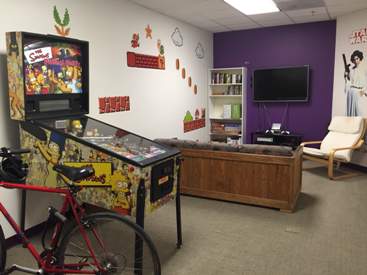
    • Cleaned up the game room and made it cool again. Honestly, it was looking downright dumpy and not fun-friendly.
    • Created a new space for the morning stand-up meetings. One where we can actually stand and write on the walls.

    If you’ve been following my blog all these years, you know that I often draw parallels between managing a website and managing a home or office. Here’s what our new office envisioning process reminded me:

    • Don’t wait until you need to do a major redesign to make improvements to your site. Think in terms of optimizing and improving sections of your site every quarter. At Matrix Group, we take a section of our site, review the analytics and make tweaks every quarter.
    • Declutter on a regular basis. Old, outdated content and run-of-the-mill clutter is deadly. After a while, you don’t even see it anymore. So on a regular basis, look at your website with fresh eyes. Is your website just a dumping ground for old content? Get rid of it. Old content simply clutters your search results, confuses visitors and makes your site feel outdated.
    • Ask your staff and members what’s working and what’s not. Get a few concrete ideas for making individual sections or a page better, then act on them quickly. Be sure to let your stakeholders know that you listened and implemented some of their ideas.
    • Experiment with inexpensive ideas to test out different concepts. For example, my staff have asked for different collaboration areas. But they’re also asked for isolation rooms where they can work uninterrupted for periods of time. Before we invest in construction, we’re testing out some ideas using empty office space. Before investing a lot of money in community tools, databases, etc., think of el cheapo ways to test out ideas.
    • Paint does wonders. It’s been a couple of years since we painted walls and touched up scuff marks. It’s amazing what a fresh coat of paint will do to a space. Same goes for your website. Update the photos. Redo some headers. Update the tired conference template. Your members will notice and pay attention to your marketing messages with fresh eyes.

    I’m going out with the Realtors this week to look at space. I don’t know what the Matrix Group office Version 5 will look like, but I predict there will be lots of purple.

  • Looking Back on 15 Years in Business

    Looking Back on 15 Years in Business

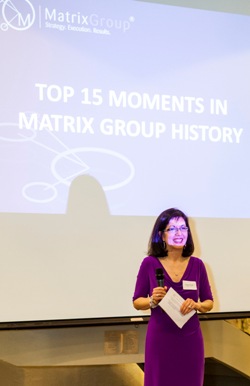
    JP giving speechA couple weeks ago, I got to host a big party to celebrate Matrix Group’s 15th anniversary. A couple hundred staff, clients, former staff, friends and partners showed up and enjoyed great music, awesome food, a chance to say hello to their favorite Matrix Group staff, and even hear my Top 15 Moments in Matrix history (you had to be there!).

    At the party, a client asked me what it’s like to run a 15-year old company and what has changed in the past few years?

    On the one hand, many things have not changed. Matrix Group is still a web design and development company. We still very much help our clients define their goals, develop a web strategy for achieving those goals, implement the strategy, and then measure the success of the initiatives against the goals. We still work primarily with associations and non-profits. Recruiting is still a challenge because I’m picky as heck about who gets to work here. I still like to get involved in projects and I still make trouble wherever I go. 🙂

    So what’s changed?

    • Matrix Group now has a content division. We used to rely on clients for 100% of the content and content strategy. But we found that launches were held up for lack of content and clients struggled with how best to present their content on the web. So a few years ago, we launched an e-marketing division that provides web writing training, copy writing, and copy editing services.
    • Social media. Big surprise, right? We use social media in a big way to promote the company and generate leads. Most of the original content we generate gets posted to social media platforms. We offer social media services. We recruit through social media.
    • Mobile has changed everything. It’s almost a cliché but mobile is in everything we do. Every website we redesign is responsive, our email templates are now responsive, we create mobile apps, and we help our clients develop and implement their mobile strategies.
    • We used to have our own content management system and now we implement third party systems. Gosh, fifteen years ago, there were no good, full-featured AND affordable CMS platforms. Today, there are so many good systems, so many years ago, we ditched development of our own system and focused on implementing best of breed systems.
    • Integration is now a HUGE part of our business. It used to be that when we created a website, integration with a member database was a maybe. Today, it’s not uncommon for us to embark on a project where there are a half dozen systems that need to be integrated so that there is single sign-on, unified navigation and taxonomy, seamless look and feel, and comprehensive search.
    • I’m not involved in most projects. I used to be the number one project manager, then I managed project managers, and now I have a Director of Operations who manages the PMs and day-to-day operations. I still review and approve strategy and information architecture deliverables, I sometimes sit in on design presentations and I consult on large integration projects. But for the most part, I manage the office, I bring in business, and I manage relationships. Of course, on the rare occasion that a project goes south, I get involved to make sure the project gets back on track. I’m called the Chief Groveling Officer for a reason.
    • We have different types of toys in the office. In our Old Town offices, we had dogs, the staff played a lot of pool, and we had little toys everywhere. In our Crystal City office today, we can’t have dogs (sniff!), the staff play more pinball than pool, we have Razor scooters for getting around, and there are LOTS of Nerf gun battles.
    • Communication is harder. I joke that I used to be able to call a staff meeting, explain a few things and the entire staff would be on the same page. Today, with a bigger staff, remote staff, people in and out all day, staff meetings where there are inevitable absences and a lot more distractions, I have to make sure important announcements are sent via email and IM, posted to the intranet, discussed at staff and team meetings, and reinforced by managers.

    Ultimately, what drives me is the knowledge that I’m making a difference in the lives of my staff, and as a company and we’re helping our clients change the world. We have modified our services and changed our processes to better meet the needs of our clients. The more things change, the more things stay the same.

    Last thing: thanks to all of our clients, friends, staff, and supporters for making the last 15 years unforgettable, and many thanks to those who came out to celebrate with us. We had so much fun! You can check out the photos from the party on our Facebook page or on Flickr.

  • Why Your Company Needs a Password Management Policy

    Why Your Company Needs a Password Management Policy

    Password lock smallLast week, we contacted a client to coordinate a site server upgrade, which required a DNS change. The response we got was a little alarming. The client’s IT Director had left and nobody knew where the password to their DNS registry was kept. Ouch. I had lunch with a friend who said he keeps passwords in Outlook. Another friend said she has an Excel spreadsheet on her desktop. Eeek.

    Passwords are the trickiest things. These days, we need them to be long and difficult to crack, they need to be unique across systems, and they are ubiquitous because everything needs a password. We read a lot about personal password management, but what about corporate password management?

    Think your organization doesn’t have a lot of passwords? Think again. Chances are, your organization has passwords to:

    • Online financial and payroll systems
    • Payment processors
    • Social media sites
    • Sites where you purchase equipment and supplies
    • Web hosting and DNS passwords
    • and on and on and on

    Where do you keep all these usernames and passwords, how do you manage them and who has access? Is your organization at risk if someone in a key position leaves and either takes the passwords with them OR leaves you without a clue as to where the passwords are kept (or not kept)?

    Don’t panic. Here a few things you can do to get started with a company-wide password management policy.

    1. Identify the company-wide accounts that need to be accounted for.
    2. Determine who has this information and collect it.
    3. Come up with a system for storing and limiting access. The system could be as simple as 2 people have access to a notebook where all the passwords are kept and everyone in the organization knows to give their passwords to these folks.

    Here at Matrix Group, we used to use KeePass to manage our company passwords. We had multiple KeePass databases, including one for the services team, one for IT, etc. But we’ve outgrown KeePass because we need more granular access management. So we’ve implemented Secret Server, which is software that helps companies store, distribute, change and audit passwords. Some passwords are limited to myself and the Director of Administration, while some passwords are accessible to multiple staff working on a project. I like Secret Server’s audit trail and we’ve created a system whereby certain team members can grant permanent or temporary access to passwords.

    Isn’t it time for a company password management policy?

  • Tips For Keeping Your Office Open During a Snowstorm

    Tips For Keeping Your Office Open During a Snowstorm

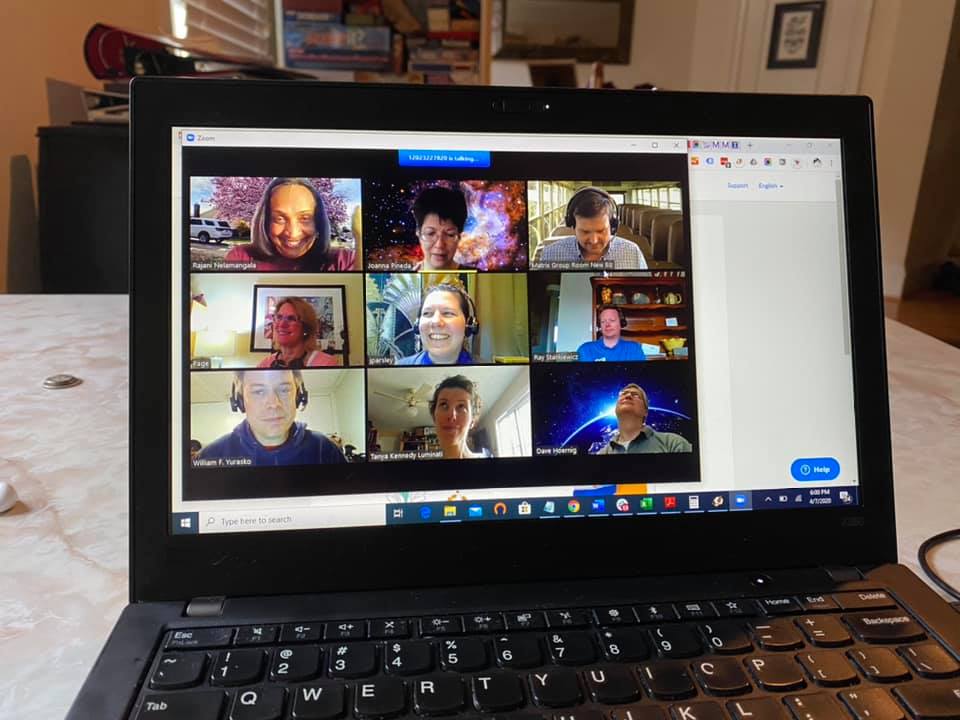
    SnowstormLast Wednesday afternoon, with not one snowflake on the ground, schools and local jurisdictions were announcing closures in advance of Thursday’s monster snowstorm. In the past, I would gotten up early the day of the storm to make the call re: keeping the office open or following the federal government’s lead and close the office. But with all the remote technology we’ve invested in, it doesn’t make sense to close the office anymore when there’s inclement weather. While I’m sure my staff would have loved a snow day, we work so much from home these days anyway, what’s another day? Besides, our out of town clients really don’t care when the DC area shuts down, really. Here’s how we make it work:

    • Plan for work at home. If we know there’s going to be bad weather, I don’t wait until 5am the day of the storm to make the call. I tell everyone to use their best judgment and work from home is approved in advance. We talk about who’s going to be doing what, the admins make sure conference calls don’t require an attendant, people with laptops bring their machines home, etc.
    • We work hard to allow every staff member to work from home. I’ve heard some say keeping the office open and asking everyone to work from home is not fair for staff members whose jobs require them to be in the office. At Matrix Group, we’ve worked hard to make every job possible from a remote location, if not all the time, at least some of the time. For example, the admins can monitor the voice mailbox, monitor the admin email box (we ask clients to send emails to that mailbox if they want a call back), use our VOIP system to forward calls, do data entry on our intranet over the VPN, do bookkeeping over the VPN, put packets together, make calls, etc.
    • The show must go on. Our policy is “It’s business as usual, even if we’re at home.” This means calls and meetings still happen, brainstorming still occurs, and quick questions are still asked and answered. We don’t wait until we’re all back together to do work, collaborate, get questions answered.
    • We have a fiber line for our VPN. This is critical because when all staff connect to the office network, development servers or intranet (which are only available over the VPN), our old, bonded T1 lines made it painful to work. The fiber line is awesome and has made a difference even for the people who always work remotely.
    • Everyone stays on Instant Messenger (IM). We have Jabber set up and  it’s only available over the VPN for added security. All staff are required to stay on IM when they are working remotely, and we must keep our statuses updated. Going to lunch? Taking a break to shovel? We keep our statuses updated. We have some standing IM chats (911, water cooler and team chats), and we can create chat rooms on the fly when a group needs to collaborate.
    • We use Web conferencing a lot. Some staff members like to use Skype, but for client meetings or even team meetings, we use Webex.
    • Tech support is always available. We know that being able to work from home depends on being able to connect to the VPN. So IT always has a person or two available to help staff troubleshoot their connectivity issues.

    On Friday, about half the staff came in to the office, while the other half remained at home. Honestly these days, I can’t tell half the time where people are because we do a good job of staying in touch, using our calendar and IM to broadcast our statuses, and keep work going. How about your office? What’s your policy when it snows and how did your office survive last week’s storm?


  • Matrix Group’s Favorite Thanksgiving Websites and Traditions

    Matrix Group’s Favorite Thanksgiving Websites and Traditions

    In honor of Thanksgiving, I asked my staff to share their favorite websites and traditions. Not surprising, what came back was a collection of foodie websites and a bunch of traditions involving family, friends and sharing a great meal. From everyone here at Matrix Group, have a happy, safe and delicious Thanksgiving!

    Our Favorite Thanksgiving Websites

    • The History Channel has fun facts about Thanksgiving. Did you know that three towns in the U.S. take their name from the traditional Thanksgiving bird, including Turkey, Texas (pop. 465); Turkey Creek, Louisiana (pop. 363); and Turkey, North Carolina (pop. 270)?
    • Real Simple magazine has great recipes, entertaining tips and decorating ideas.
    • You can’t go wrong if you follow recipes and plans from Martha Stewart.
    • SouthernLiving has great recipes and wonderful ideas for place settings and tablescapes!
    • Paprika Recipe manager is an app that lets you  explore recipes from Food Network, Martha Stewart, and any website.  Paprika will scrape the recipe and store it in your personal collection.  Pull together a menu of different dishes, and Paprika will generate the shopping list for you!

    Our Favorite Thanksgiving Traditions

    • Me? It seems that every since I married Maki, we’ve spent many Thanksgiving holidays overseas. We’ve celebrated Thanksgiving in Japan, Vietnam, Thailand and Budapest!
    • Leah says, “My family always travels to my Aunt’s house, which is an hour north of Pittsburgh. 25+ of us cram into her cozy home to watch some football, eat great food, catch up, and share what we are thankful for. With 9 kids under the age of 10, it is always a LOUD event where my brother Drew and I always turn into “Human Jungle Gyms” but we wouldn’t have it any other way!”
    • Jason says, “Thanksgiving isn’t Thanksgiving without pumpkin pie and whipped cream for our family.  It has to be the pie recipe from the Libby’s pumpkin can.  Absolutely critical – the volume of whipped cream on a slice needs to be between 125% and 150% the volume of the pie.  Too little and there’s no point.  Too much and you’re just being silly.”
    • Tom says, “We always make it a point to invite the Thanksgiving orphans – folks whose home is elsewhere and they are unable to get back, e.g., friends in the military, college students, or Capitol Hill friends). We usually have between two and six people each year!”
    • Kevin celebrates Thanksgiving at his grandma’s house. Grandma always makes her special  grape leaves, kibbeh and tabbouleh…..YUM!
    • Janna says, “In my family, Thanksgiving dinner is always a group effort.  Mom always makes the turkey, but my sisters and I contribute the rest of the meal.  My vegetarian sister always makes a hearty veggie that serves as her main dish, e.g., stuffed acorn squash. My oldest sister makes the cornbread stuffing and cranberry relish. My baby sister contributes some desserts.  And my husband and I add a few more sides to the mix.  It helps everyone feel a part of diner prep and one person doesn’t end up being stressed and responsible for the whole meal.”
    • Sherrie says, “For as long as I can remember, we celebrate Thanksgiving and Christmas with our Charleston Family and the Bakshis always bring the turkey – no matter where Thanksgiving is hosted.”
    • Kelly and Eric’s families go to the beach (separately) with their extended families and enjoy huge Thanksgiving meals!

    How about you? Have any favorite Thanksgiving websites? What’s your most treasured Thanksgiving tradition?

  • How TheMatrixFiles Blog Became Responsive

    How TheMatrixFiles Blog Became Responsive

    Last week, Matrix Group launched a redesigned version of this blog, TheMatrixFiles.net. Why redesign my blog? I wanted to update the layout and colors, I wanted each post to be more social, and, most importantly, I wanted the site to be responsive.

    Responsive web design is “an approach to web design in which a site is crafted to provide an optimal viewing experience—easy reading and navigation with a minimum of resizing, panning, and scrolling—across a wide range of devices” including widescreen monitors, standard monitors, tablet computers and smartphones.

    Although my team has developed many responsive sites for clients, it’s always interesting and fascinating to implement a new design philosophy for your own firm. Here’s what I learned:

    The widescreen size is the most fun to design for because of all the available real estate. When viewing this blog on a widescreen, high resolution monitor, you get two columns of content in the right rail. At this screen size, the site displays my tags, my recent bookmarks on Delicious, the most popular posts on this blog, etc. I love how the site fills the screen and uses the available real estate.

    Designing for a standard monitor is a lot like designing for a tablet in landscape mode. We collapsed the right rail to a single column and the widgets are set to NOT display content. If you click on the +, the navigation slides down to display the content.

    Designing for a smartphone is the most challenging. You don’t have a lot of real estate, visitors use their fingers to navigate so you need large buttons and touch areas, and the text has to be readable without pinching. We had several lively discussions about what information to display on the smartphone display. We realized by analyzing our Google Analytics reports that people who visit the blog on a smartphone really just want to read the latest blog post. So we wanted to make it super easy to simply read the latest blog post and be done.

    You have to test, test, test your responsive pages. Be prepared to spend countless hours testing and tweaking. For example, you might find subtle differences between brands and models of phones.

    Monitor your usage reports. Currently, about 10% of the traffic on my blog comes from mobile devices. If history serves as a guide, this number will grow quite a bit in the next year for two reasons: mobile traffic is increasing in general but, more importantly, when visitors are rewarded with a mobile-optimized website, they tend to come back on a mobile device. I’ll be sure to report on this in the next few months.

    I’d love to know what you think of the redesigned TheMatrixFiles website. Which device do YOU prefer to use when visiting blogs? Do you feel that we succeeded in creating a mobile-friendly experience with this blog?

  • When It Comes to Company Culture, Sometimes CEOs Should Just Get Out of the Way

    When It Comes to Company Culture, Sometimes CEOs Should Just Get Out of the Way

    A candidate for one of our jobs recently commented that he loved the company culture at Matrix Group. To be honest, I was initially suspicious. What could he possibly glean about our company culture through one interview and one tour of the office? But I was also curious since recruiting top talent is an imperative for us. So I asked the candidate what he meant by his comment and what he found appealing about the company. He said something along the lines of: Your front office person is friendly and helpful, setting up the interview was painless, the people he met with were relaxed and confident, people were smiling all over the office, and there are toys everywhere, Matrix Group must be a fun place.

    A friend and fellow CEO congratulated me on my strong corporate culture but I wonder how much of it can really be attributed to me. The more I got to thinking, the more I realized that sometimes, CEOs should set goals and parameters and then get the heck out of the way.

    Here’s a small example. When I first started Matrix Group, we couldn’t afford fancy furniture (we still don’t have fancy furniture). Our Realtor told me about a company that let every employee paint one wall whatever color they wanted. I loved the idea and shared it at staff meeting. The staff loved it and it became so. Matrix Group paid for the paint and each staff person painted his or her own wall. A friend asked me what I would do if a staff person picked an ugly color or I didn’t like the color. My response was, “you can’t tell your staff that they can paint one wall whatever color they want and then decide that colors have to be approved by you.” And you know what? We had some crazy colors in our office and they all looked great. We had bright orange, spiderman blue, pink and green stripes, even chalkboard paint. It was fabulous.

    Here are my never before published guidelines for nurturing a strong corporate culture:

    • Don’t have too many rules. Talented people feel confined by too many rules. Besides, it’s hard to remember lots of rules and it’s no fun. Every year, we have a staff member who asks for a bunch of time off, at the last minute. And every year, a manager says we should have rules about how much time you can take off at once, and how much notice you need to give. And every year, I caution managers that these types of rules tie managers’ hands too much, they’re not that useful and you’ll break them next week. What if one of your top developer’s best friend decides to get married in Vietnam at the last minute and he wants to go? Don’t you want to let him go? If you have too many rules, you can’t let him. But if you say to your dev, “yes, you can go, it’s last minute, so let’s figure out what you need to do ahead of time,” your super talented dev stays happy and you’re a hero.
    • You can’t mandate fun but you can certainly allow it and you should participate (sometimes). About a year ago, someone brought a Razor scooter to the office; he used it to get around the office quickly and he told everyone that he didn’t mind if other people used it. I didn’t say anything. I just let it be. I smiled when someone whizzed by me on the scooter. Soon, another Razor showed up and now the two scooters are community property and THE way to get around the office. Same with the fish tanks, the community puzzles, the chess games, and the Nerf guns. There was no social committee that decided on the toys and the games , they just showed up, and I never said NO.
    • You need to set parameters. Is it all fun and games at Matrix Group? Absolutely not. In fact, the opposite is true. You need to be at your morning stand-up meeting and you need to be on time. You need to meet your deadlines. You need to track your time. You need manager’s approval to work from home. Yada, yada. Managers have been known to put the kabosh on a particularly loud Nerf war or Lego construction that seemed ill-timed.
    • Encourage activities that align with your company values. My staff will tell you that I think companies can and should do more to encourage staff health and wellness. So in this area, I’m very active. When we were looking for office space, we chose one that gave us access to a fitness center and shower. We’ve brought in speakers on diet and exercise. We’ve sponsored flu clinics. And we encourage staff to participate in various runs and walks and we pay for the shirts. In this area, I’m either making suggestions or encouraging more activity.
    • Run a good staff meeting. It’s easy to make fun of meetings, especially staff meetings. But a good staff meeting makes people feel like they know what’s going on at the company, and it makes them feel connected with each other and the company. We have staff meetings every two weeks. We talk about wins, losses, launches, new techniques and technologies, and upcoming events.
    • There is no such thing as over-communication. As Matrix Group has grown, it’s impossible for all of us to know about everything going on or be part of every discussion and decision. So I’ve mandated that the company calendar be kept up to date, managers and I share what we know at status and staff meetings, we have a “when in doubt, communicate” policy, and we probably use e-mail a little too much to keep everyone in the loop.

    While I can’t take credit for the wonderful, warm and engaging corporate culture at Matrix Group, I have learned that you need to be intentional about company culture and there are many things we CEOs can do to nurture and guide it. As my coach Peter Schwartz says, “CEOs get the organizations they deserve.

    How about you? Does your organization have a strong corporate culture? What are you doing to nurture a good corporate culture? What’s working?

    A couple of years ago, Maki started climbing the stairs from the ground floor to our 12th floor office. Others started joining him. Now there’s a group that climbs the stairs once or twice a day in the afternoons. Then the funny signs showed up.

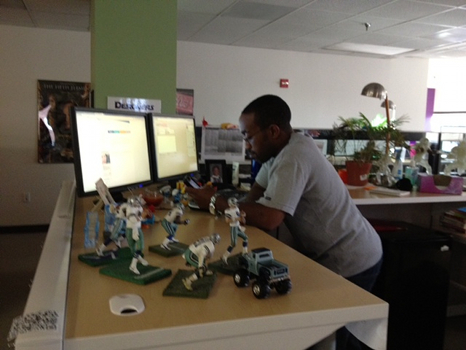
    There are toys everywhere in the Matrix Group office. Here is Front-End Developer Adrian Turner with his football toys. You’ll find toys on every desk, bookshelf, conference room and the kitchen!

  • Why Matrix Group Brought Back Its Email Newsletter

    Why Matrix Group Brought Back Its Email Newsletter

    A few years ago, Matrix Group stopped sending out a weekly email newsletter.Why? We were launching a company blog, we were getting more active on Twitter and Facebook, and other organizations were dropping their email newsletters. The marketing staff was spread thin, so killing the Matrix Missive seemed like the right thing to do. We didn’t abandon email; we still send emails about events and service announcements, we just didn’t have a marketing newsletter.

    Several months ago, we revived the Matrix Missive and just today, launched a new newsletter for our Association Management Software product, MatrixMaxx. Why?

    Our target audiences aren’t all on Facebook (shocking, I know.) After years of trying to get all of our clients and prospects to subscribe to the blog and follow us on social media, we’ve decided it’s just not going to happen. The disintermediation that the media keeps talking about is true. Even though we only have several thousand people in our database, they are all over the map in terms of web use, social media and blogging. Our CEO contacts are decidedly NOT on Twitter and Facebook.

    Social media isn’t great for direct marketing and selling. All the research shows that companies and brands that do nothing but sell on social media don’t get the follows they want. So on Twitter, Facebook, YouTube and even this blog, we try to provide really great, information-rich content. It’s great for thought leadership but not so terrific for direct marketing. Sometimes we really need to promote our design, development and mobile app expertise.

    Some topics are great in email, utterly boring in social media. On a regular basis, we need to tell clients about upcoming maintenance, new versions of CMS (content management system) software they’re using, upcoming CMS and AMS training, yada, yada. On our social media pages, this stuff is just boring, not at all interesting to a general audience. But to our clients, who need to know when we’re upgrading their systems and what’s in the latest release of the Sitefinity CMS, these communications are vital. Email is just better for certain types of messages.

    Our best response rate comes from email. Every organization is different but when we’re promoting our events and services, email just works best. For example, we offer a Spring and Fall webinar series on a variety of web topics. We promote these webinars through email to our house list, social media, and discussion lists around town. Hands down, most attendees come from our house email list.

    No matter what the platform, the challenge is getting views and clicks. Okay, so we’re back to sending out a regular email newsletter. We get pretty good open and clickthrough rates but as with social media, it’s all about generating good content that people want to read, good writing and a hot subject line.

    So here’s the challenge. How do we create something new and different with our emails that clients, prospects and partners will want to subscribe (and stay subscribed) to our emails and still subscribe to our blogs, follow us on Twitter, Facebook and YouTube, and view our photos on Flickr?

    I’ve blogged before about how we strive for a layered approach with our marketing efforts. We don’t simply post the same content across all channels. Rather, we strive for a layered messaging strategy that utilizes the capabilities of each platform and features different perspectives and voices will help us connect with clients and prospects better. With the relaunch of the Matrix Missive and the new MatrixMaxx newsletter, we’ve brought email back to the mix so that we can talk about projects, promote our events, comment on webtrends and share some fun websites.

    BTW, here’s a sample of the new and improved Matrix Missive. I hope you’ll even consider subscribing!

    How about you? Do you still have an email newsletter? How is the content in your email newsletters different from your website and social media pages? How are you juggling the mix of platforms? What’s working?