Matrix Group International

Tag: Customer Service

  • An Example of a Really Great Event Registration Email Confirmation

    An Example of a Really Great Event Registration Email Confirmation

    An IPhone Mail Application with two notificationsA couple of weeks ago, I got invited by my buddy Heinan Landa, CEO of Optimal Networks, to an event by CADRE, which bills itself as “a way for elite professionals to learn from the top experts in the world, while connecting and developing meaningful relationships with like-minded peers.

    The event itself was lovely, but what I want to highlight today are the wonderful emails that I received after registering for the event. Usually, I get a nice, neutral, thank you email confirming my registration and payment. Instead, I got a plain text email that was clearly a canned email, but it was really effective. I loved that it was plain text, and the email read like it came from a real person. There was even an offer to introduce me to other attendees. 

    Hi Joanna, I am looking forward to meeting you at YOUniversity on Thursday! I am impressed with your business and there may be a few attendees who would be good for you to meet and vice-versa. With that in mind, who do you want to meet? I'm not looking for names necessarily but rather, types of professionals (industries), folks with certain skills sets, or shared interests, etc.? If you get back to me before the event, I will make an effort to introduce you to some cool people (if potentially relevant and mutually beneficial). Let me know if you have any questions. Either way, I look forward to seeing you soon!

    So what did I do?

    I replied to Derek’s email, introduced myself and took him up on his offer to connect me with some other attendees. And you know what? He was true to his word and I got introduced to someone who I was delighted to meet because we have things in common. 

    Imagine this: CADRE got engagement from me prior to the event, which made my interactions during the event even more meaningful. My takeaway is this: revisit your event confirmation emails. Are you merely confirming payment or connecting with your attendees? Are you just confirming attendance or giving attendees a genuine opportunity to start interacting with you? Are you making them feel welcome?

    I say act like an undercover meeting attendee and review all of your event emails. What will you find?


  • Combine Virtual and In-Person Networking Before Conferences to Increase Engagement

    Combine Virtual and In-Person Networking Before Conferences to Increase Engagement

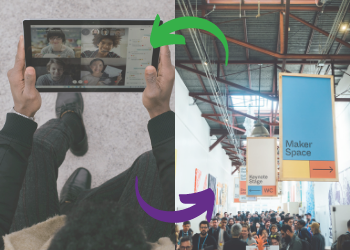
    Non Dues-a-Palooza Pre-Event Networking on Zoom I’m attending Non Dues-a-Palooza (NDAP) next week in Nashville, in person. NDAP is a conference devoted to helping associations and nonprofits increase their non-dues revenue by bringing together execs and solution providers, through case studies and panels. This will be my third NDAP event and I’m pretty excited.

    Even though the event will be in person, Teri Carden, the founder of NDAP decided to do a digital drop-in event a week before the actual event. She held a two-hour Zoom meeting and sent out an email to all attendees, asking them to drop in at any time during the two hours to say hello, meet fellow attendees, and share what’s on our minds before we come to Nashville.

    I loved this idea because:

    • I got to network with some people before the event next week
    • I got to schedule coffee with someone I want to do business with
    • It was fun to see Teri
    • The drop-in got me excited about next week

    I think this drop-in event shows that even as we look to a post-pandemic meetings landscape, we can and should continue to mix in person and virtual to create more high-impact events. And as usual, many thanks to Teri for showing us the way!

  • What Have We Learned About Creating Engaging Meetings from Virtual Conferences?

    What Have We Learned About Creating Engaging Meetings from Virtual Conferences?

    Virtual Meeting vs. In-Person MeetingHeinan Landa (CEO of Optimal Networks) asked me last week: As we’re slowly returning to the office and in-person meetings, what lessons from 15 months of virtual meetings should endure?

    It’s a great question. Over the past year, I’ve had many clients bemoan virtual, but I’ve also had many clients express joy over the benefits of virtual. Here are lessons that I hope will endure:

    Higher Quality Sessions

    It sounds really weird to say this because organizations that put on conferences are devoted to offering high quality education. And yet, a few clients were surprised at how lackluster some of their sessions were. I heard things like, “Gosh, we used to select speakers, tell them when and where to show up, make sure their tech was working, and leave the room.” But with virtual, more thought has gone into the quality of the sessions to make sure people stay engaged and don’t log off. BeSpeake clients have:

    • Paid closer attention to the content and slides.
    • Worked with their speakers to add interactive elements, from polls to contests.
    • Coached speakers to become better presenters.

    ALL of these lessons should endure past this pandemic!

    Better Wayfinding

    I’ve been to countless conferences at the Gaylord Resort in Maryland and every time, I get lost. Maybe I’m just navigationally challenged but better signage and more thoughtful grouping of the sessions and events would help me, and, I suspect, many others. With virtual, we worked closely with clients to make sure attendees always knew where to go next, using tools like:

    • Welcome and tutorial videos that explain the virtual platform and highlight the “not to be missed” parts of the meeting.
    • Putting everything on the program and having sessions disappear (temporarily) from the schedule once they are done. This way, the program always shows you what’s next.
    • Brief but clear descriptions and help text.
    • Guidance from speakers at the start and close of sessions about what’s next.
    • User testing to make sure all of this wayfinding guidance is actually effective.

    The next time you’re in person, walk your convention, make sure signage is clear, and coach speakers to tell attendees what’s next!

    Intentional Connections and Networking

    Conferences are all about connecting with our friends, colleagues and peers. In person, most conference planners organize receptions, some breakouts, and food and drink in the exhibit hall. Virtually, meeting planners have had to work harder to make sure attendees connect with others. We’ve worked with our BeSpeake clients to create opportunities like:

    • Morning Coffee, where attendees get matched up with others randomly for a virtual coffee break.
    • Extended attendee profiles and better searching.
    • Easy to use attendee search and messaging.
    • Giving attendees the chance to meet with others in video rooms.
    • Breakouts by topic or job function to encourage people to be on video and connect with others.

    These virtual connection opportunities don’t work for all attendees. Some attendees are content to focus on the sessions. But for others, these connection opportunities have made it easier than ever to expand their networks and horizons.

    In person, perhaps you can make in person conferences less terrifying for first time attendees by doing things like:

    • Asking Board and committee members to reach out, walk them through the program, attend a social event with them, and introduce them to a couple of members.
    • Creating a welcome or tutorial video to help attendees get the most out of the conference.

    Delightful Touches

    We’ve worked hard with our clients to make their meetings interesting and delightful. Some things that have worked are:

    • Interesting, even fun, pre-roll before sessions. At first, we added pre-roll so attendees would have something interesting to watch when they came in early to sessions. Then we realized pre-roll was a great way to entertain and educate!
    • Interesting imagery to evoke a place or theme.
    • Polls and contests to add sparkle to a session or break. One client is now known for a great Jeopardy game where the questions are all about their accreditation program!
    • One client had a virtual bulletin board where they challenged attendees to share what attendees and their organizations are doing to address racism and health inequities.

    In person, ask your speakers to show pre-roll, play music, and start the conversation early. Have places where people can post, share and connect, not just virtually, but also in person!

    As my friend Lee Gimpel says, in person meetings aren’t necessarily great: it’s hard to meet people if you’re new, the program can be confusing, and we spend way too much in dark rooms looking at screens and passively watching a speaker. 

    What have YOU and YOUR ORGANIZATION learned about creating engaging and fun meetings during this pandemic? What lessons will carry over and endure when you go back to in person meetings?


  • Why Journey Mapping is so Important to Creating Amazing Member Journeys

    Why Journey Mapping is so Important to Creating Amazing Member Journeys

    Member Journeys

    Matrix Group is working on an email signup project for a longtime client. This client wants to create an easier way for members and non-members to see all the newsletters the association has to offer, and easily subscribe to receive them. Some newsletters are open to the public, while others are members-only. The client has many goals with this project:

    • Showcase all of their newsletters
    • Get more people signed up
    • Make it easier to sign up

    Seems simple, right? Not so fast. In fact, it’s taken us a few weeks and multiple rounds of wireframes to get what I think will be a winning sign up form. The form itself will look simple BUT it will ultimately be the result of intentional journey mapping to ensure that the sign-up process is simple and amazing.

    How do we do it? First, we identify the audiences and the tasks they wish to accomplish. Then we map out the journeys they need to take to get what they want. We ask questions like: Will the person need to log in? What if they don’t already have a username? What if they forgot their password? How will they know that they are not eligible to subscribe to specific newsletters?

    Here’s a simple sign-up journey: Member is already logged in, goes to the sign-up form, presses the Subscribe button next to the newsletters of her choice, and gets a thank you pop-up.

    Here’s a not so simple sign-up journey. This journey took some time to articulate and make easy: Individual is with a member company but doesn’t already have a password. Individual navigates to the sign-up page, presses Subscribe. User is taken to a login page. She doesn’t have a login, so she has to create a profile and attach herself to the proper company. The profile form is two pages. At the end, she can navigate back to the sign-up form; this is important because some systems dump users back to the home page after creating a profile, which is disorienting to users. The form remembers which newsletter she wanted to sign-up for and she gets a success message.

    You see, it’s not enough to create a form and say it works. You need to map all of your user journeys. If your users have to log in, create a profile, or traverse websites, their journey is going to be more complicated, so you have to be intentional about it, know how many steps the journey is going to take, and involve your vendors in making the journey great, even if that journey requires multiple steps.

    If you’re not already doing this kind of journey mapping with all of your projects, start now. You don’t need special software to do it, but you do need time to explore the journeys. Need help? Give us a call. We love this process and we’re great at asking the questions that will lead to amazing member journeys.


  • What Makes a Successful Virtual Meeting? Lessons Learned from the Battlefield

    What Makes a Successful Virtual Meeting? Lessons Learned from the Battlefield

    light bulb with thought bubblesSince July of this year, we’ve had the honor of hosting 9 virtual meetings. It’s been a season of learning because the meetings landscape keeps changing and attendee expectations have shifted dramatically since the pandemic began. Here are some of the things we’ve learned:

    Good communication is key! Even though it feels like we’ve been living in this virtual world forever, we’re all still relatively new to this virtual conference experience. Talk to your participants early and often about what to expect, how to engage, where to go, how to use the platform, reminders about specific highlights and features, rules of engagement, etc. Also make sure you’re giving your participants reminders and direction throughout the event, just like you would in person with staff in the hallways.

    You can’t do enough training for your presenters. KiKi L’Italien and I talked about this a lot during our recent webinar. Even the most seasoned speakers, moderators, and facilitators are on a steep learning curve in this brave new world. Even if they’ve been speaking at many virtual conferences, platforms and technologies differ. Make sure you set them up for success by giving them thorough training on every aspect of the event they’ll be involved in. 

    Your participants need to log in early, for so many reasons. Yes, they’ll have a better experience if they’re well acquainted with the platform before the event begins, but more than anything they need to make sure their tech is set. Many platforms require a modern, updated browser, but some attendees don’t even realize that their browser is out of date. By logging in early, your attendees will identify login, browser and firewall issues that they can address well before your first day.

    Provide lots of attendee, exhibitor and presenter support! Ask anyone who’s put on a virtual event and they’ll tell you this: it’s way more work than you’d ever imagine, and you need all hands on deck. What if you have a small staff to begin with? Make sure you select a vendor, like BeSpeake, that offers full meeting support – conference manager, live tech support, broadcast manager, training, etc. –  and is a true partner. It will make all the difference. 

    You need to be flexible! Tweaks will need to be made to your program, your sessions, your schedule, and on and on. The beauty of the virtual space over the physical space is that you can make adjustments relatively quick and easily. For example, after day 1 of a recent virtual event, our client realized they needed to add Posters to their navigation because attendees were not finding their Poster Gallery in the Program. Another client found that attendees were not turning on their cameras in breakout rooms. During our Day On debrief, we talked about all this and made changes to the navigation and session descriptions that evening. 

    No matter how prepared you are, something will go sideways. A speaker or moderator’s internet will go out right before they’re supposed to go live, your keynote speaker’s neighbor’s dog will spot a squirrel right outside her window in the middle of the live presentation, and so on. No event, in-person or live, will ever go perfectly smoothly, but you can think ahead and come up with a “plan b” for most major scenarios. Be ready for it; embrace it. 

    Have you hosted a virtual event yet? What were your biggest lessons learned? What would you do differently, and what would you keep the same? We’d love to hear your battle stories! 

    Want to create a custom built virtual conference or tradeshow experience that is just as transformative as your in-person events? Contact us today to schedule a private demonstration of the BeSpeake virtual meeting platform

  • What Your Virtual Sponsors and Exhibitors Want Most

    What Your Virtual Sponsors and Exhibitors Want Most

    Many organizations are wrestling with how they can pull off a successful virtual meeting, especially with regard to their sponsors and exhibitors. How do you provide real value for them in the virtual environment? How do you convince them that it’s worth the time and investment? Heck, will they even want to consider it?

    Good news! Whether virtual or in-person, sponsors and exhibitors want and need the same thing: access to your members, their target market. We don’t have to tell you that life looks different, but regardless, business is still moving forward, and your sponsors and exhibitors still need facetime with your members.

    Generally speaking, your sponsors and exhibitors want one (or more) of three things from your event:

    1. Leads
    2. Brand awareness
    3. Content leadership

    So how do you know what they want most, and how do you provide avenues for fulfilling those needs? Ask! Have strategic conversations with your sponsors and exhibitors to learn more about what they want. Start by asking your largest sponsors and exhibitors, but talk to everyone, even if it’s just an email:

    • What value do your exhibitors and sponsors get and expect from your in-person conference and tradeshow?
    • Have their sponsorship and marketing goals or objectives changed recently, as a result of the pandemic?
    • Have they participated in a virtual event or meeting recently? What was their experience? Good? Bad? Indifferent?
    • If they can still meet their goals, are they willing to support YOUR event?

    Before you enter into these conversations, make sure you brainstorm with your team and have a list of things you’re thinking of offering to your sponsors and exhibitors. During the conversation, be sure to listen, be open-minded, and take feedback. Then, design sponsor and exhibitors opportunities, and your event, with their needs in mind.

    The world has changed, but your sponsors and exhibitors continue to be invaluable partners for your organization. Give them what they need, and they’ll partner with you for life, no matter the venue.


  • Why New Member Onboarding is So Critical to the Member Journey

    Why New Member Onboarding is So Critical to the Member Journey

    Welcome Aboard Life preserver Imagine this. A person (or company) has made the decision to join your organization. What happens afterward? Does she get a giant welcome packet that she won’t read? Does the packet contain current or outdated information? Does he get nothing for a few weeks while you process the application and add him to lists? Does he immediately begin to get all the newsletters and promotions for the various products and services you offer?

    Last week, I did a webinar with the wonderful Jonathan Cooper from the National Association of Episcopal Schools (NAES), a longtime Matrix Group client. Just over a year ago, NAES replaced its paper welcome packet to a digital onboarding campaign for new staff at member AND non-member Episcopal schools.

    NAES used its existing membership database, MatrixMaxx (from Matrix Group, yep, my company), and MailChimp to welcome new staff with carefully crafted messages over a 90-day period that introduce the association, the staff, the Biennial conference, key publications, the staff, consulting services, the daily meditation, and so on. The emails are NOT all about selling. They are meant to welcome new staff and show them how NAES can help them in their jobs.

    What kind of results is NAES getting on this onboarding campaign?

    The emails are getting amazing opens and clicks. One email gets close to a 90% open rate! Yes, the list is small, but they never previously got this rate of opens on other emails.

    NAES members regularly email back after receiving an automated email. The key here is that the emails are really well-written, they are warm, and they sound authentic.

    NAES is seeing increased use of their library and increased registration at featured meetings. For example, a webinar designed for new Rectors usually get 7 or 8 attendees. This past year, this webinar had 19 attendees!

    Marketing automation is extending the reach of this small-staff association. To me, well-crafted automation actually ends up being more high-touch because members get more frequent, relevant, customized communications. There’s simply no way that NAES could send out this level of communications if the messages were manually crafted and sent out.

    AssociationsNow did a nice write-up of the webinar. You can read it here.

    What happens in the first 30-90 days of a member’s journey with your organization matters. Really matters. Because it’s during those first few days, weeks, and months that your new member decides to engage with you in a meaningful way. They made the decision to join. Now it’s up to you to help them make the decision to stay.

  • How Much Should I Charge for My Virtual Conference?

    How Much Should I Charge for My Virtual Conference?

    Man making online purchase with credit cardAs the world of work continues to transition from physical to virtual, the same is happening to conferences, trade shows, and meetings. There are platforms to choose, new or different program formats to consider, and on and on. But the biggest question on everyone’s mind is: how much should I charge for my virtual conference?

    As with most questions like this, the answer is: it depends. It depends on your industry, the type of experience you’re planning to provide, your attendee demographics, your sponsorship model, etc. But take solace in this: our clients, partners, and friends are finding that attendees don’t expect virtual conferences to be free. People understand that a lot goes into event planning and preparation, and that there are costs associated with any type of event, no matter the format.

    Here are some things to consider when deciding what to charge for your virtual event:

    Consider your industry. How badly have your members, attendees, sponsors, and exhibitors been impacted by the pandemic? Are budgets being slashed? Will attendees be paying out of pocket? If your members are really hurting (and whose members are not?), consider reducing your registration fees to show compassion to members and encourage attendance. Many clients are reducing fees to maintain member engagement and demonstrate that they are being responsive.

    Consider your key demographics. Younger generations are more accustomed to meeting and connecting virtually, more likely be more optimistic about what they’ll gain from a virtual conference, and maybe willing to pay for it. Younger members are also more likely to value your educational programming because they need it to advance their careers. Older attendees may be less comfortable with an online format, and more likely to be skeptical of the value of the meeting because they come for the networking. On the other hand, older members are going to be more senior, and have more access to training funds. In all cases, study your attendee demographics, call up some members, and get some feedback from the field.

    Are you offering CEUs? Many organizations offer attendees the chance to earn Continuing Education Units (CEUs) when they attend sessions. One professional society we know is not lowering fees BUT because the conference will be online and recorded, attendees will have greater opportunities to earn CEs, thereby raising the value of the meeting.

    What level of experience will you provide? Let’s face it. Your attendees expect a highly produced event when they attend in person. Their expectations don’t change because the event is online. They still expect a great user experience, sessions with high production value, and a mix of education and entertainment. Your attendees will be less excited about paying for what feels like watching YouTube videos, sitting through more Zoom meetings with mediocre graphics, and no opportunities for networking. If you’re going to charge top dollar, give your attendees a top dollar experience.

    What’s your sponsorship model? Since there’s more opportunity for sponsors to get prominent face time in front of attendees – think YouTube style ads at the beginning of sessions, banner ads, virtual tradeshows, etc. – they may be willing to purchase richer sponsorship packages, which can subsidize attendee’s conference fees. Alternatively, you may have a harder time getting sponsor and exhibitor buy-in because virtual conferences are untested, or your virtual meeting offers few opportunities for truly showcasing their companies and products.

    It’s really hard to come back from free. Some of our clients are opting to change their conferences to free events. I get it. Members are hurting and it feels wrong to charge money for benefits. BUT a conference that doesn’t generate revenue becomes a giant expense, and members may come to expect that all future events will be free. Yuck.

    While there’s no magic formula, you’ll need to take all of these factors — and more — into consideration. We’re hearing that most attendees are very open to registration fees that are 50-75% of normal registration fees. Will that work for every event and every association? Of course not, but it’s a good starting point. And like I often say, when in doubt: ask! Your members know you’re charting new territory daily, so don’t be afraid to send out a poll to see what their thresholds may be. Good luck and please do share your experiences!

    Looking for a custom tailored virtual meeting platform that can take your virtual conference to the next level, providing your attendees and exhibitors with a comprehensive, hand crafted experience? We’d love to show you a demo of BeSpeake, our new Virtual Meeting Platform. Let’s get it scheduled!

  • Should You Convert Your Conference to a Virtual Conference? TLDR: Yes

    Should You Convert Your Conference to a Virtual Conference? TLDR: Yes

    Woman on laptop with headphonesAll Spring, one client conference after another was cancelled or rescheduled. A few clients converted their conferences to a series of Zoom meetings.

    With some states opening up, is there a chance that conferences will come back in the Fall, if not the summer? For organizations that have conferences coming up, should you wait or go ahead and plan to go virtual?

    All the signs are pointing to a prolonged lockdown across the country. We think it’s only prudent to plan for a virtual meeting or a hybrid event now and in the foreseeable future. Why?

    You won’t have the same number of people at an in person event anyway. Even if states start allowing conferences, there’s no doubt that attendees will have to distance, and many people will opt to stay away, which both point to fewer attendees at your next conference. So your choice will be to go 100% virtual, or create a hybrid event where a few people attend in person, and the rest attend online.

    You’ll need time to create an immersive, engaging virtual conference. As one client put it, “a web page that links to a bunch of Zoom meetings does not equal a conference.” It will take time to research vendors, work with your presenters and exhibitors, and design experiences that are different but (almost?) equally engaging and satisfying.

    Holding a conference during a pandemic is a giant pain. Have you seen the CDC guidelines for mass gatherings? Right now, the CDC recommends that gatherings of more than 250 people be cancelled or postponed. If a local area does allow a conference, the distancing, sanitizing and procedures necessary will double (more likely quadruple) the workload for meeting staff.

    Employers will likely limit staff travel. As an employer, I have a responsibility to keep my staff safe. So for the foreseeable future, I won’t allow attendance at in person meetings, air travel, or hotel stays. It’s just not worth the risk to the staff and to the company. I know I’m not alone. My Amazon rep says office staff are not required to report back to the office until October. My sister-in-law says Google has already told their staff to plan on staying home through the end of the year.

    So meeting planners, what’s your plan B? Plan B should be a virtual or hybrid meeting. Start planning now.

    Looking for a custom tailored virtual meeting platform that can take your virtual conference to the next level, providing your attendees and exhibitors with a comprehensive, hand crafted experience? We’d love to show you a demo of BeSpeake, our new Virtual Meeting Platform. Let’s get it scheduled!


  • How To Turn Your Webinars into Interactive, Virtual Meetings

    How To Turn Your Webinars into Interactive, Virtual Meetings

    virtual meeting man and womanOver the past couple of weeks, client after client has cancelled meetings, tradeshows and conferences. They’re scrambling to find out if they can reschedule events or create an online experience worth good money for.

    For most of our association clients, their meetings are either in person events or live/on demand webinars. Since most organizations already know how to put on a webinar, here are our tips for making them more interactive, more engaging, and worth paying for (many of our clients don’t charge for their webinars).

    Deepen the Learning

    It’s hard to impart a whole lot of learning in a 45- or 60-minute webinar. But you can pack more learning in if you ask more of your attendees. Send them articles to read and videos to watch ahead of time. Let them know that the webinar will be advanced and your presenters will expect some level of knowledge. This way, your speakers can present at a higher level and impart more knowledge.

    Add Interactions

    I’m not always a fan of real-time comments during a presentation. They’re distracting to attendees and presenters. But you can add interactivity by weaving in polls and Q&A into your webinars. These interactions make the online event more interesting, more fun, and often provide insight into the audience’s demographics and needs.

    Create A Micro-Community

    You can further the learning by encouraging conversations with your speakers and attendees. Ask attendees if it’s okay to share their names with other attendees. Create a limited-time Facebook discussion around the presentation. Host a Twitter chat around the topic. Create a blog, populate it with content related to the webinar and ask for comments.

    If you incorporate some of these ideas into your webinars, your attendees will get more than the hour’s worth of content, and hopefully, they’ll come away with a deeper sense of connection with the content and your organization. Good luck and please do share your experiences!


    Looking for a custom tailored virtual meeting platform that can take your virtual conference to the next level, providing your attendees and exhibitors with a comprehensive, hand crafted experience? We’d love to show you a demo of BeSpeake, our new Virtual Meeting Platform. Let’s get it scheduled!