Matrix Group International

Author: Joanna Pineda

  • Do You Really Need 500 Friends on That Social Network? Is It Time to Unfriend Some People?

    Do You Really Need 500 Friends on That Social Network? Is It Time to Unfriend Some People?

    Giving someone the blowoff or the kissoffI was talking to one of the Cat Herders (Project Manager) at Matrix Group today.  She said she was trimming her Facebook friend list and unfriending some people.  Unfriending.  It sounds so… ummmm… unfriendly.

    Facebook says that the average user has 130 friends but I know people who have hundreds, even thousands of friends.  500 friends?  I can’t imagine many people who have that many friends with whom they would willingly share personal updates, photos, even their full birthday.  So I asked around and got some good insight into the friending and unfriending business.  These findings don’t represent a large group, just my friends! 🙂

    • There is a group of Facebook users who will accept friend requests from anyone and who actively try to expand their friend network.
    • There is another group that views Facebook as a place where they can communicate freely so they only connect with true friends.  For these folks, Facebook is a place for personal communications, often about self, family, kids, friends.
    • There was a general consensus that the new Facebook homepage, which splits updates between News Feed and View Live Feed, makes it harder to see updates from your entire network of friends, which makes it more challenging to have a large network.
    • Many people have been cleaning up their lists on Facebook, Twitter, and other social network recently.  They’re actively unfriending people so they can manage the communications and flood of updates.
    • Even if  a person has a large network on a platform like Facebook, they are more than likely only interacting with a small subset of friends. Indeed, the Facebook sociologist says that no matter how large their friend network, Facebook users tend to “comment on stuff from only about 5-10% of their Facebook friends.”
    (more…)

  • PSERS Health Options Program Member Portal

    PSERS Health Options Program Member Portal

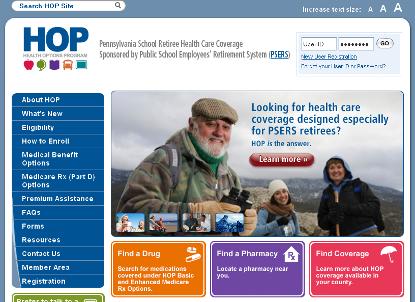
    Matrix Group recently worked with Pennsylvania’s Public School Employees’ Retirement System’s (PSERS) Health Options Program (HOP) to launch a member portal. For the first time, PSERS wanted to allow plan members to login to a member portal and review their medical statements online.

    Our work included:

    • A member portal that allows members to create a profile, login and retrieve a lost password.
    • A secure database and portal that ties together information from multiple sources to produce personalized statements.
    • Single sign on authentication for members to view their medical plans and claims under one interface without separate passwords

    Visit the HOP Benefits Web site and Member Portal

  • In the Event That Miss Universe is Unable to Serve…

    In the Event That Miss Universe is Unable to Serve…

    Miss UniverseI haven’t watched a Miss Universe pageant in a long time, but a part of the program will stay with me forever:  the part where Bob Barker says to the 1st runner up something along the lines of:  In the event that Miss Universe is unable to serve, you will take the crown.

    What on earth does the Miss Universe pageant have to do with running a business?

    Well, it turns out that if you run a business long enough, no matter how successful you, there are times when you don’t take home the prize.  I can remember deals where we came soooo close to winning the account, but ultimately, we came in second place, or 1st runner up.

    But unlike a Miss Universe pageant, the 1st runner up in business often has a good chance of taking the prize when:  the first choice can’t deliver, the client’s needs outpace the capabilities of the selected vendor, or a change in staffing triggers a review of the account and the contracts.

    When Matrix Group comes in second, yes, it totally sucks, but here’s what we try and do: (more…)

  • Goodwill Industries Web site Redesign

    Goodwill Industries Web site Redesign

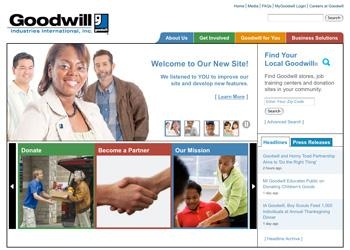
    Matrix Group collaborated with Goodwill Industries International, Inc. to launch a redesigned public Web site. The goal of the redesign was to emphasize Goodwill’s community-based programs and to better serve its current audience of shoppers, job seekers and funders of employment.

    Our work included:

    • An updated appearance and user-friendly, color coded navigation.
    • Integration of the Goodwill locator, a tool allowing users to filter results by type of location.
    • Creation and incorporation of user-friendly icons to show Goodwill’s full service offerings.
    • The Web site serves as one of the primary communication tools to promote events, employment opportunities and ways to donate.

    Visit Goodwill Industries International

  • Which Came First? Design or Content? Neither, They Need to be Hatched at the Same Time

    Which Came First? Design or Content? Neither, They Need to be Hatched at the Same Time

    Chicken and EggThere is an ongoing discussion at Matrix Group about content and Web design.

    One camp says that clients need to have all of their content prepped and ready to go before design on a Web site even begins.  The other camp says this view is not realistic, content is always behind, and clients often need the design to inspire them to update their content.

    So which view is right?  I actually think that both sides are right.  But I think the question is misdirected.  The real question is: how do we make content more important, earlier in the Web site design and development process?

    Here’s something every Web design and development firm knows:  Content is often the responsibility of the client, it’s often delayed, and it’s the most common reason for delayed launches. A List Apart has a whole section on their site devoted to content strategy.  I love Bronwyn Jones’ article on how good design is not possible without good writing.  And I think Erin Kissane is on to something when she discusses content templates (not design templates) as a way to help subject matter experts put their knowledge down on paper.

    Here is what I have learned about content, the importance of content to design, and coaxing good content out of clients: (more…)

  • I Did It! I Got My Ham Radio License!

    I Did It! I Got My Ham Radio License!

    Maki transmitting via Morse Code during ham radio eventA couple of months ago, I blogged about how my 5-year old son challenged me to get out of my comfort zone and get my ham radio license.  Wanting to set a good example, I decided to go for it.  On Saturday, October 10, after weeks of studying, I passed the Technician exam! I was assigned the call sign KJ4PSD but I successfully applied for, and was assigned, a vanity call sign – KA4JMP.

    So what does it mean to have my ham radio license? Amateur radio, also called ham radio, was created by the FCC to create a pool of volunteers that can provide assistance during emergencies, disasters and public events.  Ham radio also has a less serious face.  Ham radio is meant to foster international goodwill and encourage learning about telecommunications and electronics.

    (more…)

  • Recruiting Top Job Candidates Through the Barry Deutsch Method

    Recruiting Top Job Candidates Through the Barry Deutsch Method

    Needle in a HaystackA few years ago, Matrix Group was looking for a Network Administrator. We had been looking for 18 months with no success.  The situation was bleak. The candidates coming in were awful, my team was overworked and desperate to make a hire, and recruiters were failing us miserably.

    Then I attended a presentation by Barry Deutsch, CEO of Impact Hiring Solutions, an executive search firm.  Barry’s presentation had such an impact on me and my company that Barry Deutsch is now a verb at Matrix Group.

    When a job announcement is not pulling in the candidates we need, I tell my staff to “Barry Deutsch” the description.

    Barry says that the top hiring mistakes companies make are:

    • Failing to define the job properly, i.e., not defining what will represent success in the job.
    • Falling victim to first impressions, i.e., the candidate looks good, talks well, she must be terrific.
    • Desperation hiring, i.e., making an offer because you think it’s better to hire someone, anyone.
    • Not asking deep and penetrating questions during the interview. This happens because managers don’t know how to conduct success-based interviews or lob softballs at the candidate because they “like” them.
    • Failing to check references deeply. Many companies skip reference checks or don’t properly validate the claims by candidates. And if a candidate can’t provide references, RUN!

    Ultimately, we all want to hire and retain top talent.  Here is what Barry has to say about top talent: (more…)

  • My Favorite Twitter Applications

    My Favorite Twitter Applications

    Twitter logoTwitter was super smart when they created their API and encouraged developers all over the world to come on in, use their API and develop their own applications using Twitter data.  But wait, what’s an API, you say?

    API stands for Application Program Interface.  Wikipedia defines an API as “an interface that a software programs implements in order to allow other software to interact with it.”  In the Web world, APIs allow systems to talk to each other, request each other’s data, write to each other’s systems, etc., within a defined structure.  In Twitter’s case, the Twitter API allows software developers to request information from Twitter, especially the tweets by Twitter subscribers. The API allows requests by date range, keyword, usernames, etc. (more…)

  • Did You Forget Your Order? — My Favorite Customer Service E-Mails

    Did You Forget Your Order? — My Favorite Customer Service E-Mails

    Forgetful BoyLast Sunday, I logged onto Snapfish.com and started creating a customized calendar using mostly photos of my son (who else should be featured on my homemade calendar?).  I ran out of time before I could finish the order, so I saved it and logged off.  Tonight, I got a really cute and friendly e-mail reminder that there’s something in my shopping cart and it’s not too late to complete my order. There was even a direct link to my cart so it was easy for me to check out.

    In e-commerce lingo, my Snapfish shopping cart was abandoned because I left the site without completing the order.  Some of my clients consider it creepy to let their customers know that they know about the abandoned carts.  But here was a non-creepy, really helpful e-mail from Snapfish that prompted me to complete my order!  What made the e-mail reminder successful?

    • The cute photo of a girl next to the large caption that reads “Did you forget something?” Yes, the girl looks like she just realized that she forgot something and she’s got a hilarious expression on her face.
    • The friendly, personalized message.
    • The links to complete my order and forgot password. (more…)
  • Customer Discounts Shouldn’t Cost You More Money

    Customer Discounts Shouldn’t Cost You More Money

    Photo of money falling out of a piggy bankI was at Union Station a few weeks ago and on my way out, I validated my parking ticket, which would have given me a dollar or two off the total charge.  As instructed by all the signage, I paid for my ticket at the automated station, then hopped into my car and exited the garage.  Later that evening, I realized that the discount had NOT been taken off the charge.  Annoyed, I called Union Station and was told that in order to get the discount, I had to pay at the ticket booth to a live person.

    Okay, so this does not make any sense:  discounted parking costs Union Station more money because a real person is needed to process the transaction. (Besides that, it’s just not right to advertise a discount and then not tell consumers how to actually get the discount.)

    So it turns out that a lot of companies spend a lot more time processing charges from people who pay less.  Here are more examples:

    • The meeting registration system that can’t process discounts properly so you have to call the organization to get the discount.
    • The discount code that you can’t use on the Web, only by phone.
    • The publication that gives you a quantity discount, but you have to call. (more…)