Matrix Group International

Author: Joanna Pineda

  • The Hormone Foundation Website Redesign

    The Hormone Foundation Website Redesign

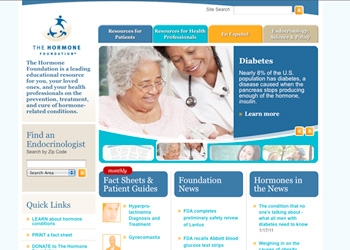
    The Hormone Foundation is the public education affiliate of The Endocrine Society, and the leading educational resource for the public and health care professionals on the prevention, treatment and cure of hormone-related conditions.

    The website offers materials, programs and alerts on everything from thyroid disease to diabetes and cardiovascular and metabolic disorders. So when an opportunity arose to make information online more accessible to all audiences, The Hormone Foundation reached out to web partner, Matrix Group, to make its vision a reality.

    Matrix Group:

    • Re-organized the home page to include a branding area to educate visitors about the mission and activities of The Foundation, and a section that features the most popular resources on the website.
    • Refreshed the site’s current look and feel by softening the organization’s color palette to include warmer colors and updating the font.
    • Implemented the new design in the Foundation’s content management system (CommonSpot).

    Visit The Hormone Foundation Website.

  • The Special Interest Group of IIAS Standards Website Redesign

    The Special Interest Group of IIAS Standards Website Redesign

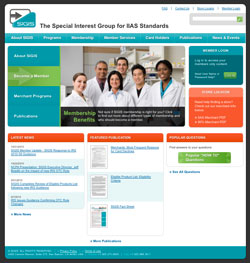
    The primary purpose of the Special Interest Group of IIAS Standards (SIGIS) is to develop voluntary standards to help non-healthcare retailers meet the required IIAS standards and to make it easier for customers to purchase prescriptions and other eligible over the counter products using their Flexible Spending Accounts (FSA) or Health Reimbursement Accounts (HRA).

    SIGIS serves as the industry’s voice to the IRS and as a valuable resource for both members and consumers. Thus, they needed their website to showcase their overall goals and communicate the organization’s current position and address the needs of both members and consumers.

    Matrix Group:

    • Created a warm, friendly site design that communicates SIGIS’s position as an organization that makes it easier for consumers to use their FSA and HSA cards at local pharmacies, supermarkets and other locations.
    •  Implemented the Sitefinity content management system to allow staff to update the website without the knowledge of HTML, keeping the site’s information fresh and up to date.
    • Created a user-friendly navigation based on the motivations, behaviors and needs of SIGIS’s target audiences.

    Visit the SIGIS Website.

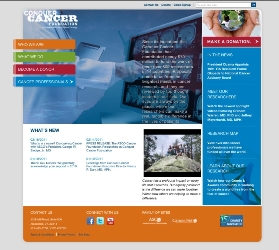
  • The Conquer Cancer Foundation Website Redesign

    The Conquer Cancer Foundation Website Redesign

    The Conquer Cancer Foundation (CCF) of the American Society of Clinical Oncology (ASCO), a nonprofit organization dedicated to creating a world free from the fear of cancer by funding breakthrough research, sharing knowledge with physicians and patients worldwide, and supporting initiatives to ensure that all people have access to high-quality cancer care.

    Matrix Group included:

    • Warm colors and images geared toward the public and that demonstrate empowerment. Less text and increased imagery were used to communicate the Foundation’s core messages.
    • A user-friendly navigation that is simple, straightforward and based on the site’s three main areas: who the organization is; what they do; and how to get involved.
    • Brand consistency between the Foundation’s website and its affiliate organization, the American Society of Clinical Oncology (ASCO.org).

    Visit the Conquer Cancer Foundation Website.

  • What’s the Difference Between Top News and Most Recent on Facebook? And Why Should Marketers Care?

    What’s the Difference Between Top News and Most Recent on Facebook? And Why Should Marketers Care?

    It’s been forever since Facebook changed it stream to be divided between Top New and Most Recent and many folks are still scratching their heads wondering what’s what. Here’s why you want your updates to be in your friends’ and followers’ Top News streams.

    According to Facebook, “Top News shows popular stories from your favorite friends and Pages, many of which have gained lots of attention since the last time you checked.” What this really means is that Top News shows the posts from the people and company page that you interact with the most. For example, I tend to “like” and comment on the updates from my friend Eileen, the photos from my brother Alex and articles from PBS. Since I interact with these Facebook account regularly, their posts are pretty much guaranteed to be in my Top News stream, which, by the way, is the default view.

    Top News also displays updates by relevance, based on an algorithm. If a post is getting a lot of comments, it will probably show up at the top of your stream, even if the original post is not the most recent in your stream.

    Most Recent “shows updates from as many as 250 friends and Facebook Pages.” This is a more traditional stream because it shows all posts, in chronological order, unless you’ve hidden posts from a specific person or company. If you haven’t checked out Most Recent recently, click on it now and you’ll see posts from a bunch of people and companies you thought weren’t posting. If you start interacting with some of these accounts more, you’ll start to see them in your Top News stream.

    What does this mean for marketers?

    It means that it’s absolutely not enough to have fans or followers. Your company’s Facebook page can have a million followers but unless they’re liking and commenting, your posts won’t show up in their Top News, which means they’re likely not getting much attention. On the flip side, once you get followers to interact with you more regularly, your posts will show up in Top News, which will further encourage them to like and comment.

    Remember, the key to Facebook success is to get your followers to interact with you regularly. I’ll blog in the future about ways to encourage interactions. And oh yeah, I’m doing a webinar next Wednesday, May 18, 11am Eastern on Social Media Marketing and Customer Engagement. Hope you can join me.

    BTW, you can edit your stream options by clicking on Edit Options at the bottom of your News streams.

    What do you think of Top News vs. Most Recent? Which stream do you prefer?

  • JP Rule #1: Do or do not. There is no try.

    JP Rule #1: Do or do not. There is no try.

    © 2007 USPS. All Rights Reserved.

    In honor of May 4, a sacred day among Star Wars fans (because George Lucas released all of the Star War movies on May 4th), I’m blogging about my Rule #1: Do or do not. There is no try.

    Clearly, I did not make up this rule. It’s Yoda’s rule. But it’s a damn good rule, especially in business.

    Here’s what I know: Clients don’t come to us so we can TRY to develop the complicated web application they need. They need us to do it. And they need to know that we will be successful and the end result will be close to what they envisioned.

    I learned a long time ago that when assigning tasks that must get done, I don’t ask staff if they can do it. I provide background, then ask what they need to get the project done, what obstacles are in their way, and how I can support them. And when I get, “I’ll try,” I remind them that “I’ll try” is not a commitment and it’s not a promise, it’s a half-hearted “maybe” or a definite “no.”

    Now, if we’re brainstorming, assessing options or exploring whether or not we can accomplish something, then I ask if we (Matrix Group) can do it. And it’s perfectly legit to say, “I’ll try.”

    So what happens if someone (me included) doesn’t know exactly how to get the required task accomplished and can’t quite commit to it just yet? In that case, I ask people to give me a plan that details what they are going to do so they will know and can commit to a timeline and budget.

    In Star Wars Episode V: The Empire Strikes Back, Yoda lifts Luke’s starfighter from the swamp. An incredulous Luke says, “I don’t believe it.” To which Yoda retorts, “that is why you fail.” Like Yoda, my best developers, front-end developers, designers, admins, project managers (yada, yada) believe they can accomplish ridiculously hard tasks under ridiculous deadlines. That is why they succeed.

  • JP Rule #3: Never Let Your Client Make a Mistake

    JP Rule #3: Never Let Your Client Make a Mistake

    The Matrix Group running team wanted t-shirts for a couple of races this Spring and Summer. We ordered black running shirt with our logo printed using a sublimation process, meaning that instead of being an applique, the ink is fused into the shirt fibers. This ensures the shirt remains breathable and the logo will be long lasting. We ordered the shirts from a company Boombah. Unfortunately, the shirts were got had the logos applied with a Fusion process, which is essentially a high-end iron on transfer. The shirts look and feel like plastic.

    We called Boombah to complain that we ordered shirts with a sublimation process, which, incidentally, is what our e-mail receipt says. The Boombah sales rep said something to the effect of “the sublimation process is only available for the white and gray shirts. Our receipts say sublimation as part of the template, but it’s wrong. Our website is very clear that you can’t get sublimation with the black shirts.” (Don’t get me started on what happened when I asked to speak with a manager or the owner. It was not good.)

    Okay, forget that the invoice says sublimation. Boombah violated what I affectionately refer to as JP Rule #3: Never let your client make a mistake. In my mind, if we had called asking for black shirts with logos, the rep should have made sure we were crystal clear on the concept that sublimation, which is the nicer printing method, is NOT available for black shirts. Knowing that fusion on black makes for a crappy shirt, the rep should have at least tried to prevent us from making that mistake. Yes, we ultimately placed the order and we take responsibility. We paid for the shirts and promptly ordered a batch from another company.

    Whether it’s shirts or websites, clients rely on their service providers for expertise and recommendations. It’s up to us to educate our clients, make sure they understand the options, make recommendations, and warn them if we think they’re about to make a mistake. Yes, clients ultimately need to make their own decisions and they are big boys and girls, but if we hold technical knowledge they don’t, shouldn’t we at least make sure they are aware of the impact of their choices?

    Case in point. A new client was implementing MatrixMaxx, our association management software. Our main contact told us that the association didn’t need any company demographics as part of the setup. We questioned this decision several times and he maintained that no, the organization did not need to collect company data outside of contact information. Knowing this is wrong and a waste of an opportunity to gather member data, we took the issue to the VP. Without making it seem like we were going over the manager’s head, we let the VP know that we thought the organization could benefit from collecting additional data as part of the member profile and membership application. We even suggested a package of fields. Sure enough, the VP, who has a bigger picture view, agreed on the demographics. We *could* have dropped the issue after confirming with the manager. We would have had tons of documentation showing that the client rejected the additional fields so that if the client came back to us a year later, we’d be perfectly justified in charging extra money for a change order. But that behavior would have violated Rule #3.

    We try to live Rule #3 and we don’t always succeed. There isn’t always clarity about what’s absolutely right and what’s absolutely wrong. We don’t always realize a decision will be the wrong one in the long run. And clients don’t always agree with us. BUT, I believe that we have an obligation to our clients to at least give it the old college try and help them not make mistakes.

    How about you? Got any stories of a vendor who let you make a mistake or saved you from making a bad decision?

    P.S. I have a total of 23 rules. I’ll try to blog about them all in the future. If you’d like a copy of the list, let me know.
  • Does Your Website Need an Attitude?

    Does Your Website Need an Attitude?

    Matrix Group recently had the pleasure of helping the Outdoor Foundation launch a new website for one of its initiatives — Outdoor Nation (ON). Outdoor Nation believes the world would be a better place if we all spent more time outdoors. Outdoor Nation hosts regional summits, connects outdoor enthusiasts through its social network on Ning (the website is on Ning), supports local outdoor clubs, and advocates for local and national outdoor policies.

    Here’s what I absolutely love about the ON website: it’s got a ton of attitude.

    The design of the site is bold, almost brash. But the attitude really shines through in the copy. The about page starts off with:

    Before the recent youth-led revolutions that are now happening around the world—there was Outdoor Nation. Okay, we probably didn’t influence those uprisings but we do share a belief in the power and passion of young people and our ability to start a revolution.

    ON says they “host awesome summits” and “when the ancient Greeks invented social networking, this is what they had in mind!”

    In the branding area on the home page, there’s a big pitch to GTFO (get the f*** outside) because “there’s no excuse not to get the fun outside.”

    How fun to see a website just brimming with enthusiasm and passion! It’s obvious that ON is targeting a specific demographic and not every organization can get away with this type of attitude and language. But I bet more of us could and should inject our marketing campaigns with fresh design and copy that signals a certain lifestyle and brand.

    How about you? What attitude does your website project? Can you name other websites that have a lot of attitude?

  • It Ain’t Easy Being Green

    It Ain’t Easy Being Green

    Matrix Group is competing in the Arlington Green Games, a competition for the commercial office sector (property owners and tenants) in Arlington, VA to reduce greenhouse gas emissions. Gold, Silver, Bronze and Recognition awards are given based on points achieved in different categories: Energy, Transportation, Waste, Water, Materials, Employees & Outreach, and Innovation.

    When we first signed up for the competition, the office was all gung ho. We formed a green team, we filled out the benchmark survey and we got to work on our green initiatives. Turns out, it ain’t easy being green. Here’s why:

    • Little Control Over Major Systems. At home, my husband and I ultimately control our energy consumption. We upgraded our HVAC system to a high efficiency system; our house is cold in the winter and warm in the summer; we just upgraded our windows to be triple-paned, argon gas-filled and super efficient; we installed dimmers; we wash our clothes in our cold water; yada, yada. But at work, our options are much more limited because we can’t control many of the systems that generate the most greenhouse gases. For example, as a tenant, I can’t exactly upgrade the windows on the 12th floor and we didn’t install the HVAC system that heats and cools the building.
    • Being Green Costs More. As any news article on green technologies and lifestyles will tell you, being green just plain costs more. The Green Games website recommends that we purchase green credits to balance our CO2 emissions. We can also make sure that all of our purchasing (office supplies, equipment, furniture) is green, which can be considerably more expensive.
    • There’s Little Incentive to be Green as a Tenant. I once asked a friend if she had switched her light bulbs to compact fluorescents and she said, “Why should I? I don’t pay for my electric bill. My building does.” As a tenant in a commercial office building, it’s hard to see the effects of our energy-hogging or green ways.

    So what’s the green path and how are the Green Games making us better?

    What I’m appreciating the most about the exercise is twofold: 1) we are focusing on obvious practices like composting our Keurig grounds and making sure the recycling is going into the right bins and actually being picked up by the recycling contractor and 2) we have initiated a conversation about real policy changes at the company that will result in meaningful greenhouse gas emission reductions.

    For example, we currently subsidize half of employee parking fees and Metrocheck cards. But we don’t have incentives (financial or otherwise) for the staff who walk or bike to work. What can we do for these staff beyond giving them $50 a month that will mostly get eaten up by taxes (whereas parking and Metro subsidies are tax-free)? Can we alter the IT policy of leaving our computers on at night so that security patches can be installed; can we at least turn them off on the weekends? And how much of our company profits are we willing to forgo in favor of purchasing green products and credits? All tough questions that we don’t have answers to but that I look forward to exploring this year.

    When I was in college and taking a course on aid in the developing world, my professor urged us students not to think about what one person can do in a day, but what a community of people can do over time. The Green Games are hopefully helping the business community in Arlington chart a course for real green practices and change in Northern VA. While it ain’t easy being green, the alternative ain’t much better.

    How about you? What is your company doing to be greener? What innovative policies and initiatives have you come up with? What’s worked? What hasn’t?

  • Facebook Admins Can Now Interact With Others on Facebook as THE Brand

    Facebook Admins Can Now Interact With Others on Facebook as THE Brand

    A few days ago, Facebook rolled out changes to the Facebook pages. Facebook pages are the equivalent of user profiles for companies and brands and they’re an increasingly important web presence for most organizations.

    One of the most important changes is the ability of Facebook admins to interact with fans and other pages as the company or brand. Here’s what this means:

    • Facebook admins can now be on Facebook as an individual OR the Facebook page or brand. If you’re admin on a Facebook page, go to your Facebook page and click on Account in the top right. The second option in the dropdown is Use Facebook as Page. If you click on this, you’ll get a list of all pages for which you’re an admin. Select one. You will now interact with others and pages on Facebook as THAT company.
    • You can “like” other Facebook pages as the company, not as yourself. Pages that your Facebook page “likes” will be displayed randomly (5 of them) in the left rail of your Facebook page, with the ability to View All.
    • You can comment on your own wall and other walls as the company, not as yourself. For example, Matrix Group can comment on a  client’s wall, even though it’s me, Joanna Pineda, who would be authoring the post.
    • You can view a newsfeed of updates from the pages that your company likes, not your friends. For example, Matrix Group has “liked” the Facebook pages of our clients. When I’m on Facebook as the Matrix Group page, when I press Home, my stream is from other company pages, not the friends and family of Joanna Pineda.
    • When I’m online as a page, Facebook recommends other pages for me to like as a company, based on the “likes” of the fans of my fan page. For example, Facebook tells me that 101 of Matrix Group Facebook fans like Starbucks and gives me the option to “like” Starbucks right from the Matrix Group fan page homepage.  Very slick.

    If there are multiple admins on  your Facebook page, be sure to train them on how to switch between their profile and your fan page. And establish guidelines for when to interact with other Facebook pages and fans as themselves or the company fan page. Remember that just because you as an individual love a band, author or political party, it does NOT mean that your company or brand should like these pages as well. I love these new changes and look forward to being Matrix Group on Facebook!

  • Give Me a Reason To Give or Join

    Give Me a Reason To Give or Join

    My husband and I attended my son’s Cub Scout Blue and Gold Banquet earlier this week. At the end of the banquet, a representative from the National Capital Area Council of the Boy Scouts of America made a pitch for supporting the Boy Scouts with a financial gift. She did a nice job but what really convinced me was the brochure she handed out, which said:

    For every 100 youth who join scouting

    • 1 will use his Scouting skills to save a life
    • 1 will use his Scouting skills to save his own life
    • 18 will develop hobbies that will last throughout their adult life
    • and on and on

    Who are Boy Scouts?

    • 72% of Rhodes Scholars
    • 65% of the US Congress
    • 65% of male college graduates
    • 26 of the first 29 astronauts were Boy Scouts
    • and on and on

    Wow. With statistics like that, I’m keeping my son in Boy Scouts forever and I’m giving them money every year!

    Here’s another compelling statistic I heard recently. I’m a member of Vistage, which is a membership organization for CEOs. Vistage says that their member companies consistently outperform non-member companies. Based on the coaching and resources I get from Vistage, I believe it. Vistage is a big commitment of time and money, but totally worth it.

    How about you? What compelling statistics or facts can you share with your prospects to make them join your organization, become a customer or donate money?

    • If you’re an accrediting body, can you point to the top organizations that are accredited and how accredited companies have better safety/graduation/success rates?
    • If you’re a trade association, can you point to the top companies in the field that are members, your legislative record, and the success rate of your companies?
    • If you’re a professional society, can you point to the job rate and salary levels of your members, your contributions to the profession, and your profession’s rank as a top career?
    • If you’re a charity, can you point to your success in changing systemic problems?

    In thinking again about the Boy Scouts, what was effective about the pitch was this: I wasn’t being sold on the activities of the Boy Scouts, I was being sold on the outcome. The message was clear: Enroll your son in Boy Scouts and this is what he can become. I’m sold.