
Matrix Group International

Category: Content Marketing and Social Media

  • Integrating Traditional Marketing with Social Media

    Integrating Traditional Marketing with Social Media

    Grow Smart Business logoI had the pleasure of being part of a panel at today’s Grow Smart Biz conference, sponsored by Network Solutions.  Our topic was “Integrating Traditional Marketing with Social Media.”  Despite being the last panel of the day (we started around 4:20pm), I estimated that over 80% of the conference attendees attended the panel.  And by the number of questions raised, this is a hot topic for sure.

    You can read a nice recap of the panel on the Solutions are Power blog, but here were my take-aways: (more…)

  • Using the Crowd to Attract a Bigger Crowd To Your Events

    Using the Crowd to Attract a Bigger Crowd To Your Events

    CrowdI’m going to be a panelist at the Grow Smart Biz conference next Tuesday, September 29, 2009 at the Renaissance Hotel in Washington, DC.   In my opinion, this conference will be a must-attend event for small business owners and entrepreneurs (more on that later).  This blog post is about how the conference planners are using the crowd to attract a bigger crowd. Here’s how:

    The planners of Grow Smart Biz have assembled a powerhouse group of speakers and panelists, which is not unusual for a conference.  What is new is this: the planners have actively engaged the speakers in promoting the conference through their blogs, Facebook pages, Twitter accounts, etc. In essence, the conference hosts are tapping into the vast networks of the speakers to promote the event. So, when Jill Foster, editor of the Women Grow Business blog and social media expert, tweets or blogs, the event is marketed to her over 3,000 followers.  So, if you’ve got big names keynoting at your next convention, why not ask them to update their status and give your event a boost? (more…)

  • Netiquette for The Boss While on Twitter, Facebook, and Other Social Networks

    Netiquette for The Boss While on Twitter, Facebook, and Other Social Networks

    Book of EtiquetteI was on LinkedIn yesterday and the LinkedIn search engine helpfully recommended a couple of people for me to add to my network.  The list included a couple of people who currently work at Matrix Group.  While it’s every CEO’s dream to have a large network, I did not invite the staff to get linked up.  Why?  Because I think that for bosses, managers,and CEOs, there are unwritten rules of netiquette. Here are some of the rules I abide by when using Twitter, Facebook, LinkedIn and other social networks.

    • Except for a few direct reports, I don’t invite staff to be my friend or get linked up. I imagine that some staff would view an invitation from me as wanting to know too much about them; at the very least, it could be awkward if they don’t want to get linked up and they have to turn down a request from their boss.
    • I do accept invitations from staff to be my friend or get linked up. If they’re staff, they’re part of my extended family.
    • I don’t accept an invitation to get connected unless I actually know the person. Even on LinkedIn.  Random strangers are NOT going to get access to my network just because they want to link to me.
    • I do ask staff to follow this blog because I’m communicating with their clients through the blog and it’s always good for staff to know what the boss is broadcasting. 🙂
    • I do ask staff to follow or fan the company’s pages on the social networking platforms.  I’m not asking for them to friend me, but I am asking them to support our social networking efforts. (more…)
  • Who’s Afraid of User-Generated Content?

    Who’s Afraid of User-Generated Content?

    Users on ComputersFrom homemade movies on YouTube, to movie and book reviews, comments on blogs, and entries in Wikipedia, user-generated content (UGC) has changed the Web forever. I can’t imagine the Amazon shopping experience without comments and ratings from other moms, the posts from the 500 or so people I follow on Twitter could keep me occupied and interested all day, and I thank God every day for the thousands of homemade Thomas the Tank Engine movies on YouTube that keep my five-year old enthralled on a rainy day.  Mashable reported that more than 82 million people in the US created content online in 2008.

    So how come most organizations shy away from incorporating UGC on their sites? (more…)

  • Why is Facebook so Addictive?

    Why is Facebook so Addictive?

    Asleep At The ComputerI called a friend last Sunday to say hello and her husband said she was deep in Facebook, and had been for several hours. Several hours! This is a woman who holds a challenging job, has an 18-month old, and even has hobbies on the side. Facebook for several hours? And I know she’s not alone.

    Facebook says that it has 250 million users, of which 120 million login once a day, and spend 5 billion minutes doing “stuff.”  Just what what are we all doing on Facebook and why is it so addictive? Here are my thoughts: (more…)

  • Measuring the ROI on Social Media Initiatives

    Measuring the ROI on Social Media Initiatives

    Analyzing The DataI met with a group of CEOs this morning and social media came up in conversation. More than several members of the group wondered if a social media strategy is worth the effort. In other words, how do we measure the return on investment (ROI) of our social media initiatives?

    This is a topic that comes up a lot at Matrix Group. Unfortunately, there isn’t a magic formula for calculating ROI on social media activities. Mashable says that you can measure the ROI in two ways:

    • Qualitative – Are you part of the conversation in your industry? Are you able to demonstrate that you or your organization is a thought leader? Is social media able to help you build better relationships  with your target audiences?
    • Quantitative – Look to your usage reports, RSS subscriptions, e-mail opt-ins, e-commerce sales and registrations to see if social media is increasing traffic and transactions. (more…)
  • Will Social Networks Trump Traditional Networks In The Future?

    Will Social Networks Trump Traditional Networks In The Future?

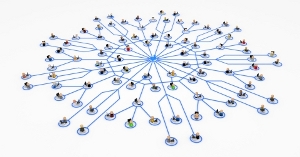
    NetworksOne of the people I’m following on Twitter (who shall remain nameless) recently commented: “Prefer getting updates from my friends via Twitter. Much more efficient and I don’t need to see them.”  Hmmm….

    I don’t know about you, but even though I love Twitter, Facebook, LinkedIn, yada, yada, I still really like getting together with my college buddies, grad school buddies, fellow DC Web Women, fellow volunteers for Doorways, etc.. Yes, it’s “efficient” to get updates from friends in far away lands via their social network pages, and I have strengthened ties with folks via Twitter and FB, but will my social networks ever trump my traditional networks?

    I don’t think so.

    A recent article in The Economist maintains that “(o)ld-style networks… are usually stronger than online ones, , and the trust between their members facilitates transactions of all sorts.”  Transactions like doing business together, hiring staff, and lending money.

    For me, however, it’s not a black and white issue.  Here’s what I think is happening:

    • Family networks will probably trump all networks because “blood is thicker than water” although we all know that families are also our craziest and most dysfunctional networks.
    • School, fraternity and work networks will remain the strongest because these are ties that get developed over time and involve shared efforts. So for me, my Stanford and Matrix Group networks will continue to be my strongest networks.
    • Offline networks that involved shared interests will remain strong because members have a common interest. These networks, however, will be expanded to include online members.  In fact, I expect these networks to be strengthened by the ability to connect with others worldwide, in different languages. (more…)
  • My Favorite Twitter Visualization Sites

    My Favorite Twitter Visualization Sites

    Twitter logoI love Twitter.  Yes,  it’s information overload and there’s a lot of noise, but I love the commentary and the interesting links.  I also appreciate the updates from friends and family.  More recently, I am loving the Twitter visualization sites that are popping up everywhere.

    So, what the heck is a Twitter visualization?  If you’re on Twitter, you know that there are millions of individual posts, replies, and discussions every day.  Figuring that people out there would want to do things with this flowing data, Twitter publishes an API (application programming interface) that lets developers have real-time access to tweets and some user information.  The result is hundreds (thousands?) of sites that let you search, map and analyze tweets, relationships between users, and topics.  Here are some of my favorite Twitter visualization sites.

    • Twistori is my favorite.    Click on the words love, hate, think, believe, feel, wish and see a real-time stream of posts that contain these words in the tweet.
    • WeFeelFine is a visualization of not just tweets, but blog posts and images as well.  Explore Murmurs and see a flood of tweets with the words “I feel” in them.
    • Twittervision shows tweets from around the world, overlaid on a world map so you know where the tweet are coming from.  Twittervision is even available in 3D.
    • Having an event?  PepsicoZeitgeist shows real-time tweets about Internet Week in New York City.  I especially love the top words from IWNY tweets.
    • TweetStats lets you enter your Twitter username and see a bunch of statistics about your tweets, including when you tweet, average daily tweets, who you tend to retweet, etc..  Did you know all this about yourself?
    • Twitter Friends Network Browser lets you see your Twitter network and click and drag to do fun things.
    • Hashtags shows you the top hash tags on Twitter right now.
    • MyTweetMap lets you see tweets from the people you are following, overlaid on a map.
    • Dipity let you explore tweets in a timeline format but the site has since gone dark. Here’s a blog post that explores what happened to Dipity.

    What’s fascinating to me is how Web designers and developers have found countless ways to transform the universe of Twitter data in new and different ways.  Each site introduces me to new people to follow and gives me insight on new topics.

    How about you?  What are your favorite Twitter visualization sites?

  • Get Your Vanity URL on Facebook On June 13, 12:01am

    Get Your Vanity URL on Facebook On June 13, 12:01am

    Facebook logoWhenever I sign up for something, I try to get jpineda@matrixgroup.net as my username and jmpineda as the account name. I’m jmpineda on Twitter, Yahoo!, Delicious, FoodBuzz, FriendFeed, etc.  For example, you can browse my Delicious account by going to http://delicious.com/jmpineda.  You can follow me on Twitter by going to http://twitter.com/jmpineda.

    But on Facebook, currently I’m http://www.facebook.com/profile.php?id=716098588.  Ugh.  Not exactly a memorable URL.  But all this is changing at 12:01am this Saturday, June 13.  At that time, you’ll be able to create a vanity URL for your profile.  You guessed it; I’m hoping very much to be http://www.facebook.com/jmpineda.  Perhaps more importantly, I want a vanity URL for the Matrix Group fan page, which is currently at http://www.facebook.com/pages/Matrix-Group-International-Inc/48658676723.  (The Matrix Group Facebook fan URL is so long and unfriendly that I have to access my bookmarks to share it with others.)

    Vanity URLs, also known as addressable identities, will sure make it easy for all of us to share our Facebook profiles with others and encourage friending and fanning (are friending and fanning real verbs these days?)
    (more…)

  • Dog on Roof: How Social Networking Has Changed The Speed of News and Information

    Dog on Roof: How Social Networking Has Changed The Speed of News and Information

    Dog on RoofIt wasn’t a call I get every day.  Last week, my nanny called to say that two neighbors had knocked on our door to report that there was a dog on our roof. Yes, a dog, not a cat.  And since it was pouring rain, she wondered if I could come home and help out the poor dog.

    The first thing I did was call my husband to see if he could deal with the dog on the roof.  The second thing I did was tweet about the dog on the roof. The third thing I did was contact a few neighbors to try and figure out who the dog might belong to.  By the time I figured out which neighbor had left his 4th floor balcony door open, Maki had coaxed the dog (his name is Kerbie) down from the roof, brought him into our house and dried him off.  Within an hour, dog and owner were reunited.  I duly tweeted the happy news to my Twitter followers.

    Why does this dog on roof story matter? It matters because:

    • My dog on roof story became news to my community – my staff, my neighbors and my online network.  Within minutes of tweeting about the dog on my roof, I got tons of tweets about said dog on roof.
    • Kerbie’s story reached hundreds of people within minutes. Remember the plane crash in the Hudson?  Janis Krums posted the first photo of the crash on Twitter.  Within minutes and hours, the news was all over Twitter and the blogs.  By the time the 6 o’clock news covered the story, it felt like ancient news.
    • I bet that if I had asked for help, I would have received a dozen offers within minutes. People would have tweeted and retweeted until I got the right resource to solve my problem.

    (more…)