Matrix Group International

Author: Joanna Pineda

  • An Example of a Really Great Event Registration Email Confirmation

    An Example of a Really Great Event Registration Email Confirmation

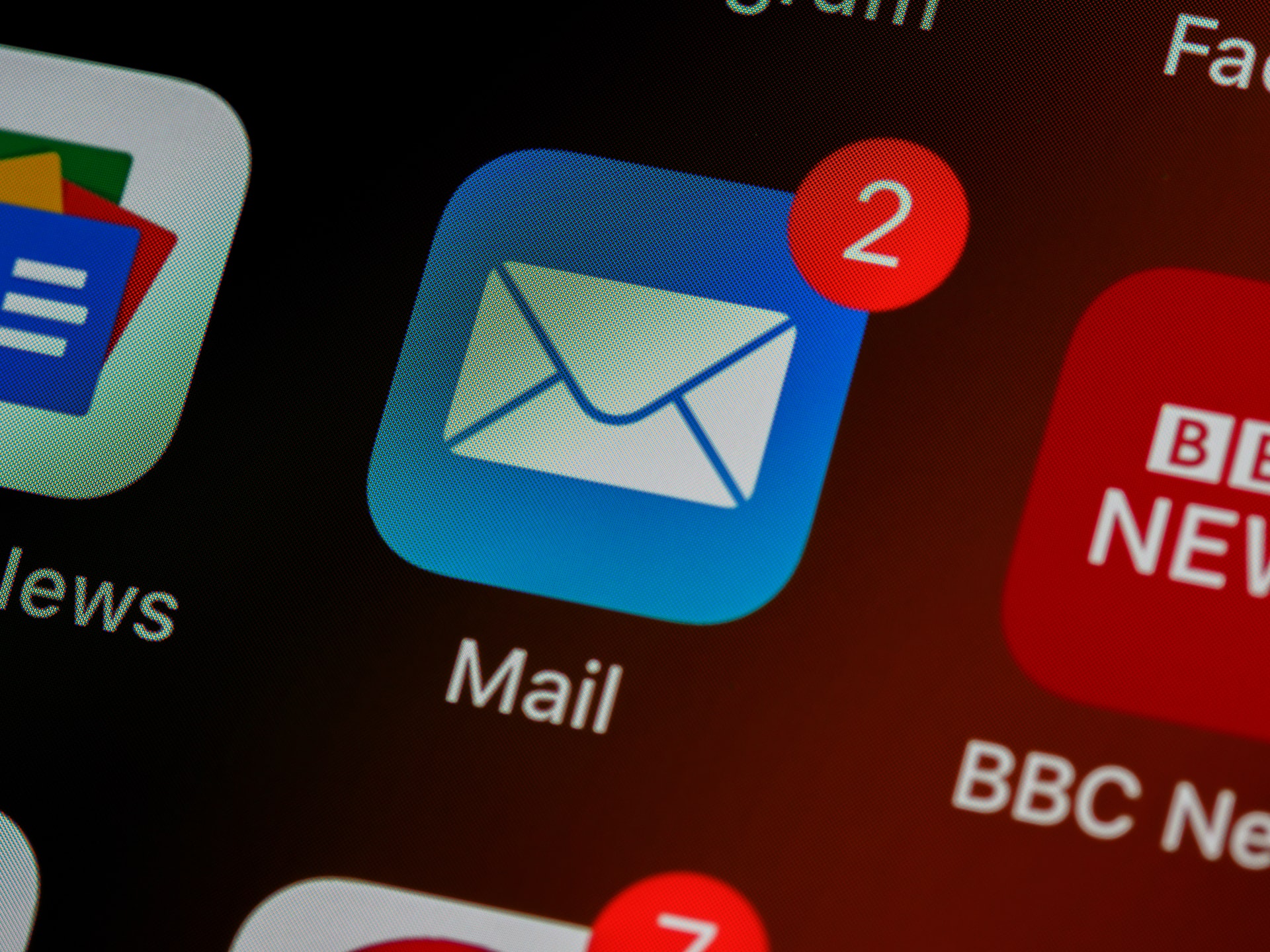
    An IPhone Mail Application with two notificationsA couple of weeks ago, I got invited by my buddy Heinan Landa, CEO of Optimal Networks, to an event by CADRE, which bills itself as “a way for elite professionals to learn from the top experts in the world, while connecting and developing meaningful relationships with like-minded peers.

    The event itself was lovely, but what I want to highlight today are the wonderful emails that I received after registering for the event. Usually, I get a nice, neutral, thank you email confirming my registration and payment. Instead, I got a plain text email that was clearly a canned email, but it was really effective. I loved that it was plain text, and the email read like it came from a real person. There was even an offer to introduce me to other attendees. 

    Hi Joanna, I am looking forward to meeting you at YOUniversity on Thursday! I am impressed with your business and there may be a few attendees who would be good for you to meet and vice-versa. With that in mind, who do you want to meet? I'm not looking for names necessarily but rather, types of professionals (industries), folks with certain skills sets, or shared interests, etc.? If you get back to me before the event, I will make an effort to introduce you to some cool people (if potentially relevant and mutually beneficial). Let me know if you have any questions. Either way, I look forward to seeing you soon!

    So what did I do?

    I replied to Derek’s email, introduced myself and took him up on his offer to connect me with some other attendees. And you know what? He was true to his word and I got introduced to someone who I was delighted to meet because we have things in common. 

    Imagine this: CADRE got engagement from me prior to the event, which made my interactions during the event even more meaningful. My takeaway is this: revisit your event confirmation emails. Are you merely confirming payment or connecting with your attendees? Are you just confirming attendance or giving attendees a genuine opportunity to start interacting with you? Are you making them feel welcome?

    I say act like an undercover meeting attendee and review all of your event emails. What will you find?


  • It’s Really Time to Use Strong, Unique Passwords (Really!)

    It’s Really Time to Use Strong, Unique Passwords (Really!)

    A silver key and a blurry reflection of the key on a dark table with a blurred background.

    I attended the Matrix Group Security and Compliance Committee meeting this month and I asked them what we’re doing this month to make our clients and Matrix Group more secure. We talked about a lot of things, including new protocols, ongoing reviews, and our yearly security assessment. One thing kept coming: our clients need to set stronger passwords.

    Most People Set Weak Passwords

    How do we know that our clients don’t have strong passwords? Because they tell us that they know they need stronger passwords. Or they share their passwords so we can access their DNS or their analytics reports. Or they set up accounts for us and they give us laughingly simple passwords. Or they say things like, “I have a spreadsheet with all of my passwords” or “I use the same password all the time.”

    Why You Need a Password Manager

    Folks, it’s past time to use strong, unique passwords on each and every single site that you have an account on. If you reuse passwords, one breach means your entire digital life is compromised. If you use versions of the same password (e.g., variations on Coffee), believe me, the bad guys know you’re doing this and they know how to crack the code on these passwords.

    So what’s the answer? It’s simple, really. Use a password manager. Here’s a great review by Cybernew of the best password managers, updated in 2022. Me, I use LastPass; my whole family uses it, including my 11-year old. I let LastPass create strong, unique passwords for me. Everything goes into LastPass, including my Amazon Prime PIN and my airline frequent flier passwords and account numbers. 

    Why I Love My Password Manager

    Here’s the beautiful part: since I have LastPass installed as a Chrome extension, LastPass populates login pages for me. On my phone, since I have LastPass installed as an app, I use Face ID to populate passwords. The upshot is that I have strong passwords AND it’s easy to log in to my various accounts.

    And you know what else? LastPass lets me know when one of my sites has been breached (so I know to change those passwords) and tells me which of my passwords are weak (also so I know to change them). Did I tell you I love LastPass?

    It is waaaaay past time to use strong, unique passwords. Do yourself a GIANT favor and get a password manager. Get it for your parents, your spouse and your kids. Help them get started. Make your digital life safer and make the Internet a safer place. Do it. Now.


  • What’s It Like to Travel These Days?

    What’s It Like to Travel These Days?

    I never really stopped traveling during the pandemic. Yes, I traveled a whole lot less, but I have seen my mom several times, I went on vacation, and I have attended out of town conferences. Just since the start of the New Year, I’ve been to San Diego, San Francisco and New York.

    Whenever I come back from travel, friends and co-workers ask me, “what’s it like to travel these days?” This post is for all of you who have been wondering what it’s like to get on a plane or train, stay in a hotel, or attend a conference or show. Here’s what I have observed and learned, in no particular order.

    • Mask mandates are very strict at airports, on planes, and on trains. Even if your local jurisdiction is no longer requiring masks, you’ve got to mask up when traveling by air or rail.
    • At New York restaurants and shows, be prepared to show your vaccine card and ID to get in.
    • Many NoVA and DC restaurants ask for proof of vaccination if you are eating indoors.

    So what’s it like to travel these days? On the whole, it feels great. Since last July, I’ve been to Santa Fe, Boston, Nashville, San Diego, San Francisco, and New York City. I’m a pretty careful traveler. I wash my hands a lot, I mask up, and I carry wipes, hand sanitizer, and extra masks. When I can, I eat outdoors. Even though I’ve never tested positive, my household has had COVID, so the existential fear of COVID that loomed before me is now mostly gone. 

    This post is not about whether or not I think life is, or should be, back to normal. For the record, I don’t think either is true. It’s about travel, which for me, has been pretty joyous and safe. If and when you do decide to travel, be safe, be well.

  • Onboarding New Staff During a Pandemic and the Power of Company Fundamentals

    Onboarding New Staff During a Pandemic and the Power of Company Fundamentals

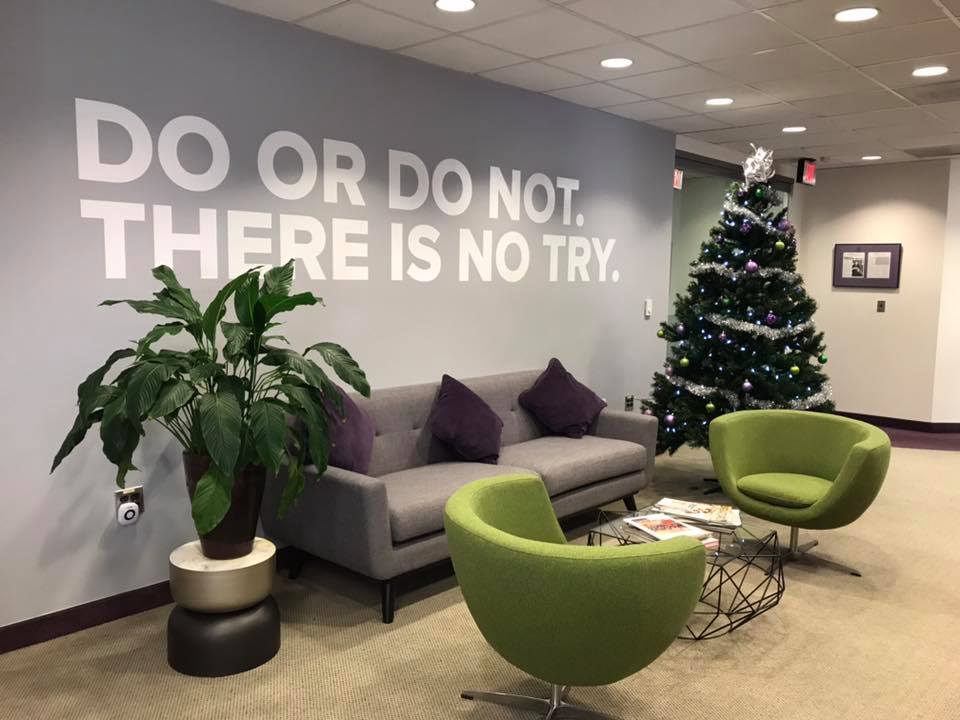
    A picture of an office waiting area, with the words 'Do or do not" written above, and 'There is no try' written below.During the pandemic, Matrix Group has hired new staff. Most of them are out of state because, you know, why not? We are all remote anyway, so why does it matter if Mark is in New Jersey? Not to mention the fact that finding great talent is so tough right now, who cares if Mark is in New Jersey?

    I did fret a little, however, about onboarding these new staff. Before the pandemic, ¼ of the Matrix Group was already remote, but they were all staff who had previously worked in the office and then moved away for a variety of reasons. These were team members who were inculcated in the Matrix Group ways, they had deep networks, they had strong ties to their managers and teams.

    Turns out that something we’ve been doing for a looooong time has served us well as we’ve hired and onboarded staff who may never set foot in the Arlington, VA office. 

    Matrix Group has company fundamentals. These fundamentals are 23 rules to live by that we developed eons ago. Here are some of my favorites:

    • Do or do not. There is no try.
    • Communicate to be understood.
    • Don’t let your client make a mistake.
    • Don’t let your boss make a mistake.
    • We are curious.
    • When in doubt, act with urgency. Everything has a timeline.

    Here’s the trick: each week, we pick a fundamental and every meeting opens with a discussion about that fundamental. During staff meetings, I take the fundamental and ask if someone would like to comment on it. During project managers meeting, I take the fundamental and ask how we’ve lived it, or not lived it, this week. The idea is to provide guidance on how to live and interpret the fundamentals so they’re not just empty slogans. I want everyone to know what it means when I say “let’s get curious about this” or Rajani says “ASAP is not a timeline.”

    Back to onboarding. Turns out these fundamentals do more than serve as something to talk about. They give staff guidance on how to behave, they let us tell stories about how we’ve lived or violated the fundamentals, and they give my team common language about what’s acceptable and what’s accepted at work.

    Once I realized this, I spent a whole lot less time fretting about whether or not my remote staff would “get” the Matrix Group company culture. I smile when I hear someone fairly new at the company start to use the company fundamentals in their communications. I love it when I hear or read, “I know we’re not supposed to let clients make a mistake,” or “I know we’re not supposed to deliver bad news via email.”

    How about you? How are you defining your company fundamentals for new or remote staff? What’s working?


  • Ready to Declutter Your Digital Life?

    Ready to Declutter Your Digital Life?

    It’s a new year and with a new year comes new year’s resolutions. Many of us resolve to tidy up our closets and garages. This past holiday season, I decided to declutter my digital life. Here’s what I ended up doing:

    Cleared my Email

    I have unlimited storage in Gmail, which is a good thing and a bad thing. To be honest, I had a lot of unread emails, mostly promotional and social emails, but still. All that unread email was weighing on me and stressing me out. I spent two weeks clearing out my email. I’m down to a (more) manageable list of unread emails and overall number of emails. I still have a ways to go but I can see the light at the end of the tunnel. I even deleted about 1,700 drafts of emails; God only knows why they were still in there.

    I Unsubscribed From a Zillion Newsletters

    I have no idea how I get on so many lists. I hesitate to press Spam on most of the messages I receive because most are legit businesses and many are newsletters I subscribed to a while back. But I hadn’t read a Chronicle of Philanthropy or Entrepreneur.com newsletter in ages, so I unsubscribed. Who knows if my unsubscribes will make a difference; maybe for a bit?

    I Emptied My Downloads Folder

    The Downloads folder on my laptop was huge! Every time I download an attachment or an image, it would go into Downloads. Often, I needed the files for something quick and then never again. But those files stayed in Downloads. I realized I had old project files, and I don’t want those on my laptop; I want those files on our company intranet and nowhere else!

    I still need to clear folders in Drive, delete photos in iPhoto on my phone and Mac, yada, yada. But the decluttering I did over the holidays has already lifted my spirits. Turns out digital clutter is just as distracting and annoying as physical clutter, maybe even more so because it’s often hidden and there’s so much of it!

    How about you? Where do you have clutter? What are you doing about it? 

  • What the Vietnam War and the Stockdale Paradox Can Teach Us About How to Face 2022

    What the Vietnam War and the Stockdale Paradox Can Teach Us About How to Face 2022

    plant sprout in tilesIt’s 2022 and it feels like 2021 again. We’ve got another COVID wave, more lockdowns, more virtual schooling, more work from home, canceled trips, and a country more polarized than ever. I can sense fatigue and hopelessness from my family and my staff. During these times, I turn once again to a great video from Jim Collins about what he calls The Stockdale Paradox.

    Admiral Jim Stockdale was shot down by the Vietnamese during the 1960s and then spent 8 years in the infamous Hanoi Hilton. He was the highest-ranking military officer at the Hanoi Hilton, which meant he had the full burden of command and responsibility, but he was also repeatedly tortured and could be shot at any moment. Admiral Stockdale’s time at the POW camp was bleak, miserable and seemingly endless.

    Jim Collins, the author of several of my favorite business books (Built to Last and Good to Great), got to know Admiral Stockdale at Stanford University many years ago. Professor Collins has written extensively about what he calls The Stockdale Paradox. 

    Professor Collins asked Admiral Stockdale HOW he survived his years as a POW. Admiral Stockdale replied that he never wavered in his faith that he would get out and, more importantly, he would turn his time as a POW at the Hanoi Hilton into a defining event of his life, that in retrospect he would NOT trade. Wow. Just wow.

    Here’s the crux of The Stockdale Paradox. You need unwavering faith that you can and will prevail against whatever terrible situation you’re in, AND you need to confront the brutal facts of your condition, whatever they may be

    What does this mean? For me, it means:

    • Not being naive in thinking that this pandemic will be over soon and life will get back to normal.
    • Not giving in to despair when I’m missing my family, my mom, my co-workers, travel.
    • Rallying my team and reminding them that we can, and will, prevail in the end, over this pandemic.
    • Reminding myself and my team that we will come out stronger as a company and as a community.
    • Not romanticizing the olden days, the “normal” days.
    • Keeping my team and my family focused on what we CAN control: our work, our attitudes, our routines.
    • Finding joy where I can, including walks in the snow, movie night at home, new accounts at work, amazing clients, Zooms with college buddies, and my amazing family.

    For those of who are leaders at work and at home, Jim Collins reminds us to become Admiral Stockdale for those who need us to be. We need to have unwavering hope AND we need to help those around us navigate the gloom and despair that surround us.

    Here’s the video from Jim Collins. I have watched this video countless times. I watched it at the start of the pandemic, when my team was working nonstop to launch BeSpeake, when the world opened up and then closed again because of Delta, and then again when Omicron wiped out all of my family’s holiday plans. I hope you find comfort and strength in The Stockdale Paradox. We are living in a Stockdale moment and we all need to become Admiral Stockdale.

  • Reflections from 2021, Thoughts for 2022

    Reflections from 2021, Thoughts for 2022

    2022 on running trackIt’s December 22, 2021. Phew! Another year has come and gone and as usual, I’m thinking about the coming year. I’ve been having conversations with my team, friends in the industry and fellow CEOs about what to expect in 2022 and we all agree that next year will be another wild ride.

    Who wants to go back to in person meetings?

    Not gonna lie. Once I got boosted, I felt invincible. I was still careful but I had lunches with team members and clients, I attended a bunch of client social events, and I went to the mall a few times. And then over the weekend, the dreaded emails and calls came: I had multiple exposures at a networking reception I attended, and both of my boys had exposures at school. To make matters worse, I started feeling sick on Sunday. I slept badly on Sunday, got tested on Monday and I’m thankfully negative BUT I know scores of people who have tested positive.

    My confidence in attending in person meetings has dipped and I’m wondering about the rest of the world. My hunch is that C-suite and salespeople want to go back in person but the rest of the world, less so. Clients with conferences and tradeshows attended by high-level staff will probably do well in 2022, Conferences that are more education-focused and/or not attended by C-suite types will likely still have lower than normal numbers and it’s not clear what hybrid really looks like these days.

    I know I’m willing to take the risk and attend in person meetings, but I’m less willing to send staff and I sense reluctance on their part anyway.

    Staffing Will be Ultra Challenging

    Every time I get together with my CEO group (I’m a member of Vistage), we talk about how tough it is to find and retain top talent. We have all decided that recruiting, retention, professional development and leveling up our staff is the number one job of CEOs these days. If you’re a CEO and it’s NOT your number one job, it should be.

    At Matrix Group, we’re doubling down on 1-2-1 meetings with all staff, including me, who is meeting with every single team member. I’m finding it so helpful to learn about my team’s hopes, dreams and fears for the future.

    Where are Your Team and Family Emotionally?

    Matrix Holiday Party 2022Last Friday, for the first part of the Matrix Group holiday celebration, I hired a facilitator to run a group discussion about the year we’ve just had. Brian Tarallo from Lizard Brain led us through a two-hour reflection and asked us questions like: What has been your overarching mood in 2021? What is a defining moment you had in the last 18 months? What are you grateful for? What gives you strength? What are you fearful of going into 2022? What would it take to make 2022 amazing for you personally?

    As a CEO, you never really know what you’ll find out when you ask questions like the ones above. Brian assured me that if we created a safe space, I would get some great insights, and I did. Some of the discussions were funny, some sad, some deeply moving. I’m grateful to my team for bringing their true selves to the discussion. I learned that my team is resilient and proud of how they managed the last 18 months. I also learned about their fears and that I have work to do to make them feel more supported at work.

    Reinventing the Work Environment

    The media is full of stories about CEOs wanting their staff to come back to the office, CEOs deciding to go fully virtual, CEOs creating a hybrid work environment.

    I had lunch with my commercial real estate broker a couple of weeks ago and he says it’s anybody’s guess what commercial office space will look like in 2022. Here is what I do know:

    • My staff misses seeing each other, and they’d love to get together, just not very often, not even weekly. 
    • Staff who used to have a long commute and basically suffered through it are less tolerant of long commutes these days, after 18 months of no commute and work from home flexibility. I suspect I’ll have people quit on me if I make them commute to Crystal City from Gaithersburg or Herndon every day.
    • Asynchronous work is here to stay. I have staff around the country, around the world even. So it doesn’t make sense to say that work must get done from 9am -6pm Eastern time. Between kids learning at home, sick parents, or just life, why not give people the flexibility to leave work at 3 and then get back online later?

    I’m thinking a lot about the future. Reading a lot. Discussing with anyone who’ll tolerate me. If you have reflections on your 2021 and predictions for 2022, please share.

    I hope everyone has a healthy and joyous holiday season. As always, be safe, be well.


  • Elevate Your Next Conference with a Professional Emcee

    Elevate Your Next Conference with a Professional Emcee

    Want to elevate your next in person or virtual conference? Consider hiring a professional emcee!

    Rachel Sheerin emceeing the 2021 SQF Unites Conference
    Rachel Sheerin emceeing the 2021 SQF Unites Conference

    We recently hosted the SQF Unites conference for the Safe Quality Food Institute (SQFI) in BeSpeake, our virtual meeting platform. SQFI wanted to elevate their virtual conference and ensure that their attendee journeys were meaningful and intuitive. To help with this, SQFI hired a professional emcee named Rachel Sheerin.

    And boy did Rachel do her part to elevate virtual SQF Unites! 

    • Rachel recorded several welcome videos that were featured on the home page of the BeSpeake virtual platform before and during the conference.
    • Every morning of the conference, Rachel did a “highlights” session, during which she previewed the day’s events, gave tips for getting the most out of the day, and showed people how to navigate the platform and features.
    • Rachel was the host and moderator for the keynote sessions.
    • Rachel was also the host and moderator for several hour-long sessions that featured mini-sessions from conference sponsors.

    Throughout the entire conference, Rachel added commentary, insight and guidance. Best of all, she was in tune with all of the content, tying together sessions with quotes and common themes.

    During an in person conference, I sometimes find myself a little lost. I’m not sure which sessions to attend, I struggle to find the best way to get to lunch or the exhibit hall, and I wonder how to bring the knowledge I’m gaining back to my company. 

    During the virtual SQFI Unites conference, Rachel didn’t just serve as emcee to whichever session she was hosting, she served as the overall guide to the entire conference experience. She was both dynamic and helpful. It was clear attendees appreciated Rachel because of all the love she got in the chat of each session.

    Whether you’re doing an in person, virtual or hybrid conference, think about whether and how a professional emcee can elevate your event and guide your attendees to their best conference experience ever!

    And if you’re looking for a great emcee, we can’t recommend Rachel highly enough!


  • Using Video to Promote Your Meetings and Conferences

    Using Video to Promote Your Meetings and Conferences

    We all know that video rules. Check out these amazing video statistics from 2021. 

    Non Dues-a-Palooza Pre-Event VideosI recently attended Non Dues a Palooza (NDaP) in Nashville, TN. NDaP is devoted to helping associations and nonprofits learn new ideas for generating non-dues revenue. Yes, I attended in person and it felt great! Teri Carden, the conference organizer and CEO of 100Reviews, uses video to promote her meetings and make them feel special. Here’s what she did for NDAP:

    Ahead of the conference, Teri invited her speakers and attendees to record and share a video about why they were excited to be attending NDaP.  Teri used Gather Voices to make this happen. Check out the video promo page. Maybe I’m just a conference marketing geek, but I found the videos compelling and I wanted to watch them all!

    When I checked into my hotel, there was a welcome letter from Teri that contained a QR code. The QR code led me to a video from Teri, welcoming me to Nashville, inviting me to the pre-conference happy hour, sharing highlights for the next day, and providing me with contact information if I have questions. In typical Teri fashion, the video was fun, authentic and super helpful.

    At the happy hour at the end of the conference, she asked a few attendees to talk about their experience, what they learned, and why they loved the event. These videos were shared in an event debrief put together by Association Briefings (another great touch – more on that later), and it was so fun to hear the takeaways from fellow attendees. And by the way, now she has video marketing material in hand for her next event. Genius! 

    Whether your next conference is in person or virtual, I’m sure you can use these ideas to promote your event, provide your attendees with useful information, and make all of your attendees feel welcome and special.

  • How the Air and Space Museum is Using Virtual Docents

    How the Air and Space Museum is Using Virtual Docents

    My younger son and I are listening to Project Hail Mary by Andy Weir. Andy Weir also wrote The Martian, which was a great movie and an even better book. Both The Martian and Project Hail Mary are adventure books set in space. Both are full of science and science fiction. If you love space stuff and science fiction, buy this book.

    Anyway, Project Hail Mary inspired me to take the boys to the Udvar-Hazy Center of the National Air and Space Museum. This museum is full of all types of vehicles that fly: planes, helicopters, amphibious ships, missiles and drones. There’s even a Concorde plane, the space shuttle Discovery, an honest to goodness SR-71 reconnaissance plane (my favorite), and a scale model of a Martian lander and rover.

    Whenever we go to Udvar-Hazy, I look forward to speaking with the docents, who are usually (in my experience) knowledgeable and friendly former NASA, Boeing, or Lockheed employees, or just plane or space buffs. Alas, because of COVID, there are no docents available in person. 

    Scott, Virtual DocentWhat the museum instead was probably just as good. Next to the SR-71, Enola Gay and Discovery space shuttle, there were large screens with volunteers in their homes, available to chat with in real-time. I realized this when I walked by the screen by the Enola Gay and Scott said hello. I looked at the screen, said hello and asked him if he was there in real-time. Yep, he was speaking to us from his home in Falls Church, VA. Scott was terrific. He answered our questions about the Enola Gay, like how much did Little Boy weigh, and why were the bombs called Little Boy and Fat Man.

    Patricia, Virtual DocentWe also spoke with Patricia, who was stationed next to the Discovery space shuttle. And Jim, who was next to the SR-71. Turns out they were all trained to answer questions about pretty much anything in the museum, but our questions were mostly about the ships they were next to.

    What a terrific, innovative and surprisingly simple way to bring back docents! All three docents say they are looking forward to being back in person, but I’m wondering if some virtual docents should stick around. Virtual docents could be anywhere in the world; they wouldn’t need to drive to Udvar-Hazy; they could have disabilities that prevent them from driving, standing or walking;  they could speak different languages.

    Virtual docents are just one thing borne of this pandemic that could/should stick around. I know there are lessons learned and many, many innovations and practices should endure post-pandemic. What do YOU think should stick around?