Matrix Group International

Category: Budgeting and Planning

  • How to Make Your AMS a Revenue Generator, not a Cost Center

    How to Make Your AMS a Revenue Generator, not a Cost Center

    I attend a lot of webinars and conferences about non-dues revenue, including Non Dues-A-Palooza. At all of these events, there are presentations and discussions about new products and new partnerships that associations can invest in and offer to their members.

    I realized recently that hardly anyone is talking about AMS (association management system) as a revenue generator; this makes no sense to me! Yes, nearly every association uses their AMS to manage and process dues payments. But associations also use their AMS to track event registrations, purchases, advertising, subscriptions, and sponsorships. So why isn’t your AMS part of YOUR association’s non-dues revenue strategy?

    Historically, associations view their AMS as merely a cost center: technology with a fancy price tag to track what the association and members are doing. This is a mistake. We assume that the market for a product or service is influenced by marketing alone, i.e., once a member or customer gets past the marketing email or landing page to convert, the software will take care of the rest and it’s marketing moving the needle. 

    In my experience, however, a great online store will increase sales and therefore revenue. A user-friendly event registration system will encourage more registrations. Why? Because while there are highly motivated customers who will manage to get past even the crappiest of online ordering systems, a lot of customers will abandon when they encounter friction (e.g., confusing directions, bad login page). Sure, they have every intention of coming back or calling the association, but a percentage abandons for good. Does this audience represent an additional 1%, 10% or 20% of what could be your total sales? Hard to know.

    If your association or nonprofit is looking to increase non-dues revenue, be sure to include someone from the AMS team and ask these questions:

    • Conduct a usability study. How easy or hard is it to actually complete a transaction? Where are the friction points?
    • Is your product or service optimized for search, meaning can I find your product through Google or your site search?
    • Does your AMS have an abandon report that tells you who started to convert but abandoned?
    • Are you tracking abandons in Google Analytics?
    • Is someone from the AMS team included in discussions about revenue generation at your organization?
    • Can you make e-commerce on your website more like Amazon with its recommendations and use of purchasing?
    • Can you look at previous purchasers, create demographic profiles and market to others like them?

    Once you have some answers, work with your team and/or digital partner to make your customer journeys better. Track progress, celebrate results. Keep tweaking. And keep including the AMS in all discussions about non-dues revenue! 


    Looking for an Association Management System packed with features to help you increase membership, increase revenue, and become more high-performing? We’d love to show you MatrixMaxx, Matrix Group’s AMS. Request a Demo today!

  • New Year’s Resolutions For Your Website in 2024

    New Year’s Resolutions For Your Website in 2024

    It’s the New Year and all of us are bubbling over with resolutions. So many of us resolve to exercise more, be kinder, spend more time with family, and so on. What about our websites? Shouldn’t we have resolutions for making our websites, email, and social media accounts better?

    I am a big fan of Dan Pink, author of the best-selling books Drive, When, The Power of Regret, and so many others. He also has a video podcast that he calls the Pinkcast. Each podcast is only 2-3 minutes long and they’re full of amazing insights and advice. In this Pinkcast, he talks about how to make New Year’s resolutions like a pro. The process includes making a list of your regrets, picking the one thing that bugs you the most, and then focusing on just that in the new year.

    What Are Your Website Regrets?


    Getting back to your website, what are your regrets about your website from the last year? Here is what I hear from clients. They wish:

    • They blogged more often
    • They had better visuals on their website
    • They had cleaned up their website by deleting the old stuff and making sure what was left was current and fresh
    • Their website was better optimized for mobile
    • They had a better handle on their website analytics and what it means for their organization
    • Their content was better optimized for Google
    • Their site search was better
    • Their website did a better job of storytelling
    • Their join or registration process was easier
    • Their website templates were more flexible

    This is a pretty long list of regrets. Each of the items above is important and worth focusing on. BUT if you focus on all of them, it will be sometime before you see progress. AND not making any progress on your goals and resolutions early in the year could set you up for another year of regrets. So how and where do you start? 

    Pick 1 or 2 Regrets to Focus on in 2024


    Start by picking just one of your regrets, or maybe even 2, and turn them into goals. Which one is most important that if addressed, would yield the most benefit for your organization? 

    The key here is making specific enough goals that you end up with an action plan and a timeline. 

    For example, if one of your goals is to make your organization’s join process better, your action plan might have these steps:

    • Look at Google Analytics to see what kind of traffic the join page gets and where people abandon.
    • Meet with your membership database and marketing team to map the member join process and map the journey. Where are the friction points?
    • Ask your web team, AMS team or website vendor for suggestions for making the journey better.
    • Resolve to have something, anything done, by the first quarter of 2024.
    • Monitor the results weekly.
    • Repeat until the next set of improvements will bring in only marginal benefits.

    If your goal is to clean up the dead and outdated content on your website, your action plan might look like this:

    • Ask your web manager or web vendor to create an updated inventory of all of the content on your website.
    • Look at your Google Analytics to see where traffic is going and where it’s not going.
    • Do some searches on your site. Is old content dominating the results?
    • Resolve to make some decisions about 5 types of content, eg., news, blogs, annual meeting information, etc. A decision could be: Delete all but the last three years of news, or delete all but the last two years of annual meeting information (except session handouts, which will live in a separate database).
    • Set aside 1 hour per week to do this work. If you set aside too much, it will become onerous. If you allocate less time, you won’t make enough progress.
    • Distribute the work to a team of staff and monitor your work and results monthly, including whether and how traffic and site search are improving.

    Once you’ve got one one of your regrets tackled (at least for now), tackle the next one. And so and so forth. 

    Of course, your organization could opt for a total website redesign, which would presumably help you tackle a whole lot of regrets, challenges, and issues. Barring that, however, focusing on one thing at a time will give you the mental energy to actually make a difference on that item that’s been bugging you.

    What are your biggest website regrets from last year? What “regrets” are you planning on tackling first this year? Leave a comment and let us know!


    Need some help planning, strategizing, and/or getting the right technology in place to reach your goals and clear your year of regrets? That’s our expertise! We’d love to partner with you to help your organization thrive this year – in the digital space and beyond. Get in touch and we’ll schedule a time to tackle those “regrets” together!

  • Budget for Communications and Marketing When Proposing New Initiatives

    Budget for Communications and Marketing When Proposing New Initiatives

    Last week, I attended and spoke at the International Foundation’s Technology and Benefit Communications Conference, held in Boston, MA. I spoke on the topic of “Next-Generation Tools to Enhance Your Communications,” or next-gen tools to communicate benefits to employees.

    At the end of the conference, there was an Open Forum, during which select speakers took questions from the in person and virtual attendees. The final question of the Open Forum was “what is one thing you would recommend to communications professionals?” I was really impressed with the advice from Megan Yost, Senior Vice President and Engagement Strategist at Segal Benz. Her advice? When proposing new initiatives, include the marketing and communications plan in the project budget.

    Megan’s advice is brilliant. Most professionals budget for whatever technical or operational project they are proposing, e.g., a custom database application, a website redesign, etc. But few include all of the costs needed to properly promote the new initiative, costs like copywriting, email drip campaigns, travel, presentation costs, etc. Instead, these communications costs get rolled into the overall comms budget or request separately once the project is ready to launch.

    If you think about it, a project is more likely to succeed when ALL project components are properly funded, including the marketing needed to promote the new initiative to the proper audiences. I love this advice from Megan, which is why I’m blogging about it.

    The next time you’re working on your digital budget for the coming year, be sure to consider all comms costs and included them in the budgets for individual projects. Don’t risk not having the budget needed to promote your amazing, new initiatives.

  • Reflections from 2021, Thoughts for 2022

    Reflections from 2021, Thoughts for 2022

    2022 on running trackIt’s December 22, 2021. Phew! Another year has come and gone and as usual, I’m thinking about the coming year. I’ve been having conversations with my team, friends in the industry and fellow CEOs about what to expect in 2022 and we all agree that next year will be another wild ride.

    Who wants to go back to in person meetings?

    Not gonna lie. Once I got boosted, I felt invincible. I was still careful but I had lunches with team members and clients, I attended a bunch of client social events, and I went to the mall a few times. And then over the weekend, the dreaded emails and calls came: I had multiple exposures at a networking reception I attended, and both of my boys had exposures at school. To make matters worse, I started feeling sick on Sunday. I slept badly on Sunday, got tested on Monday and I’m thankfully negative BUT I know scores of people who have tested positive.

    My confidence in attending in person meetings has dipped and I’m wondering about the rest of the world. My hunch is that C-suite and salespeople want to go back in person but the rest of the world, less so. Clients with conferences and tradeshows attended by high-level staff will probably do well in 2022, Conferences that are more education-focused and/or not attended by C-suite types will likely still have lower than normal numbers and it’s not clear what hybrid really looks like these days.

    I know I’m willing to take the risk and attend in person meetings, but I’m less willing to send staff and I sense reluctance on their part anyway.

    Staffing Will be Ultra Challenging

    Every time I get together with my CEO group (I’m a member of Vistage), we talk about how tough it is to find and retain top talent. We have all decided that recruiting, retention, professional development and leveling up our staff is the number one job of CEOs these days. If you’re a CEO and it’s NOT your number one job, it should be.

    At Matrix Group, we’re doubling down on 1-2-1 meetings with all staff, including me, who is meeting with every single team member. I’m finding it so helpful to learn about my team’s hopes, dreams and fears for the future.

    Where are Your Team and Family Emotionally?

    Matrix Holiday Party 2022Last Friday, for the first part of the Matrix Group holiday celebration, I hired a facilitator to run a group discussion about the year we’ve just had. Brian Tarallo from Lizard Brain led us through a two-hour reflection and asked us questions like: What has been your overarching mood in 2021? What is a defining moment you had in the last 18 months? What are you grateful for? What gives you strength? What are you fearful of going into 2022? What would it take to make 2022 amazing for you personally?

    As a CEO, you never really know what you’ll find out when you ask questions like the ones above. Brian assured me that if we created a safe space, I would get some great insights, and I did. Some of the discussions were funny, some sad, some deeply moving. I’m grateful to my team for bringing their true selves to the discussion. I learned that my team is resilient and proud of how they managed the last 18 months. I also learned about their fears and that I have work to do to make them feel more supported at work.

    Reinventing the Work Environment

    The media is full of stories about CEOs wanting their staff to come back to the office, CEOs deciding to go fully virtual, CEOs creating a hybrid work environment.

    I had lunch with my commercial real estate broker a couple of weeks ago and he says it’s anybody’s guess what commercial office space will look like in 2022. Here is what I do know:

    • My staff misses seeing each other, and they’d love to get together, just not very often, not even weekly. 
    • Staff who used to have a long commute and basically suffered through it are less tolerant of long commutes these days, after 18 months of no commute and work from home flexibility. I suspect I’ll have people quit on me if I make them commute to Crystal City from Gaithersburg or Herndon every day.
    • Asynchronous work is here to stay. I have staff around the country, around the world even. So it doesn’t make sense to say that work must get done from 9am -6pm Eastern time. Between kids learning at home, sick parents, or just life, why not give people the flexibility to leave work at 3 and then get back online later?

    I’m thinking a lot about the future. Reading a lot. Discussing with anyone who’ll tolerate me. If you have reflections on your 2021 and predictions for 2022, please share.

    I hope everyone has a healthy and joyous holiday season. As always, be safe, be well.


  • What Have We Learned About Creating Engaging Meetings from Virtual Conferences?

    What Have We Learned About Creating Engaging Meetings from Virtual Conferences?

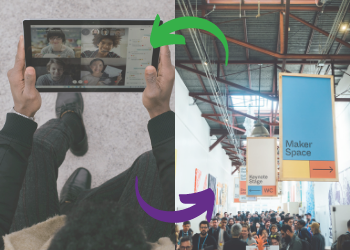
    Virtual Meeting vs. In-Person MeetingHeinan Landa (CEO of Optimal Networks) asked me last week: As we’re slowly returning to the office and in-person meetings, what lessons from 15 months of virtual meetings should endure?

    It’s a great question. Over the past year, I’ve had many clients bemoan virtual, but I’ve also had many clients express joy over the benefits of virtual. Here are lessons that I hope will endure:

    Higher Quality Sessions

    It sounds really weird to say this because organizations that put on conferences are devoted to offering high quality education. And yet, a few clients were surprised at how lackluster some of their sessions were. I heard things like, “Gosh, we used to select speakers, tell them when and where to show up, make sure their tech was working, and leave the room.” But with virtual, more thought has gone into the quality of the sessions to make sure people stay engaged and don’t log off. BeSpeake clients have:

    • Paid closer attention to the content and slides.
    • Worked with their speakers to add interactive elements, from polls to contests.
    • Coached speakers to become better presenters.

    ALL of these lessons should endure past this pandemic!

    Better Wayfinding

    I’ve been to countless conferences at the Gaylord Resort in Maryland and every time, I get lost. Maybe I’m just navigationally challenged but better signage and more thoughtful grouping of the sessions and events would help me, and, I suspect, many others. With virtual, we worked closely with clients to make sure attendees always knew where to go next, using tools like:

    • Welcome and tutorial videos that explain the virtual platform and highlight the “not to be missed” parts of the meeting.
    • Putting everything on the program and having sessions disappear (temporarily) from the schedule once they are done. This way, the program always shows you what’s next.
    • Brief but clear descriptions and help text.
    • Guidance from speakers at the start and close of sessions about what’s next.
    • User testing to make sure all of this wayfinding guidance is actually effective.

    The next time you’re in person, walk your convention, make sure signage is clear, and coach speakers to tell attendees what’s next!

    Intentional Connections and Networking

    Conferences are all about connecting with our friends, colleagues and peers. In person, most conference planners organize receptions, some breakouts, and food and drink in the exhibit hall. Virtually, meeting planners have had to work harder to make sure attendees connect with others. We’ve worked with our BeSpeake clients to create opportunities like:

    • Morning Coffee, where attendees get matched up with others randomly for a virtual coffee break.
    • Extended attendee profiles and better searching.
    • Easy to use attendee search and messaging.
    • Giving attendees the chance to meet with others in video rooms.
    • Breakouts by topic or job function to encourage people to be on video and connect with others.

    These virtual connection opportunities don’t work for all attendees. Some attendees are content to focus on the sessions. But for others, these connection opportunities have made it easier than ever to expand their networks and horizons.

    In person, perhaps you can make in person conferences less terrifying for first time attendees by doing things like:

    • Asking Board and committee members to reach out, walk them through the program, attend a social event with them, and introduce them to a couple of members.
    • Creating a welcome or tutorial video to help attendees get the most out of the conference.

    Delightful Touches

    We’ve worked hard with our clients to make their meetings interesting and delightful. Some things that have worked are:

    • Interesting, even fun, pre-roll before sessions. At first, we added pre-roll so attendees would have something interesting to watch when they came in early to sessions. Then we realized pre-roll was a great way to entertain and educate!
    • Interesting imagery to evoke a place or theme.
    • Polls and contests to add sparkle to a session or break. One client is now known for a great Jeopardy game where the questions are all about their accreditation program!
    • One client had a virtual bulletin board where they challenged attendees to share what attendees and their organizations are doing to address racism and health inequities.

    In person, ask your speakers to show pre-roll, play music, and start the conversation early. Have places where people can post, share and connect, not just virtually, but also in person!

    As my friend Lee Gimpel says, in person meetings aren’t necessarily great: it’s hard to meet people if you’re new, the program can be confusing, and we spend way too much in dark rooms looking at screens and passively watching a speaker. 

    What have YOU and YOUR ORGANIZATION learned about creating engaging and fun meetings during this pandemic? What lessons will carry over and endure when you go back to in person meetings?


  • Why Journey Mapping is so Important to Creating Amazing Member Journeys

    Why Journey Mapping is so Important to Creating Amazing Member Journeys

    Member Journeys

    Matrix Group is working on an email signup project for a longtime client. This client wants to create an easier way for members and non-members to see all the newsletters the association has to offer, and easily subscribe to receive them. Some newsletters are open to the public, while others are members-only. The client has many goals with this project:

    • Showcase all of their newsletters
    • Get more people signed up
    • Make it easier to sign up

    Seems simple, right? Not so fast. In fact, it’s taken us a few weeks and multiple rounds of wireframes to get what I think will be a winning sign up form. The form itself will look simple BUT it will ultimately be the result of intentional journey mapping to ensure that the sign-up process is simple and amazing.

    How do we do it? First, we identify the audiences and the tasks they wish to accomplish. Then we map out the journeys they need to take to get what they want. We ask questions like: Will the person need to log in? What if they don’t already have a username? What if they forgot their password? How will they know that they are not eligible to subscribe to specific newsletters?

    Here’s a simple sign-up journey: Member is already logged in, goes to the sign-up form, presses the Subscribe button next to the newsletters of her choice, and gets a thank you pop-up.

    Here’s a not so simple sign-up journey. This journey took some time to articulate and make easy: Individual is with a member company but doesn’t already have a password. Individual navigates to the sign-up page, presses Subscribe. User is taken to a login page. She doesn’t have a login, so she has to create a profile and attach herself to the proper company. The profile form is two pages. At the end, she can navigate back to the sign-up form; this is important because some systems dump users back to the home page after creating a profile, which is disorienting to users. The form remembers which newsletter she wanted to sign-up for and she gets a success message.

    You see, it’s not enough to create a form and say it works. You need to map all of your user journeys. If your users have to log in, create a profile, or traverse websites, their journey is going to be more complicated, so you have to be intentional about it, know how many steps the journey is going to take, and involve your vendors in making the journey great, even if that journey requires multiple steps.

    If you’re not already doing this kind of journey mapping with all of your projects, start now. You don’t need special software to do it, but you do need time to explore the journeys. Need help? Give us a call. We love this process and we’re great at asking the questions that will lead to amazing member journeys.


  • We Need to Bring Back the “Meet” in Meetings

    We Need to Bring Back the “Meet” in Meetings

    During a kickoff meeting with a new BeSpeake client, I asked this question: What did not work during your annual meeting last year? Answer: While the education offerings were excellent, there were few opportunities for attendees to connect and network, and the few that did exist, were simple text chats.

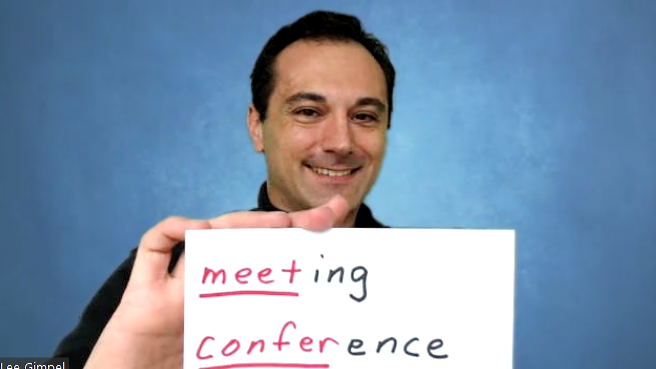
    This client isn’t alone in wanting to add meaningful opportunities for their meeting attendees to connect, talk to each other, catch up, be on video, laugh, say hello. As my friend Lee Gimpel of Better Meetings says, “we need to bring back the ‘meet’ in meetings.” In other words, if your virtual meetings are mostly live or pre-recorded sessions where all attendees can do is comment, you’re not holding a meeting, you’re offering private YouTube videos. Worse, if all or most of your education is pre-recorded, you’re not giving your attendees to attend in real-time because hey, they can watch these videos anytime. Just like YouTube or Netflix.

    So what are your options for adding the “meet” to your meetings? In BeSpeake, we have our own web-based video rooms that can be used for breakout rooms, 1-2-1 video meetings, exhibitor sessions, speed networking, cohort groups, and so much more. Clients are finding creative ways to allow attendees to connect with old friends, make new connections, develop business relationships, even strike deals.

    One BeSpeake client had a whopping 54% of their attendees participate in break out discussions or 1-2-1 appointment scheduling. In other words, more than half of their attendees participated in an activity where they were on video with other attendees. Wow.

    But wait. While 54% is an amazing number, I’m not satisfied. I’m working with my team to get that number even higher and I’ll blog about what we are trying and learning over the next few months.

    How about you? What is your organization doing to bring the “meet” back to meetings?

    P.S. Lee from Better Meetings will be joining me for a conversation on April 7th at 2pm ET as we dive into “How to Deliver Collaboration and Connection at Conferences.” He has invaluable ideas and insight; I hope you can join us!


  • The ASAE Annual Meeting Goes Virtual; Why This is a Good Decision

    The ASAE Annual Meeting Goes Virtual; Why This is a Good Decision

    ASAE 2021 virtual I read the email from ASAE (the American Society of Association Executives) yesterday afternoon about the ASAE Annual Meeting. Citing concerns for the health and safety of all members, ASAE Annual, which was supposed to be in person in Dallas, will once again be virtual, coupled with smaller, regional hub gatherings. Ugh. After a year of no in person meetings, I was so looking forward to this conference. I love ASAE Annual. I love the sessions, catching up with friends, the social events, the exhibits, all of it. I’m even scheduled to do two sessions: one with Elise Kuurstra from EAIE and Gretchen Steenstra from DelCor; and one on leadership lessons from the martial arts. Sigh. Who knows if I’ll even have the chance to do these sessions this year.

    ASAE is not alone in this decision. Many Matrix Group clients, including clients using our virtual meeting platform (BeSpeake), have decided to go virtual with their meetings, at least through September 2021.

    But there’s another dimension to the ASAE decision. Texas announced on March 2 that the state no longer has a mask mandate and all businesses can operate at full capacity. Perhaps some are cheering, but I’m not. I have not been vaccinated and since I have no known health risks, I figure I’ll get my vaccine sometime this summer or fall. Which means I was maybe looking at attending the ASAE Annual meeting unvaccinated, in a state that doesn’t have a mask mandate and is operating without social distancing guidelines. Yikes. I was going to think hard about whether or not my speaking opportunities were worth it. Since the meeting is virtual, I don’t have to make any tough decisions.

    While I’m bummed, I know this is the right decision. I have grounded my staff at least through the end of July. Many of our clients report that their members, especially the larger companies, have done the same.

    How about you? What do you think of ASAE’s decision to take their Annual Meeting virtual? What is your organization doing this year?

  • Lessons from Three Seasons of Virtual Meetings

    Lessons from Three Seasons of Virtual Meetings

    virtual meeting Well, the pandemic that was supposed to last a couple of weeks has dragged on through the Spring, Summer and Fall. Nearly 10 months since stay at home orders were issued, what have we learned about virtual meetings and engagement?


    Pre-Recorded Is Giving Way to Live

    Early in the pandemic, meeting planners pivoted to Zoom meetings that focused on education, a lot of it pre-recorded. Exhibits halls were limited to directory listings.
    9 months later, we know that attendees are sick of starting at their screens, passively watching a presentation. By late October, most of our clients had switched over to live presentations. One client said they switched because:
    • Pre-recorded is more work for the staff
    • Speakers want their presentations to be perfect when they are pre-recorded, so they do take after take, which requires a lot of editing
    • A lot of speakers gets their energy from the audience, so recorded presentations don’t have the same vitality
    Our clients have packed their programs with a mix of live and pre-recorded sessions. And most pre-recorded sessions also have the speakers available to chat with attendees, or a live Q&A immediately following the content presentation.
    Attendees can tell when a presentation is live. Live presentations have big and little flaws that let you know this session is happening right now. Somehow, attendees are drawn to these imperfect sessions.


    Attendee Engagement is Key

    Clients have asked us how to add attendee engagement during their virtual events. Attendees say they don’t want a conference that feels like a series of webinars. They want to see other attendees, they want to celebrate, they want to meet new people, and they want to be entertained. Some things clients did this Fall:
    • NAES offered Morning Coffee each day of their Biennial Conference. Attendees were slotted into video rooms with 7 random attendees for a half hour of networking.
    • EAIE followed content presentations with breakout sessions where attendees were placed in video rooms with up to five other people to discuss the topic.
    • FACT held a Lunch with Leaders session where attendees could drop in and chat with the organization’s top leaders.

    Facilitate Informal Meetings

    Whenever I attend an ASAE meeting, I try to see as many clients and friends as possible. These informal meetings and chance conversations are part of the magic of conferences.

    Which is why BeSpeake has a user-friendly and easy to find attendee search, a message center and 1-2-1 video meeting scheduling.

    In one of our meetings, nearly 30% of the attendees participated in at least one private video meeting! And a whopping 54% participated in a breakout or appointment; in other words, more than half of the attendees participated in an activity where they were on video and meeting with other attendees!

    Add Some Lightness and Entertainment

    When we hosted the Biennial Conference for the National Association of Episcopal Schools, two of the most captivating involved music: one session featured a pre-recorded video of a children’s choir, and one social event featured an entertainment/musician.

    It was obvious from the comments and reactions that these sessions were a welcome break from the talking heads (that were amazing, by the way), and highlighted the need for a variety of session formats.

    During the ASAE TEC Conference in December, one of the most memorable events was the party hosted by the Association of Women Technology Champions (AWTC). The event was conducted in Zoom and featured games and networking. While the TEC sessions were good, the AWTC event was the most interactive and fun.


    It’s 2021. While we don’t really know what the meeting landscape will look like, here’s what we do know: Attendees are looking for new, different, and engaging. Your meeting cannot be a broadcast version of your in person conference. So what are YOU going to do in 2021 to take your virtual meetings to the next level?


    Want to create a custom built virtual conference or tradeshow experience that is just as transformative as your in-person events? Contact us today to schedule a private demonstration of the BeSpeake virtual meeting platform.


  • The Road Ahead for Virtual and Hybrid Meetings in 2021

    The Road Ahead for Virtual and Hybrid Meetings in 2021

    Woman taking virtual classLast week, I had the pleasure of attending the Techsy Talk Global Conference. One of the best sessions was called “The Road Ahead: Industry Landscape for 2021” by Howard Givner of the Event Leadership Institute.

    Howard provided an overview of the meetings and conference landscape, covering the latest news related to vaccines, state COVID regulations, and meeting statistics and predictions.

    What’s the road ahead for live events? If you plan to have live events in 2021, Howard says:

    • Be prepared for uncertainty.
    • You will have a lot of last-minute registrations.
    • You will have a lot of no-shows.
    • Be prepared for short notice pivots to virtual because of state-mandated shutdowns.
    • You need to calculate your attendees’ psychological comfort level with risk
    • What will the economics be for a venue that could house 1,000 people pre-COVID, but can only house 10 people post-COVID? Does this even make sense?
    • There is always a risk that your event could become a super-spreader event.
    • At the end of the meeting, if nobody is sick, can you truly say that you held a safe event? What if you had attendees who were asymptomatic and spread the virus to your other attendees?

    In light of all this, Howard recommends “Reverse Hybrid Planning.” In the past, conference planners treated the in person event as the base experience, and virtual was the add-on. But today, Howard thinks we should consider the virtual event as the base experience, and the in person event as the add-on experience. Why?

    • Because meetings and conferences aren’t expected to go back to their pre-pandemic attendee levels for another 3-5 years, and that’s assuming the vaccines are effective AND people agree to get them
    • Because employers are going to look hard at the ROI of conferences and training. Most employers today are probably thinking, “if I can train 4 people for the price of one, or spend a lot less money training one, I’m going to choose that option.”
    • Because virtual events have opened conferences and training to a whole world of people who previously couldn’t get on a plane or be away from home for a multitude of reasons.

    As for us here at Matrix Group and BeSpeake, so far, clients are planning on being virtual through April 2021. Most are hoping that in person events will start to come back starting in May. And most are thinking they will need to plan for a hybrid experience starting in 2021.

    How about you? What’s your event planning strategy for 2021?