Matrix Group International

Blog

  • Does Your Organization Have a Social Sharing Strategy?

    According to a study by ShareThis, the social sharing widget that you see on many websites, Facebook accounts for 38% of sharing traffic on the web. And that’s just the percent of people who click through. If you add links shared but not clicked, the number goes up to a whopping 56%. Which means that if we (the collective “we” since there are over 700 million of us now on Facebook) want to share a link with the world, we do it through Facebook.

    This totally makes sense to me. When I find something new, cool, interesting, amazing or whatever, I immediately post it to Facebook and Twitter (increasingly, Google + as well, but more on that in a future blog post).  And I rely on my network of friends, co-workers, clients and business colleagues to find out about other new, cool, interesting and amazing things.

    So I got to thinking. If social sharing is an important means by which we (again, the collective “we”) learn about new sites, we can’t and shouldn’t leave this sharing to chance. Sure, most websites now have a ShareThis widget, but is this enough? I say no. I think every organization needs a social sharing strategy that includes the following:

    • What you want people to share. Do you want visitors to share your home page? Individual articles? Donation pages?
    • How you want people to share. Do you want visitors to send an e-mail, post to their social networks, save to their social bookmarking pages, all of the above?
    • Regular review of analytics to find out what and how people are sharing links on your site. Be sure to review your usage reports, ShareThis account and other reports to find out what’s popular, how people are sharing, and learn why certaini articles or posts generate activity.
    • Design and CSS guidelines that make your site shareable. For example, if you share a link on Facebook, Facebook automatically indexes the images and allows you to cycle through the images and select one to include with the link. If your organization logo is set up as a background image in your CSS or the logo is not whole, your logo can’t be included in the link.
    • Calls to action to encourage sharing. While many of us will share our favorite links on our own, other won’t unless prompted, so I think it’s important to have calls to action to encourage sharing. It’s also a good idea to test calls to action on a regular basis to find out which calls to action work best.

    The design and front-end team at Matrix Group has developed a set of guidelines for setting up web pages so that titles are complete and the proper images are included in links. Be sure to test the shareability of your site on a regular basis and address issues with your web design or maintenance team.

    How about you?  What’s your platform of choice for sharing links?

  • Can One Little Sticker Change the World?

    Can One Little Sticker Change the World?

    These Come From Trees StickerEarlier this year, I was in the bathroom at my son’s elementary school when I saw the sticker you see at left on the mirror above the sink. I was intrigued by the promise that one sticker would “save up to 100 lbs. of paper every year.”

    So I visited the website (TheseComeFromTrees.com) and ordered a bunch of stickers for Matrix Group. Jessica, who is on the “green team,” put stickers everywhere we use paper: in the bathrooms, the kitchen, all the printers.

    Curious to see if the little stickers would make a difference, I started paying attention to the amount of paper waste in the women’s bathroom. Here’s what I found: in the women’s bathroom, the trash bin for paper hand towels used to fill up before lunchtime. Today, the bin does not fill up at all during the day. This is consistent every day. The women of Matrix Group are absolutely using fewer hand towels in the bathroom. Could the little sticker really be making a difference?

    We haven’t reduced the number of female staff, so that couldn’t be the cause. And I can’t imagine that we’re using the bathroom any less. So I started talking to my co-workers and they all agreed that because of the sticker, they are using 1 paper hand towel instead of 2. We had effectively halved our paper consumption!

    This got me thinking. How had a little sticker changed behavior?

    I attended a presentation last week by Don Schmincke of the Schmincke Research Alliance. He effectively articulated why management consulting doesn’t work: You can’t change behavior by changing the process. You need to change people’s beliefs in order to change their behavior. People need to believe and understand why doing something is important and necessary.

    So how did the little sticker make me change my beliefs? In this case, I don’t think the sticker changed my beliefs, but it did help me connect the dots between trees and my paper consumption. The little sticker also made it easy for me to do good: just think about where paper towels come from and use fewer!

    This reminds me of signs that remind us that stormwater drains go into a nearby river or bay. Even though I already don’t litter, I’m extra careful when I see that a gutter or drain will dump into a body of water.

    Or how about the gauge in my Honda Hybrid that tells me how many miles per gallon I’m averaging on a tank of gas? There is a number that I shoot for with every tank. When the gauge tells me I’m below that number, I look for ways to change my driving to up that number: I coast more, I don’t speed, I use distance to slow down, I turn off the AC, yada, yada.

    The question is: in our daily lives, what other signs and reminders could help us be more productive, healthier, greener, nicer? What labels and signs have helped you make a difference in your life?

    P.S. I hope you’ll consider ordering stickers for your home and office. Heck, I’m thinking of buying a bunch and plastering them in bathrooms of bars and restaurants all over town! Won’t you join me?

  • AppSumo

    AppSumo

    For tech geeks only, you’ll get daily deals on books, training, development tools, videos and more. The deals are great and the copy is hilarious.

  • Your Organization’s Voice Should Be Different Across Platforms

    If you’ve attended any of my webinars or follow this blog, you know that I advocate strongly against posting the same updates and information across different communications channels. I think it’s a waste when organizations simply post their press release headlines to their Facebook or Twitter pages. But Joanna, you say, “what if I want to educate my members and the public about one, burning issue or I want to promote a new event or publication? What if I WANT to talk about one thing across, print, online and social media for a while?”

    My answer is this: post about that one topic but change the perspective, voice and interactions depending on the platform.

    Say your organization is pushing for a piece of legislation on Capitol Hill. You could issue a policy statement and repeat that statement across all platforms. A more effective strategy would be to:

    • Post the policy statement on the website. This policy statement will likely have a formal tone and reflect the position of the entire organization.
    • Write a press release on the policy statement and send it to your media list. This, too, will have a more formal tone.
    • Post links to the policy statement on Twitter, but with differing headlines, highlighting different aspects of your policy. You could also post third party stories, facts and figures that support your position; in this instance, you would be curating relevant content to bolster your position.
    • Feature interviews with members and customers talking about why they support (or oppose) the proposed legislation on YouTube and your blog. These interviews will feature member perspective in their own voices.
    • Have the CEO write a blog post about why the issue is important to the industry and members. The tone of the blog post should be conversational and personal.

    If you are promoting a new publication or report, you could:

    • Feature the publication in your online store and what’s new section of your website. These descriptions should be compelling but more formal.
    • Post an audio excerpt on your YouTube channel and iTunes. The excerpt could be done by the author.
    • Post key findings and highlights to Twitter. The most effective tweets are thought-provoking and compelling.
    • Feature the publication on Facebook and sponsor a discussion with the author for a 7-day period. A discussion will allow a dialogue about the issue and foster a different kind of member interaction.

    Finally, if you are marketing a convention or event, you could:

    • Mail a 4-color brochure with full meeting information.
    • Mail and e-mail postcards (e-cards) that showcase the different benefits of attending the event. The tone of these pieces should be urgent and compelling.
    • Tweet conference news (number of exhibitors, confirmation of keynote speakers, etc.) and third party news that highlight the importance of the issues to be covered at the event
    • You could test different calls to action in e-mails and posts. Some calls to action could focus on benefits, some could inspire fear, while others could discuss opportunities.
    • Feature YouTube interviews or presentation highlights from the featured speakers.
    • Offer a hosted discussion with the speakers for a 7-day period on Facebook.

    Our jobs as marketers are so much harder because we are marketing to multiple generations, there is no one platform that allows us to reach all audiences, and people are motivated by different things. Having a layered messaging strategy that utilizes the capabilities of each platform and features different perspectives and voices will help you reach and connect with your audiences better.

    How about you? How are you marketing your products and services? And how does your message or approach change with each platform? What’s working?

  • The Prank of the Year or Why Green is the New Purple

    The Prank of the Year or Why Green is the New Purple

    It’s kind of a tradition at Matrix Group that when you go on vacation, especially if you’re gone for an extended period of time, you get pranked. When Dan went to Cancun for a week, he came back to find his area converted into a resort, complete with beach umbrella and inflatable pool filled with jello. When Maggie went on vacation, she came back to find 400 balloons in her area; it took a couple of hours to pop the balloons so she could reclaim her space.

    So when Maki and I went to the beach last week, what did the staff do? They pranked me and prank me good they did!

    I came back to find that my blog had been completely redesigned and rewritten. I became Jar Jar Binks, my signature purple was now green, and I had apparently been blogging about our new dress code and drinking on the job (if you know me, you know that I’m not much of a drinker). The net admins went to great pains to make sure that my new, green blog wasn’t available from outside the office.

    I was in shock initially. Then I panicked that the blog had actually been replaced. Then I started laughing hysterically when I realized I had been pranked and pranked hard.

    Check out the alternate version of The Matrix Files. (If the image comes in small, click it to make it full screen in your browser. Trust me, this will be worth it.)

    Kudos to Liz, who masterminded the whole prank, and the whole gang of people who designed, wrote, posted, and hosted.

    If you’re at familiar with some of the internal jokes at the office (purple is our signature color, we don’t allow shorts, yada, yada), you’ll get a chuckle at the posts. The writing is so good that I think I’ll recruit some new guest writers for this blog.

    If you’re shocked at the amount of time that goes into our pranking or that I even allow pranking, let me just say that pranking is great for office morale and productivity. The prank prep is done during personal time and it’s just plain fun.

    How about you? Have you pranked anyone lately? Share stories!

  • The Importance of Meeting Clients and Prospects on Their Own Turf

    The Importance of Meeting Clients and Prospects on Their Own Turf

    A few months ago, I went to Lowe’s to pick out new carpet for my basement. First, I had to check out some carpet samples so I could try to match the carpet on my stairs. Turns out the carpet I picked (even though they gave me a sample) was no longer available. So back to Lowe’s I went. The second carpet I picked was also not available. I finally picked a Berber I liked but couldn’t place the order on my 3rd visit because the estimator wasn’t available. When I finally got the quote, I was asked to come back in to sign the paperwork. At that point, I gave up. It was too hard to work with Lowe’s. And given my schedule (work, 2 boys, selling a house), I didn’t have time to make it back to Lowe’s.

    I remembered an advertisement from Empire Today. The appeal was that they offered to come to my house, show me samples and install my carpet the next day. So I went online on Sunday night and booked an appointment for Monday night. The sales guy came on time, helped me pick a carpet and asked what time I wanted the installers to come the next day. Amazing. And I didn’t even have to leave the house.

    This whole episode reminds me, once again, of the importance of meeting clients and prospects on their own turf. I’ve rarely landed an account where I didn’t take the time to visit the prospect’s office, meet the staff, walk around, and learn about their pain points. Yes, I can probably get good information over the phone and via Webex, but somehow, meeting prospects in their own office makes a difference.

    I just came back from a client meeting in New York City. Yes, it took all day because of the train ride up and back, but we had a fun and productive 5-hour meeting. While I don’t necessarily recommend marathon meetings like that, we had to pack a lot into the day to make the travel time worthwhile. But guess what? Meeting for five hours in person was enjoyable because of the amazing information the client was sharing, the conversation and the socializing during lunch. There’s no way to replicate that type of connection via phone and no way to hold an effective multi-hour conference call.

    When I get busy, my first inclination is to do a call instead of a face to face meeting. And e-mail is quick and easy when I don’t have time even for a phone call. But I fool myself when I pretend that I connect with staff, clients and prospects via e-mail and phone the same way I do when I meet them in person. I know it’s not practical or cost-effective to do all of my meetings in person so I aim for in person gatherings for the kickoff and midway through the project.

    How about you? Do you prefer in person or phone meetings? Voice or e-mail? And how do we steer our interactions back toward face to face in this busy, time-starved, electronic age?

  • Why a Redesign is Like Moving: Time to Audit Your Stuff and Toss, Toss, Toss

    Why a Redesign is Like Moving: Time to Audit Your Stuff and Toss, Toss, Toss

    My husband and I recently bought a new house. Even though the new place is slightly bigger than our old house, I was determined not to move old crap so I took the time to audit all of our stuff and toss out as much stuff as possible. During this process, which took months, I realized that moving to a new house is a lot like redesigning your website. Here’s how:

    Inventory and audit everything. During the move, I was amazed at the stuff that I “found” and the junk that I ended up tossing. It makes me think of a content audit we completed for a client recently. After delivering the Excel spreadsheet that listed all of their website’s content, the client said, “wow, there’s so much stuff that we didn’t realize we still had online.”

    Don’t just hire movers to move everything. A neighbor recently moved and she hired movers to pack up her entire house and move the boxes and furniture. Me, I prefer to do my own packing because it gives me a chance to edit, sort, and toss. With a redesign, I recommend that clients not ask us to just migrate everything because inevitably, we’ll migrate content that should be archived or we’ll put content into the wrong place and it gets “lost” forever.

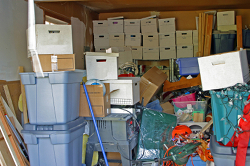
    Use a move to re-organize the flow of your house or website. When Maki and I moved into our old house, the garage was pristine. Over time, the garage became a dumping ground for everything: old notes, out of season equipment, holiday decorations, overflow storage for kitchen items, yada, yada. Pretty soon, the garage was a mess and it was hard to find anything. With this move, I’m taking the opportunity to re-organize the garage so that everything has its place, the shelves are properly labeled, and like items are grouped together for easy access. Same with a redesign: don’t just dress up the pages, use the redesign as an opportunity to make it easier for your customers to find information and services. And label everything properly!

    If you haven’t used it in a year, toss! My mom always tell me to toss clothes that I haven’t used in a year. While this advice is not always practical (think winter coats and specialty items), I think it makes sense to put into storage, donate or toss things that my family no longer needs. Same with your website. Check your usage reports to see what content is just not getting visited. If the content is no longer relevant or out of date, you’re better off archiving the content offline or simply deleting it. In fact, old content can be a bad thing because Google can index it and serve it up to visitors, which can cause confusion and misinformation.

    Organizing takes time. This process has taken more time and energy than I had originally budgeted. So the moral of the story is to allocate enough time to do your content review, then double or triple your estimate.

    Get professional help. I’ve blogged in the past about how I worked with a professional organizer to get my house into shape. For the new house, I’m involving C. Lee from SimplifyYou early. She is going to help me figure out where to put mail, how to store kids’ games for easy access, how to organize supplies in the garage, etc. She can tell me what other clients have done and she can recommend products and solutions that would take me hours to research. With a website redesign, I recommend that clients work with us to create the content inventory, site map, migration plan, navigation and taxonomy. We’re able to do the work faster and we can draw on our experiences working with hundreds of other organizations.

    Don’t just make the new house a replica of the old house. Sometimes, clients ask us to redesign their websites, but they want the navigation, content and applications to look and work exactly the same way. What is the point then of the redesign? A new website, like a new house, will have similar functions (think kitchen, living room, dining room, etc. or About Us, Contact Us, Calendar, etc.) but the new site should have updated and improved design, flow, content and functions. Now is the time to create a really great About Us page, redo the site search, roll out some new publications and rethink the online store.

    The new house is a work in progress and it will take time to get it just right and feeling like home. But the time, money and effort will be more than worth it.

    How about you? When was the last time you moved and how did it go? Is it time to “move” or redesign your website to clear out the garbage and create a fabulous, new space?

  • I’m Waging the Good War Against Paper

    I’m Waging the Good War Against Paper

    Last December, my husband and I set up a managed account with one of the brokerage firms. We expected a few extra pieces of mail as the account ramped up. We certainly did not expect the flood of mail that started appearing in our mailbox as we received confirmations of trades and prospectus information from companies. The photo at left shows the 3 inches of mail that arrived from that one account in just one week.

    Once I realized what was happening, we quickly switched to e-mail confirmations and statements.I vowed to do more to reduce the paper tsunami that swallows my mailbox every week but then entropy set in and I just resigned myself to simply standing in front of the garbage can as I reviewed my mail.

    Well, turns out I have another opportunity to reduce my carbon footprint and save trees. We’re moving next week, which means I get to contact all my creditors and vendors to give them my new address. In the process, I’m switching to e-statements whenever I can. I like how Schwab retains my statements for 10 years. And I love that ExxonMobil is planting a tree in my name because I switched to e-statements for my DRIP. Wherever I can, I’m receiving bills through my online banking account and paying online.

    According to Matador Network, “The average person in the US receives nearly 11 pieces of junk mail each week, or 560 pieces a year. This amounts to 4.5 million tons of junk mail yearly, of which 44% goes straight to the landfill unopened and unread.” Apparently, eliminating US junk mail would be like taking 480,000 cars of the road!

    So what can we all do to reduce our paper consumption? Here’s what I’ve learned:

    • Opt out of credit card offers by going to http://www.optoutprescreen.com/; btw, this has the added benefit of making you less likely to be victimized by identity theft from people stealing these credit card offers and opening up accounts in your name.
    • Contact the Direct Marketing Association and opt out of about 75% of direct marketers’ lists by going to DMAchoice.
    • Configure your online banking account to send you e-mail notifications when you have a new bill and stop paper bills.
    • Take the time to cancel unwanted subscriptions and catalogs; this is the most time-consuming because it’s easy to just pitch the unwanted stuff in the trash but think of the trees you’re NOT killing by making the effort.
    • Print everything double-sided.
    • Watch what I’m printing. Before I hit print, I check to make sure I’m not printing unnecessary pages. I once nearly used up a ream of paper when I accidentally printed a search results page that had hundreds of pages of debug code. Ugh, that was not pretty.

    In doing research for this blog post, I found cute suggestions for ways to reuse junk mail as scrap paper, but I don’t believe that solves the problem: the trees had to be cut down in the first place. Besides, junk mail is some of the most expensive paper because it’s coated and printed in four color.

    My goal is to trim the crap that appears in our physical mailbox by 50% by the end of the year. I’ll let you know early next year if I met my goal. How about you? Are you overrun by paper? What are you doing in the war against paper?

  • The Matrix Minute is Born!

    The Matrix Minute is Born!

    Even though Matrix Group has had a YouTube account for years now, we weren’t doing much with it. Well this past week, we finally, fully integrated this platform into our overall marketing and social media strategy by launching a new series called The Matrix Minute.

    Why so late to the YouTube game? As I’ve explained before in previous blog posts and webinars, I believe that it’s important to create a layered experience across different media. In other words, don’t just post the same stuff to Facebook, Twitter, your website, YouTube, your blog, etc. Have an overall strategy, but take advantage of each site’s capabilities and culture to maximize followers across all platforms.

    Until recently, we didn’t have a clear idea of how we wanted to incorporate YouTube into our marketing, sales and client engagement strategy. We had videos from Matrix Group staff events, but we had reserved our Facebook page for information and posts about the project we’re working on and corporate culture. I didn’t want to use YouTube as another place to promote corporate culture. And until we hired a new Marketing Coordinator, we didn’t have the bandwidth to staff an active YouTube channel properly.

    But this past week, we launched The Matrix Minute, which is a series of interviews with in-house and outside experts who discuss web technologies, mobile technologies, social media, design and web development. Occasionally, we’ll feature local CEOs who will talk about leadership and what their organizations are doing to stay relevant and vibrant.

    Here’s how the Matrix Minute fits into our overall sales and marketing strategy:

    • As a company, we’re extremely committed to ongoing education for staff and clients so content-rich interviews make sense for us.
    • It’s a way to showcase the expertise we have within the staff.
    • It’s a way to leverage the expertise of our clients and partners.
    • It’s a way to continue demonstrating thought leadership.
    • We get to show off our video production capabilities.
    • YouTube is owned by Google and Google favors keyword-rich videos and descriptions so the channel is good for search engine optimization (SEO).
    • It’s a way to layer YouTube into our strategy in a way that’s new and different from what we’re doing on our website and social media.

    The Matrix Minute has also been a lot of fun.  So far, I’ve been doing all of the interviews and I’m learning a ton. Ray Stankiewicz, New Biz Manager at Matrix Group, is the producer and Melissa Bader, Designer at Matrix Group, does the video editing.

    We’ve got a half dozen interviews already online. For example, Jill Foster of Live Your Talk talks about videoblogging. Jennell Evans of Strategic Interactions shares her tips for managing remote teams. And Sherrie Bakshi of Matrix Group talks about why 2011 is the year to start a corporate blog.

    BTW, we call it The Matrix Minute, but the interviews are usually 2-3 minutes long. 1 minute just didn’t provide enough time for a meaningful interview and Matrix Minutes sounded goofy.

    I hope you’ll check us out on YouTube (http://www.youtube.com/MatrixGroup) and you’ll rate, comment and subscribe. Tell us what you think of our latest initiative!

  • Ringling Brothers and Barnum & Bailey Circus

    Ringling Brothers and Barnum & Bailey Circus

    This circus is not just for kids anymore. You’ll be surprised to find today’s circus has fun for the whole family. Enjoy, and don’t forget the popcorn!