
First, everyone who has looked at these problems, including skeptics of existing programs, recognizes that we have real enemies and threats, and that intelligence serves a vital role in confronting them.
Second, just as ardent civil libertarians recognize the need for robust intelligence capabilities, those with responsibilities for our national security readily acknowledge the potential for abuse as intelligence capabilities advance, and more and more private information is digitized.
Third, there was a recognition by all who participated in these reviews that the challenges to our privacy do not come from government alone. Corporations of all shapes and sizes track what you buy, store and analyze our data, and use it for commercial purposes; that’s how those targeted ads pop up on your computer or smartphone. But all of us understand that the standards for government surveillance must be higher.
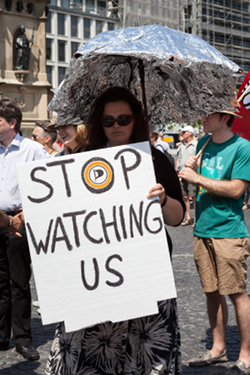
Ouch. Did the President just compare retailers and us marketers to the NSA? The Direct Marketing Association (DMA) wasn’t happy with the President’s remarks. A statement on the DMA website says, “DMA was disappointed to see the responsible use of consumer data for marketing purposes conflated with “government surveillance.”
Was the President’s comparison valid? After all, yeah, we know that Amazon and Google collect vast amounts of data about what we search for, the sites we visit, what we buy. Aren’t they like the NSA? Well, here are my own observations:
- Expectation of Privacy. I think one big difference between the NSA and the big retailers has to do with whether or not we have an expectation of privacy. If I’m on the Amazon website, I can’t really expect Amazon to NOT know what I’m doing. On the contrary, I expect Amazon these days to know so much about me so as to make accurate recommendations and make purchasing simple and fast. With my private emails and phone calls to my clients and family, I feel I should have an expectation of privacy. It probably caught most Americans by surprise to know that their emails and calls were being collected and sifted through by the NSA.
- What does it mean to say that “the standards for government surveillance must be higher?” All of the big retailers have explicit privacy policies that they post on their website. They tell you what data they’re collecting and what they do with it. Do we take the time to read these privacy statements and terms and conditions documents? Absolutely not. What does it even mean to hold government to a higher standard when we don’t know what they are collecting, when and how.
- The ability to opt out. For those of us who want to be anonymous on the web, we can turn off cookies, we can use the private proxies to browse websites, or we can go into Anonymous mode when using the Chrome browser. We can cancel our Facebook accounts. While most of us don’t know how to do most of these things, they are possible and available.
- There is at least some oversight of marketing practices on the Web. I’ve blogged in the past about Facebook’s security policies and how unhappy I am that they keep changing. I’m not nuts about how Facebook uses my Likes to promote advertisers. And I’m not nuts about how Nordstrom ads follow me everywhere. And yet, I know that there is oversight of these marketing practices by government agencies like the FTC and industry groups. When intelligence agencies operate in the shadows, how are we to know what they’re doing and who is overseeing them?
- But do we really know what Google is tracking? I say all of the above to defend the marketing community, but on the other hand, I think about the big data that Google is collecting, analyzing and learning. Google probably knows what I had for breakfast. Heck, Giant claims to be able to “guess” my next week’s food delivery. Are we perhaps too blasé about the data trails we leave behind every time we go online?
Like President Obama, I don’t know all the answers. I hope we get meaningful reform, I hope we have meaningful oversight, and I know in my heart that privacy these days is a myth.


