
If you have you ever wondered how much money you could have if you lived in the time of Star Trek, or if you were on a planet in Star Wars, or even in another country, this website can tell you!
Month: January 2014
-

Is It Fair to Compare Retailers and Marketers to the NSA?
On January 17, President Obama made an important speech at the Department of Justice on NSA reform. He discussed the history of the intelligence community in the US, why it exists, how it has benefited our country, the data breach that brought to light the National Security Agency’s metadata collection program, and the reforms he’d like to make. During the speech, the President made some”broad observations” that emerged from his Administration’s review of current intelligence practices. He said:First, everyone who has looked at these problems, including skeptics of existing programs, recognizes that we have real enemies and threats, and that intelligence serves a vital role in confronting them.
Second, just as ardent civil libertarians recognize the need for robust intelligence capabilities, those with responsibilities for our national security readily acknowledge the potential for abuse as intelligence capabilities advance, and more and more private information is digitized.
Third, there was a recognition by all who participated in these reviews that the challenges to our privacy do not come from government alone. Corporations of all shapes and sizes track what you buy, store and analyze our data, and use it for commercial purposes; that’s how those targeted ads pop up on your computer or smartphone. But all of us understand that the standards for government surveillance must be higher.
Ouch. Did the President just compare retailers and us marketers to the NSA? The Direct Marketing Association (DMA) wasn’t happy with the President’s remarks. A statement on the DMA website says, “DMA was disappointed to see the responsible use of consumer data for marketing purposes conflated with “government surveillance.”
Was the President’s comparison valid? After all, yeah, we know that Amazon and Google collect vast amounts of data about what we search for, the sites we visit, what we buy. Aren’t they like the NSA? Well, here are my own observations:
- Expectation of Privacy. I think one big difference between the NSA and the big retailers has to do with whether or not we have an expectation of privacy. If I’m on the Amazon website, I can’t really expect Amazon to NOT know what I’m doing. On the contrary, I expect Amazon these days to know so much about me so as to make accurate recommendations and make purchasing simple and fast. With my private emails and phone calls to my clients and family, I feel I should have an expectation of privacy. It probably caught most Americans by surprise to know that their emails and calls were being collected and sifted through by the NSA.
- What does it mean to say that “the standards for government surveillance must be higher?” All of the big retailers have explicit privacy policies that they post on their website. They tell you what data they’re collecting and what they do with it. Do we take the time to read these privacy statements and terms and conditions documents? Absolutely not. What does it even mean to hold government to a higher standard when we don’t know what they are collecting, when and how.
- The ability to opt out. For those of us who want to be anonymous on the web, we can turn off cookies, we can use the private proxies to browse websites, or we can go into Anonymous mode when using the Chrome browser. We can cancel our Facebook accounts. While most of us don’t know how to do most of these things, they are possible and available.
- There is at least some oversight of marketing practices on the Web. I’ve blogged in the past about Facebook’s security policies and how unhappy I am that they keep changing. I’m not nuts about how Facebook uses my Likes to promote advertisers. And I’m not nuts about how Nordstrom ads follow me everywhere. And yet, I know that there is oversight of these marketing practices by government agencies like the FTC and industry groups. When intelligence agencies operate in the shadows, how are we to know what they’re doing and who is overseeing them?
- But do we really know what Google is tracking? I say all of the above to defend the marketing community, but on the other hand, I think about the big data that Google is collecting, analyzing and learning. Google probably knows what I had for breakfast. Heck, Giant claims to be able to “guess” my next week’s food delivery. Are we perhaps too blasé about the data trails we leave behind every time we go online?
Like President Obama, I don’t know all the answers. I hope we get meaningful reform, I hope we have meaningful oversight, and I know in my heart that privacy these days is a myth.
-

Starbucks App
Coffee addicts beware! The Starbucks App lets you load money onto your smartphone so all you have to do is scan and go! No need for cash or card.
-

MyFreeTaxes.com Website Redesign
MyFreeTaxes.com, is an initiative of Goodwill Industries International, Inc., National Disability Institute, United Way Worldwide and sponsored by the Walmart Foundation. MyFreeTaxes.com has been in operation for six years. It provides easy, safe, secure – and most importantly, free – state and federal tax preparation and filing assistance for those with lower incomes who cannot afford paid tax preparation services. The tax filing software is powered by H&R Block.
In order to keep the website up-to-date for this year’s group of filers, Goodwill and its partners collaborated with Matrix Group to update its current site and bring it into accessibility compliance.
Matrix Group:
- Upgraded the existing site to the latest version of WordPress, a popular content management system.
- Refreshed the home page design and navigation, including blogs and testimonials.
- Updated the site to be both responsive and compliant with Web Content Accessibility Guidelines (WCAG) 2.0.
- Developed the EITC Calculator wizard for people to find out immediately if they qualify for the free tax preparation services.
- Migrated the vanity url program from ColdFusion to WordPress, allowing all the custom information to be stored in one database.
Learn more about MyFreeTaxes.com.
-

Nike Training Club
The Nike Training Club app can help you whip yourself into shape with voice recorded workouts that vary in duration and style. Almost better than an in-home personal trainer! (Almost).
-

Top Tech Resolutions for 2014
It’s the new year, which means we’re all talking about our New Year’s resolutions. While most of us are thinking about diets and exercise routines, I’m thinking about tech resolutions. Here’s my list of top tech resolutions that I think you and your organization should consider in 2014.Make your site responsive. If your site isn’t already responsive, resolve to redesign your website or create responsive templates. Know that more and more of your readers are coming from mobile device and more will come if you make your site mobile-friendly.
Go visual. All the research shows that web pages with images and video get more views and generate more time on site. Facebook favors posts with images. YouTube is the #2 search engine. The world is favoring visualizations.
Add a new platform to your communications strategy. With the proliferation of new communications and social media platforms, it’s a good time assess your strategy and see if you should add a new platform. Yes, you must have the business case and the resources to be successful.
Be on Google+. Google’s social strategy is struggling. So it’s favoring Google+ posts in its search results. If you’re not already on Google+, it’s time. You’ll reach a largely male, techie audience that is usually worth attracting.
Look at your Google Analytics reports. I’m amazed at how many organizations do NOT make a habit of looking at their analytics. Yes, traffic reports don’t tell the whole story, but they don’t lie. Your usage reports will tell you what people are doing and viewing on your site, and, more importantly, you should be measuring campaign conversions so you can figure out which platforms to invest the most time in.
Develop an editorial calendar. This is the only way to ensure you have good, quality content posted on a regular basis to your website, e-newsletters, and social media pages. Good content will boost your search engine ranking. A calendar will eliminate some of the struggles associated with generating good content.
Back up to the cloud. Because it’s easy, convenient and inexpensive. Because it means you have access to your “stuff” from anywhere. And because it’s a terrific disaster-recovery tool.
Secure your mobile devices. The stats on the number of phones and tablets that get lost and stolen each year are staggering. Be sure to use a PIN on your device and install “Where’s my iPhone/Android?” so that can remotely erase your data. And if you’re backed up to the cloud, you can easily restore all of your information and services to your new device.
Use a password manager. Still using sticky notes or Excel to manage password? Still using the same password across sites? Security breaches are becoming more frequent and affecting more people. Limit your exposure by using KeePass or LastPass to manage your strong passwords. And NEVER use the same password on multiple sites. Otherwise, you’re just asking the hacker who breached x retailer site to access your Amazon, Apple or Schwab account.
Audit your privacy filters on social networks. I make a habit of auditing my privacy settings on Facebook, Google+ and other platforms on a regular basis. You probably don’t want the world accessing photos of your baby or your boss checking out your rants.
There you have it. My Top 10 tech resolutions for 2014. What are YOUR resolutions?
-

Adventure Time
This children’s TV show is about a boy named Finn and his best friend Jake, a dog with magical powers, and their adventures in the post-apocalyptic land of Ooo.
-
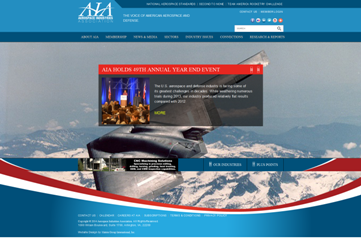
Aerospace Industries Association Website Redesign
The Aerospace Industries Association (AIA), based in Arlington, VA, is the voice of American aerospace and defense, representing its members, partners and stakeholders in all levels of industry and government.
AIA wished to modernize their website in order to make information more accessible to members and policymakers, highlight the sectors their members operate in, and educate the public about AIA’s policies and initiatives.
AIA teamed up with Matrix Group to turn their vision into a reality. Here’s what we did:
- Conducted a thorough review of the previous AIA site, identifying where the most effective changes could be made, both visually and functionally
- Updated the navigation and developed wireframes
- Redesigned the look and feel of the website so that it presents the association and the industry as the bold and dynamic industry that it is.
- Implemented the new site in the Expression Engine content management system.
- Undertook a large-scale migration of AIA’s vast library of content and resources