Matrix Group International

Month: February 2009

  • Spirit Airlines Sucks; American Express Rocks

    Spirit Airlines Sucks; American Express Rocks

    Poor customer ServiceI am so mad.  I booked tickets on Spirit Airlines to attend a wedding in Mexico later this Spring.  I booked the tickets on the Spirit Airlines Web site, paid extra to check bags, even paid extra to reserve seats.  Here’s the problem: their system shows us (me, my husband, my son) as leaving and coming back on the same day. I KNOW that I did not make a mistake when I booked the flights.  Yeah, okay, I should have checked the e-mail confirmation more carefully the day I made the reservation, but I only now discovered the problem, a few days later.

    So I called Spirit Airlines and talked to a customer service rep.  He politely tells me that I must have made a mistake, that I bought non-refundable tickets, and he’ll have to charge me to change the reservation AND I have to pay all over again to check my bags and reserve my seats. “Are you kidding?” I ask him.  “Why would I make plans to be in Mexico for less than 1 hour?  Surely you can help me out.”  No luck.  The customer service rep was polite, but the supervisor was downright rude.  “There are no reported problems on the Web site,” he tells me.  “I’m reporting a problem now,” I tell him.  “I’m sure I didn’t select the same day to leave and come back.  And shouldn’t your Web site have caught that problem if I had been so stupid?”  No luck.  I’m being as nice as can be, but he’s getting more obnoxious by the minute.  “You can always report a problem to corporate,” he says.  Yeah, right.

    So I hang up and weigh my options.  I called American Express because they have always, always, always helped me out. I talk to a terrific customer service rep who thanks me for being a “valued card member since 1989.” (Note to self: American Express CRM system shows how long I’ve been a member.)  He listens to my story, warns me that even American Express sometimes can’t help out when it comes to the airlines, but he’ll surely try.  He puts me on hold for a few minutes, then comes back and reports that he’s filed an investigation and American Express will try to dispute the charges on my behalf.  He can’t promise anything, but how do you think I feel?  Yep, I’m filled with love and loyalty for my Gold card and the company behind it. (more…)
  • Electrical Contractor Magazine Anti-Counterfeits Initiative

    Electrical Contractor Magazine Anti-Counterfeits Initiative

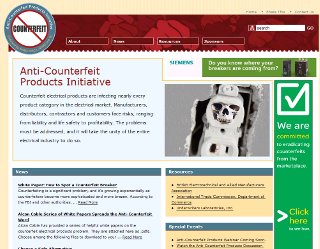
    Electrical Contractor Magazine(ECMAG, in collaboration with TED Magazine, recently launched an Anti-Counterfeit Products   Initiative to aggressively fight the increase in counterfeit electric products in the United States.

    For the new anti-counterfeiting campaign, ECMAG and TED Magazine turned to Matrix Group to create a Web site that will serve as a central repository of resources in the fight against the influx of counterfeit products in the US.  The new Web site  is a one-stop resource for manufacturers, contractors, consumers and government officials.

  • Washington Institute for Near East Policy

    Washington Institute for Near East Policy

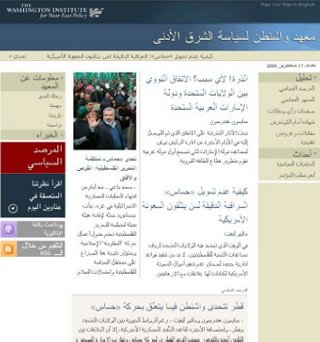
    The Washington Institute for Near East Policy (WINEP) was established in 1985 to advance a balanced and realistic understanding of American interests in the Middle East. When WINEP decided to launch an Arabic portal, they turned to Matrix Group for help because of our experience working with other research organizations and implementing content management systems; multi-lingual capabilities; and user-focused design process. Working in partnership with WINEP, Matrix Group:

    • Created a right to left design for the new Arabic portal that would showcase WINEP’s research, experts and events.
    • Enhanced the WINEP content management system to support Arabic and the special publishing rules required for the new portal, the need to publish content in right to left mode.
    • The CMS also connects English and Arabic content so that visitors can view content in the different languages.
  • Discover Policing

    Discover Policing

    The International Association of Chiefs of Police (IACP) is the world’s oldest and largest nonprofit membership organization of police executives, consisting of operating chief executives of international, federal, state and local agencies of all sizes.  As part of a national recruitment effort, IACP and the Bureau of Justice Assistance tasked Matrix Group International with creating a new “Discover Policing” Web site to help attract more recruits to this exciting field.


    The Web site is designed to overcome stereotypes about careers in law enforcement, demonstrate the skills and experiences available, and create excitement about the profession.  Through a striking design, a CMS that lets IACP staff update the site without knowing any html skills, pages that have been optimized for search engine indexing and viral options (send to a friend, social bookmarking), the new Web site is already generating rave reviews among law enforcement agencies, parents, counselors and potential recruits.


  • Standby Power: Is that Monitor Really Turned Off?

    Standby Power: Is that Monitor Really Turned Off?

    Electrical outlet on a green wallIn my last power bill, Dominion Power reported that “(n)ationally, 6 percent of our residential electricity consumption goes to … ‘phantom loads’ used by devices – such as, VCRs, televisions, stereos, kitchen appliances – that are turned off and not in use.   Holy cow!  6 percent?!

    I don’t know about you, but my power and gas bills  shock me each month.  At home, we upgraded our HVAC system to high efficiency Trane units; we have turned our thermostat down to 68 this winter; we have window film on bedroom windows; all of our light fixtures and lamps use compact flourescent bulbs; well, you get the picture.

    But we’ve completely overlooked the phantom loads used by: the laptops that get left on at night; the PS3, Apple TV and Wii that are on standby all the time; and on and on.  So I dug a little deeper and found these suggestions for reducing the phantom load at home and at work. (more…)

  • I Love the Serendipity of Twitter and StumbleUpon

    Many of my friends and family ask me, “what’s your favorite site?” Recently, my answer has been “Twitter and StumbleUpon.” I love these sites, I keep them open all day long in my browser, and I tell everyone about them.

    I can give you all kinds of reasons why I love Twitter. It’s terrific for knowing what my friends are up to, it’s a great way to promote my company and blog, but most of all, I love the crazy variety of sites and pages I learn about. My favorite tweeters are people who introduce me to new sites, interesting statistics, gorgeous photos, and news articles I would otherwise never chance upon. One of my favorite tweeters is Guy Kawasaki. Some of the recent gems I learned about from Guy are: 9 resistance-boosting foods and ingredients to help you win the cold war, 50 of the world’s best food blogs, and 10 evolution stories Darwin would love.  I suspect that Guy spends all day trolling the Web or has a vast staff that does same and then he tweets the coolest and most interesting of his finds.  Thanks, Guy! (more…)

  • The Graveyard Book

    The Graveyard Book

    Amazing book about a boy raised by ghosts in a graveyard. The best book I’ve read in years. Neil Gaiman at his best.

  • Getting Started with a Facebook Page For Your Organization – Part 1

    Getting Started with a Facebook Page For Your Organization – Part 1

    facebookAfter last week’s webinar on “Creating a Social Networking Strategy For Your Organization,” clients and attendees asked me how they should get started with social networking. It can be a daunting task when you consider all the platforms, and the additional work needed to keep the pages populated.  A simple way to get started is to create a Facebook for your organization or company.

    • They’re called Business Pages on Facebook and they need to be connected to an individual profile.  Click on Create a Page for My Business at the bottom of a company page.  I recommend selecting Category = Brand or Product, then select Professional Service.  Choosing this category will let you enter the year the organization was founded, as well as provide an overview, mission and product information.  If you choose other categories, you are likely to only be able to enter the hours of operation and a URL.  And once you choose a category, you can’t undo it!  Thankfully, if you make a mistake, you can just not publish the page or delete it.
    • I recommend uploading a company logo to dress up your page. Gif images don’t display properly, so upload a jpg instead.  The logo on the Matrix Group Facebook page is 720 x 720 pixels.
    • Facebook lets you write on your wall, enter notes, post events, upload photos and videos, even host discussions.  But here’s the challenge: chances are, you’re probably already entering this same information elsewhere (e.g., on your Web site, on YouTube, etc.).  So the trick  is to use one of the zillions of Facebook apps to integrate your Facebook page with other sites. For example, we use MyFlickr to automatically bring in photos from the Matrix Group Flickr page into our Facebook page.  Just know that these third party apps can be a little flaky and there is little support should you run into trouble. (more…)
  • Your Social Networking Strategy Doesn’t Have to Include the Kitchen Sink

    Your Social Networking Strategy Doesn’t Have to Include the Kitchen Sink

    Social NetworksBy popular demand and client request, I conducted a webinar on Tuesday with esteemed Project Manager Cat Lee from Matrix Group on “Creating a Social Networking Strategy (SN) for Your Organization.” Why do a webinar on a topic that is already getting a lot of coverage?  Our reasons:  Clients are looking for help, they want to know why and how to set up their social networking toolbox, and they’re looking for best practices on ways to use SN to help them achieve their overall goals.

    The key take aways from the webinar were the following:

    • The social networking services (e.g., Facebook, LinkedIn, Twitter, etc.) complement the social networking that non-profits and associations have been offering to their members for years through meetings, e-mail discussions and bulletin boards.
    • It’s no longer enough to have a communications strategy that includes a Web site, e-mail, direct mail and newsletters. Customers, members and staff alike are craving, indeed demanding, engagement and conversation.
    • Every organization needs, at the very least, a listening strategy so that you know what is being said about you, your organization and industry; you are aware of the conversations taking place between members; and you get a sense of the most pressing issues of the day for your field.
    • We organize the SN universe into the following platforms: networking sites; friend networks; broadcasting (with conversation); rating and recommender sytems; sharing systems; and SN community platforms.
    • Social networks are reaching close to 50% of all active Web users and 3 of the top 5 sites in the US (MySpace, YouTube and Facebook) are SN sites.
    • You can use SN to recruit staff, raise money, provide thought leadership, engage members in conversation, provide customer service, promote meetings and events, and extend the learning and networking of events.
    • (more…)

  • Keeping Track of Company Mentions on the Web

    When I’m researching a product, I go to the Web. When I’m looking to hire a candidate, I go to the Web. All day long, I’m running searches in Google and other search engines. So it only stands to reason that customers, prospective customers and prospective staff are likely running Google searches on my company, Matrix Group. And when they do, what do they find?

    Some call it ORM – Online Reputation Management – or the art of managing how you and your company are perceived online.  ORM starts with tracking mentions of your company on the Web, anywhere on the Web, in every nook and cranny.  So how do you that?  There are tools and services, but I like:

    • Google Alerts.  Google lets you create e-mail alerts for keywords and phrases.  Every time Google indexes a new page with your keyword or phrase, you get an e-mail.
    • Of course, you should also be checking how your company shows up in the main Google search and the Google blog search.
    • Twitter search.  This is a real-time search of Twitter posts that Google doesn’t necessarily index and certainly not fast enough.  You can even create an RSS feed out of specific searches.
    • (more…)