
Matrix Group International

Category: CMS, E-Commerce, Integration and Mobile Apps

  • Web Design Can and Should Be CMS-Agnostic (and why we love WordPress more and more)

    Web Design Can and Should Be CMS-Agnostic (and why we love WordPress more and more)

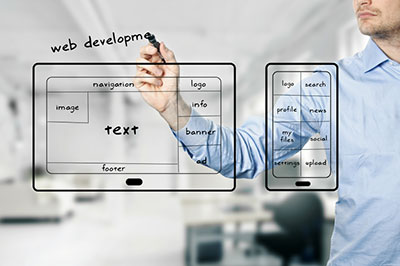
    webdev_smHere at Matrix Group, we use a variety of platforms and frameworks to build client applications. On the content management system (CMS) side, we really like Sitefinity and WordPress for building websites, although we have worked with other platforms, including DNN, Expression Engine, and Kentico. WordPress has come a long way in recent years, and we’re doing more and more with it. We love its flexibility, extensibility, and clean code, to name just a few things.

    During a client meeting the other day, I was pitching doing a magazine website in WordPress. The client was surprised and said, “WordPress, the blogging CMS? Isn’t that too simple for our needs?” I explained that no, WordPress has come a long way, it powers so much of the web these days, and it is perfectly capable of the complex functionality she needs. She countered with, “So show me a site that you did in WordPress that doesn’t look like a WordPress site.”

    So I did. I showed her Endocrine News, the magazine of the Endocrine Society, the website for e-discovery firm eTera Consulting, and a convention site for the National Electrical Contractors Association.

    But then I got curious. Does my front-end team design differently based on the CMS platform? I asked my Creative Director and Senior Designer, “Do you take CMS into consideration when creating designs?”

    The response: “Heck no, half the time, we don’t even know the platform that will be used.”

    So then I asked my Lead Front-End Developer, “Does the CMS platform affect what we can and can’t do?”

    The response: “Nope. Some things are easier in WordPress, other things in Sitefinity. Just depends.”

    I know I’m involved in many Information Architecture projects, and I no longer wonder if a platform can do something I’m envisioning in a wireframe.

    I hadn’t really thought about it but it appears we are now CMS-agnostic when it comes to designing the front-end of our websites. Does that mean every CMS can do everything? Probably, at least in the arena we play in. But we definitely express favorites, and choice of platform can affect HOW a specific requirement is implemented, as well as price and timeline.

    Makes me think of a wise client who said to me some time ago, “Joanna, I don’t care what system you use to build my site, as long as it does what I want, it’s easy to use, and you can maintain it easily.”

  • Why Your Organization Needs a Mobile App Strategy

    Why Your Organization Needs a Mobile App Strategy

    Man holding smartphoneStarting early this year, I have been urging clients to consider a mobile app. Not just a responsive website, which should be a given these days, but native iOS and Android apps.

    Why?

    The reasons have been building up over the past couple of years, but I became convinced because of several things.

    • Earlier this year, Comscore reported that the percentage of mobile-only Internet users in the US is 11.3% of Internet users. Even more significant, mobile-only users now exceed desktop-only users, who now represent only 10.6% of Internet users, down from 19.1% in March 2014. This mobile-only population is used to interacting with the world on a smaller screen and usually with no keyboard.
    • Here’s the statistic from analytics firm Flurry that really surprised me. When people use their phones or tablets, 90% of the time spent represents interactions with apps, NOT a browser. BTW, 17% of time spent is on Facebook (big surprise, right?) and 32% is spent on games.

    These stats support a presentation made by a couple of interns at Matrix Group this summer. These two college-aged women confirmed that they almost NEVER interact with a browser. Instead, they rely on apps.

    And while Gen-X me still gets on my computer at home in the evenings and weekends for everything from email to working on proposals or looking for recipes, my millennial employees tell me they pretty much don’t crack open a laptop outside of work unless they are working. For casual interactions, they rely ONLY on their phones.

    I have to admit that in many cases, native apps are better designed and more focused. I dislike the weather.com website because it’s too cluttered and confusing, but I adore their app. It’s also super easy to just find the app on a phone and click it, versus pulling up a browser, typing a URL and waiting for the site to load. I have a feeling I’m not alone in thinking this, and this is why so many prefer apps to browsers.

    So with 2016 around the corner, I ask you all: What’s your organizations’ mobile app strategy? What audience(s) could you better reach with an app (or two or three)?

  • Why It’s Important to Keep Your CMS Upgraded

    Why It’s Important to Keep Your CMS Upgraded

    Time to upgradeMost of us are accustomed to the idea that we have to keep the content of our websites updated on a regular basis. If we don’t add fresh content regularly, people and search engines won’t feel compelled to come as often. But few of us think about updating the backend systems that power our websites.

    Any modern website these days is powered by some type of content management system (CMS). At Matrix Group, we like platforms like Sitefinity and WordPress. Every single proposal to clients includes a line item for CMS upgrades. Clients sometimes push back and say, “But Joanna, I just paid good money to implement x CMS and it’s working exactly the way we want it to. Why do we need to upgrade?” Here’s what I counter with:

    • You get access to new features. CMS companies stay in business by continually making their products better. With a CMS, no single customer pays all the freight for enhancements. With each upgrade, you get new features and functionality that perhaps you were waiting for or never imagined possible. For example, a recent Sitefinity upgrade included the ability to create sub-folders for uploads, thereby making it easier to manage images, files, etc. A small but super valuable enhancement!
    • Upgrades often include bug fixes and security patches. None of us would think of NOT upgrading Windows on a regular basis to protect our systems against hackers and crashes. Why would you you treat your website any differently, especially given its public-facing nature?
    • Staying on the upgrade path makes future upgrades easier. This sounds like a not so compelling reason to upgrade but the truth is, if you know you’re sticking with a particular system, it’s best to stay relatively current. Otherwise, a future upgrade could be nearly impossible or ridiculously expensive. Why? Most companies will write scripts that let you upgrade from the previous 1 or 2 versions. If you get to be 6 or 10 versions behind, there’s no simple way to jump versions because the database or programming are so different.

    When you do upgrade, do take the time to familiarize yourself with the new version’s new features, bug fixes and changes. Ask your vendor how you can take advantage of new functionality so that the upgrade becomes even more of an investment in the future. And talk to your vendor about making sure that your site is configured and customized to be upgrade-friendly. I’ve seen websites that couldn’t be upgraded without a lot of money because they had been customized in a way that made upgrades hard or expensive or both. And if your vendor isn’t talking to you about upgrades, be sure to ask why.

    Happy upgrading!

  • Does Your Organization Have a Groupon Strategy?

    Does Your Organization Have a Groupon Strategy?

    It seems everyone is hawking a good deal lately. A couple of people at Matrix Group recently got a 50% off deal from Groupon for a spa treatment. Earlier this week, AppSumo had a great deal on heat mapping software form CrazyEgg. Amazon has Daily Gold Box Deals. There are so many of these discount sites that there’s now a term for them: group coupon sites.

    A recent article in the Vancouver Sun reports that “frugality (is) the top consumer trend in 2011.” After this long recession and with many people still feeling uncertain about the economy, it only makes sense that we’re all trying to make our dollar go further by looking out for sales and coupons.

    I think that most people are looking for savings and value everywhere: when they’re shopping for clothes, booking travel, buying software, or registering for meetings. How does frugality affect your organization and what are you going to do about it? Here are some ideas:

    • Offer more for the same price. If you’re loathe to discount, I don’t blame you. But since most people are looking for a deal or extra value, what extra thing can you offer? Last year, when we announced the Matrix Group webinar series, we offered four webinars for the price of three to people who registered for the entire series. It worked really well for us because we got a lot of registrations to all four events and clients got a deal.
    • Create lightning deals. Most organizations offer an early bird registration fee. But what if you offered a steeper discount during just one day? Market the heck out of the deal, create some buzz and capture registrations early in the game. I call this the groupon strategy (I’m going to get sued for saying this, hope not).
    • Offer discounts for PR. When I got my haircut at Salon DeZen the other day, the stylist offered me 10% off my bill if I checked into Yelp. Owner Maria Burns knows that a check-in or a great review are worth way more than the few dollars off she’s giving away.
    • Create social deals. This idea isn’t new. In fact, it’s a classic campaign: refer a new member, registrant or purchaser and get a discount off your next bill. Encourage your clients and members to register for a meeting as a group and give them a break.

    I have a feeling that frugality is going to get even more chic and popular. How will YOUR organization take advantage of this trend? What’s your discount/value strategy? What’s worked for you?

  • The Amazon Effect: What Amazon Has Done to the E-Tailing Experience

    The Amazon Effect: What Amazon Has Done to the E-Tailing Experience

    Woman shopping online surrounded by shopping bagsLike the rest of America, I went shopping on Black Friday.  However, I didn’t get up at 3am and I didn’t brave the crowds.  I did my shopping online, largely in response to promotional e-mails that I received throughout the day.  What struck me was how I compared the shopping and checkout experience on all other sites to Amazon.com. I call it “The Amazon Effect” (I’m sure I’m not the only one to call it that, btw).

    I actually hear it all the time from friends, family and clients: why can’t this (insert name of site here) work like Amazon?  Okay, forget for a moment that that Amazon has spent tens of millions on their site.  Here’s what I’ve come to expect from Amazon and would love it if other e-tailers followed suit.

    • Much as I hate to think that my shopping patterns can be predicted by a computer, the personalization on Amazon rocks. Yep, the site pushes all kinds of merchandise on me via e-mail and the Web site, but it’s not crap if I’m even mildly interested.  I’ve been introduced to new bands and authors, and I love that the related items often lead me to what I’m really looking for.
    • Amazon fulfillment is lightning fast. I placed three orders on Black Friday and they all arrived Monday morning.  Meanwhile, another retailer tells me I have to wait 7-10 days for regular shipping.  7-10 days, are you kidding?  What are the people in the warehouse doing? (more…)