Matrix Group International

Category: Association Management Software

  • What’s Your Membership Experience?

    I’ve blogged in the past about Vistage, the CEO membership organization that I’ve been a member of for five years. I was talking with a Vistage VP a few weeks ago and he summed up the Vistage experience quite succinctly: strong peer advisory group with well-run meetings, effective coaching and world-class speakers. In other words, the entire Vistage organization is focused on creating a membership experience that includes these 3 elements.

    I got to thinking. How many organizations have eloquently and succinctly described their ideal member or customer experience? Indeed, how many of us have architected how our customers interact with us and experience our services in an intentional way?  Alex Pineda, the Matrix Group Creative Director, talks often about how every interaction with a company IS the user experience, from the way the phones are answered, to how emails are responded to, how products are delivered, how invoices are sent, how conference calls are run, and how disputes are handled. As CEO, part of my job is to make sure that for every type of potential customer interaction, we’ve defined how we will respond.

    Here’s an example of a situation where the staff expectations were not well defined, so we kept falling down on the job. A couple of clients complained that after approving a proposal, we weren’t responding fast enough to kick off the project. Turns out that we hadn’t defined the turnaround time for creating the project in our system and kicking off the work. Depending on how busy a project manager was in any given week, it took between 1 – 7 days just to get a project entered into the system. So the project managers sat down and crafted a better process. Today, when a proposal is approved by a client, an email goes out the same day from the new business team to announce the project to the project manager and assigned team members. The admin team creates the project in the intranet within 24 hours of the approval, sends the link to the client and schedules the kickoff call. Doesn’t this sounds like a much better, more user-friendly, and more intentional customer experience?

    I think about how pleasant it is to call American Express. I’m never on hold for very long, I’m always referred to by name, I’m always thanked for being a cardmember for over 20 years, and if I’ve called the wrong number, I’m transferred directly and the person I’m speaking with stays on the phone until the next person come on. I have to believe that every little part of this whole experience has been carefully architected and tweaked over time.

    Turns out that architecting an amazing customer experience is really hard and requires paying attention to the big picture as well as the littlest of details. For me, the most important thing is realizing that every client interaction is part of the customer experience and we can, and should be, intentional about every single one of these interactions.

  • Beer and Cream Cheese Agile Methodology Revisited

    Beer and Cream Cheese Agile Methodology Revisited

    Just over a year ago, I blogged about how the MatrixMaxx team was using an agile software methodology we’ve dubbed “beer and cream cheese.”

    MatrixMaxx is Matrix Group’s Web-based association management software (AMS) that is used by dozens of trade associations and professional societies to manage their membership applications and renewals, meeting registrations, committee rosters, tradeshows, sponsorships, foundation fundraising, e-mail lists, and publication sales.

    Beer and cream cheese is the software development methodology we came up with after exploring several agile methodologies, including SCRUM.  While there are many flavors of agile development methods, most are characterized by:

    • Breaking big projects into smaller tasks that can be accomplished in hours or days, never weeks or months.
    • New versions of the software are released in short timeframes, called timeboxes or sprints.  Sprints can last 1 day to 30 days.
    • The goal of each sprint is to produce a working product that the client can use immediately, rather than having to wait months or years for a release, bug fix or new functionality.
    • Each team has a customer representative who represents the client perspective and makes him/herself available to team members.  In the case of SCRUM, there are 3 roles: the ScrumMaster (who serves as the project manager); the Product Owner (who represents the stakeholders/lients); the Team (the staff who do the development work).

    We call our methodology beer and cream cheese because about 18 months ago, Tanya, the MatrixMaxx Director, posted to one of the SCRUM message boards, asking if anyone had experience with having the same person be the ScrumMaster AND the Product Owner.  One ScrumMaster sarcastically remarked, “You CAN do it, but that would be like combining beer and cream cheese.”

    Fast forward one year.  The MatrixMaxx team is still using beer and cream cheese, but our process has changed, and for the better.

    • Where Tanya used to play the role of Product Owner and ScrumMaster, she is now the Product Owner.  Geoff is our Brewmaster.  As a result, Tanya can focus on the product road map and client requirements.
    • Our sprints are now 15 days long.  Major product releases are quarterly, but we put out small enhancements, especially custom enhancements for clients, twice a month.  Clients love this!
    • Although we still primarily use our intranet to manage tasks and requirements, there is a whiteboard in the MatrixMaxx team area that lists tasks that have been designated for the next release/sprint.
    • We’re doing a better job of tracking projects and elements that tend to go over budget.

    We plan to refine our beer and cream cheese process even more over the next year by:

    • Going back to shorter, daily check-ins, which have turned into lengthy discussions about tasks and requirements.  We realize that the entire team does NOT need to be part of all in-depth discussions.
    • Giving each team member one long item and one short item per day to encourage maximum productivity from all team members and help us manage the backlog of small items.
    • Making a renewed commitment to identifying and analyzing tasks that tend to make us fall behind or go over budget.

    BTW, we still hold beer and cream cheese parties where staff bring in baked goods made with beer and cream cheese.  My favorite this year was the dark chocolate cupcakes made with beer and topped with cream cheese frosting. Yum!

    How about you?  What software development methodology does your company use?  Are you an agile shop?  What’s working for you?  And how did you select the methodology that you are using?

  • Crowdsourced Software Development?

    Crowdsourced Software Development?

    This afternoon, the MatrixMaxx team at Matrix Group held a Town Hall meeting with clients to get feedback on about a half dozen features slated to go into the 10.1 version (scheduled for release in early February).  We could have surveyed clients via e-mail or a Web survey; we could have conducted a focus group; we could have called a select group of clients and consultants; or we could have gone with our gut and made decisions about credit card processing, meeting wait lists, individual relationships, etc.

    Instead, we decided to crowdsource the specifications.  Crowdsource?  What does this mean?  Wikipedia defines “crowdsourcing” as the “act of taking tasks traditionally performed by an employee or contractor, and outsourcing them to a group of people or community, through an “open call” to a large group of people (a crowd) and asking for contributions.”  Wikipedia also uses this definition: “the trend of leveraging the mass collaboration enabled by Web 2.0 technologies to achieve business goals.”

    In the past, Tanya (the Director of MatrixMaxx) and I would sit down, discuss requirements, maybe make a few calls, and then decide on the specifications for each release.  This time around, we decided to get immediate feedback from as big a group of clients as possible to validate our ideas and generate new ones.

    The Mechanics of the Town Hall Meeting

    • We sent an e-mail invitation to all MatrixMaxx clients, inviting them to an hour-long, online Town Hall meeting.  The e-mail provided details on the half dozen topics under consideration, with a general discussion of the options available.
    • Clients were invited to provide feedback in real-time during the meeting, before the meeting via phone and email, and after the meeting via phone and e-mail.
    • About 60% of the clients registered at least one person to the Town Hall meeting, which was conducted via conference call and Webex.
    • Tanya ran the meeting, leading the discussion and taking notes, which were shared out via Webex to all participants.

    (more…)

  • Beer and Cream Cheese SCRUM

    Beer and Cream Cheese SCRUM

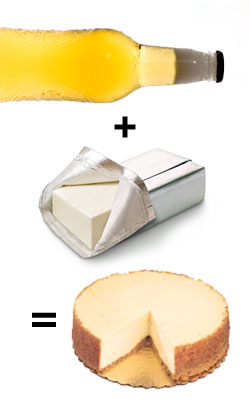
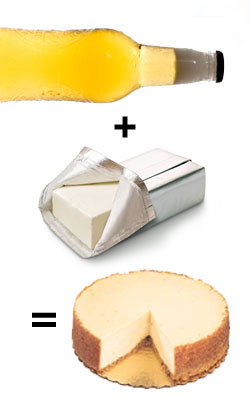
    Beer + cream cheese = cheesecakeLast Thursday, the MatrixMaxx team celebrated a successful SCRUM sprint with a beer and cream cheese party.  So what do beer and cream cheese have to do with software development, specifically SCRUM? Read on and find out.

    MatrixMaxx is Matrix Group’s Web-based association management software product.  For about a year, the team had been exploring agile development methodologies.  Maki, our CTO and Chief Architect for MatrixMaxx, was really hot to implement SCRUM.

    There is a lot to SCRUM, but here’s what SCRUM means to a non-techie, manager type like me:

    • SCRUM is all about roles and process.
    • There are 3 main roles in SCRUM: the ScrumMaster (who serves as the project manager); the Product Owner (who represents the stakeholders like me and the clients); the Team (the folks who do the development work).
    • Development cycles are broken up into sprints, which last anywhere from a week to 30 days; each sprint has a defined list of shippable work.  Complex projects are broken up over multiple sprints, but each sprint must include deliverables that the customer can recognize and use.
    • There is a daily SCRUM meeting (lasting no more than 15 minutes), during which each team member answers the following questions:  what have you done since yesterday?, what are you planning to do today?, and what is preventing you from making progress? (so the ScrumMaster can facilitiate a resolution).
    • Tasks, or user stories, are posted on a board and each team member takes tasks off the board each day.

    Sounds great, right?  But for an agency like Matrix Group, SCRUM posed some problems:
    (more…)