Our online identities are, unfortunately, not in our control.
The internet was created for communication between computers, but our presence as individuals on the internet is less formally defined. We create online accounts and over time we may forget they exist, if we haven’t already forgotten our passwords.
Technology advocates argue that we need an identity layer for the internet. We need a new way of managing our digital identity so that it’s in our control. Decentralized identity and verifiable credentials can provide this identity layer.
What is a Verifiable Credential?
Think of a verifiable credential like a diploma or driver’s license, but digital. This digital credential is cryptographically signed by its issuer for its specific holder. In other words, it’s practically impossible to fake.
How Could Associations Use Verifiable Credentials?
In many ways! Verifiable credentials could be used for membership, continuing education, certifications, credentialing, and more. Today, let’s explore how it could be used for membership:
When an association accepts a new member, it could issue a proof of membership credential to that member. The member would store that credential in a digital wallet, either on their phone or computer, and would later be able to present that membership credential to prove their membership to a particular association.
Why would a membership credential be useful? For starters, it could erase the need for passwords. Rather than creating a new account on an association’s website, members could use their membership credential to login by simply scanning a QR code. A member’s personal information could be restricted to that membership credential and that member would have the authority to decide who can access their data and when.
Membership credentials could make it straightforward to provide vendor discounts for specific associations. Members would present their credential to a vendor. The vendor would then check whether the credential has been issued by an association they offer a discount to and seamlessly grant the discount.
It could also be used to verify member application requirements. Perhaps an association requires proof of certification to become a member. If the certification is a verifiable credential, that association can trust that that certification is valid without the hassle of checking with the certifying authority.
The Current State of Verifiable Credentials
There are a lot of exciting possibilities for verifiable credentials, but the technology is still maturing. There’s a lot more work to be done in the space before it can be put into practice.
Right now, Indy and AnonCreds credentials require a distributed blockchain ledger, which is a sizable barrier to entry. In order to interact with a mobile wallet, that wallet needs to be set up to work with the distributed ledger chosen by the credential issuer. Other credential types work without a blockchain ledger, but with a loss in other privacy-preserving aspects. Additionally, issuing and verifying credentials is a two step process. First you establish a connection, and then you can complete an action.
But, we’re getting closer! This summer, as a Matrix Group intern, I researched verifiable credentials and have learned a lot about how to manage our digital identities. I even have a proof-of-concept WordPress plugin to show for it that allows users to login to their accounts with a verifiable credential, rather than a username and password. It interacts with a separately running “agent” that handles the actual credential issuance logic, however troubleshooting issues with this agent is difficult, and is one of the barriers to widespread implementation of this technology, for now.
Eventually, verifiable credentials will simplify membership and membership management for associations, but we’re not there quite yet. Here at Matrix Group, we’re monitoring the state of verifiable credential technology and we continue to experiment with new options. We will be sure to keep associations in the loop as this decentralized identity technology develops!
Check out our proof-of-concept WordPress plugin for verifiable credentials!


 It’s no secret that video is one of the hottest marketing trends and tools right now. If you haven’t taken the leap into video creation for your organization, now is certainly the time!
 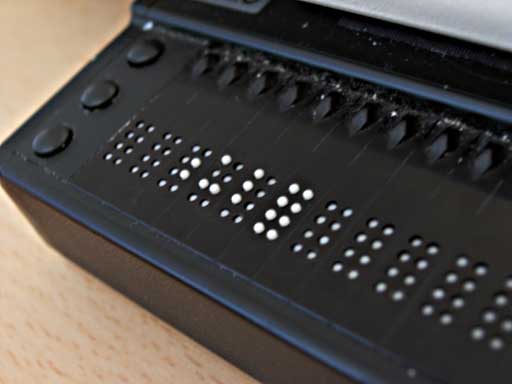 Website accessibility has been on my mind recently. A few years back, one of the biggest trends on the web was subtlety. Medium gray text on light gray backgrounds, super-thin fonts, etc. all looked quite elegant to designers, but in hindsight they were pretty unfair to the average user. At Matrix Group, we try to be as inclusive as possible, and that means paying attention to accessibility and designing our sites to be as usable by the widest range of people as humanly possible.
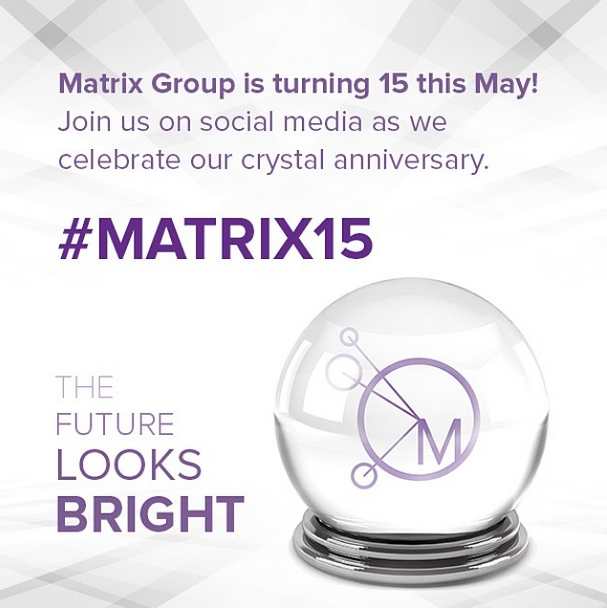 The marketing team put their thinking caps on and realized that the 15th anniversary is typically celebrated with crystal. We turned this tradition into a crystal ball themed party and the tag line “The Future Looks Bright,” was born. Having a theme makes everything from invitations to decorations easy. Our main focus point for decorations were two silver trees with crystal balls holding all of our client logos in them. Even our cake had a crystal ball topper emblazoned with our Matrix logo on the inside and our tag line in fondant with tons of purple icing. It was a big hit with all the guests and we were very lucky that crystal and purple go so well together!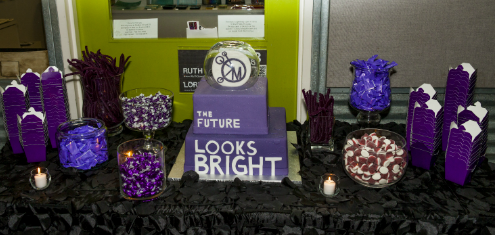
 you’ve run into the problem of finding quality images at an affordable price.