Matrix Group International

Month: January 2021

  • Top 5 Web Design Trends for 2021

    Top 5 Web Design Trends for 2021

    It’s safe to say that, thanks to the pandemic, our lives are lived online now more than ever before. The more time we spend in the digital world, the more the lines are seeming to blur between physical and virtual, lending way to some exciting new web design trends. Here are the 5 trends that I think will be most popular in 2021:

    1. Neumorphism
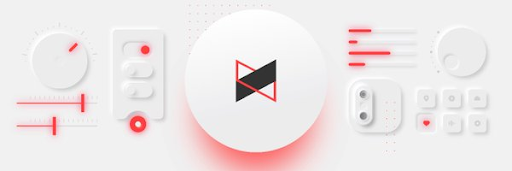
     

    Neumorphism example
    Twitter header of Marques Brownlee

    The death of “skeumorphism”, or the digital equivalent of “real-world” surfaces and objects, gave rise to “flat” design that has dominated UI design for a few years now, famously championed by Jony Ives, former design director of Apple. The inevitable backlash to flat design is a trend back towards more “realistic” interfaces, but far short of full skeumorphism. This “neumorphic” trend features elements that rise subtly from the background, (e.g., gentle shadows), and are far more subdued than pure skeumorphic digital objects. While more prevalent in app design, these neumorphic elements are popular on the web as well.

    2. More lives lived online, more integrated experiences


    virtual event features

    2020 saw us working remotely, avoiding close contact with other humans, and sheltering in our homes. The COVID crisis has had an enormous impact on our daily lives, and how we do business. Matrix Group is, of course, no exception – we’ve had to change our way of interacting with our teams, serve our clients, and craft interactive experiences. For our association and non-profit clients, one of the biggest challenges was how to hold conferences and annual events in the year of COVID and non-gatherings. To address this challenge, we at Matrix Group created a virtual event platform called BeSpeake, with the goal of having virtual meetings that are more than just a bunch of video conference windows, but a space to still have meaningful interactions with members, vendors, and sponsors. This trend of integrating live video, multimedia presentations, chat, and data is continuing to evolve as we need digital tools to replace what was done face to face, but now is increasingly done virtually.

    3. Less rigid layouts

    example of less rigid layouts

    Since the earliest days of the Internet, web design has always been a grid-based experience, due to the limitations of, at first, table-based HTML layouts, then CSS. The ability to freely place elements anywhere on the canvas has been something that we web designers have always envied from print design. This limitation is gradually being removed, however, through more advanced CSS and the latest browser support. Asymmetric grids, overlapping elements, and even randomly-placed objects are in vogue, and are a welcome respite from the usual, rigid layouts of most web pages. My hope is that someday soon, we can design as fluidly as print designers, and web designers will have the freedom to create as we see fit, not limited by code or browser technology.

    4. The horizontal scroll is back!

    Gelataria Amande Website Screenshot

    Horizontal scrolling was once popular, then became a huge no-no; but it’s making a comeback. Perhaps the resistance has been eroded by the mobile experience, where apps frequently use the horizontal swipe interaction to scroll content. There are many more sites using horizontal scrolling, such as this site for Italian gelato. We at Matrix Group have done a few recently for clients, including a recent project for FMI’s Food Prices report. For good usability, it’s key to make sure to have clear controls for the horizontal scroll, such as arrows, or to allow for the mouse scroll wheel.

    5. 3D elements
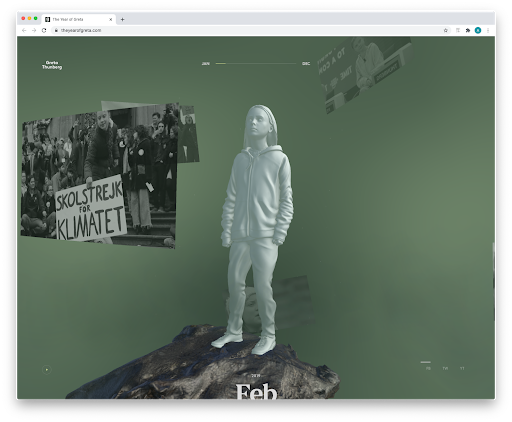
    The Year of Greta website screenshot

    3D elements are becoming increasingly used on websites, whether in the form of rendered illustrations or an actual 3D-like environment. One of my favorite recent sites is the Year of Greta, where the interaction is a virtual experience based around a 3D statue of Greta Thurnberg. As you drag your mouse, the statue rotates and video windows appear that commemorate the 2019 moments of Greta’s fight for climate change. The use of 3D can be gratuitous, but I feel in this case, it was used well, and a fitting testament to a courageous young woman fighting for our environment.

    2020 was a tumultuous year, with disruptions on many fronts. One of the main missions of a designer is to bring visual order to chaos, to facilitate communication, and to create experiences that entertain, educate, and illuminate. All these “trends” reflect advances in technology, stylistic evolutions, and so on, but ultimately, they are a means by which we hope to bring joy to our clients and our audiences. Here’s to a more joyful year ahead!


  • Lessons from Three Seasons of Virtual Meetings

    Lessons from Three Seasons of Virtual Meetings

    virtual meeting Well, the pandemic that was supposed to last a couple of weeks has dragged on through the Spring, Summer and Fall. Nearly 10 months since stay at home orders were issued, what have we learned about virtual meetings and engagement?


    Pre-Recorded Is Giving Way to Live

    Early in the pandemic, meeting planners pivoted to Zoom meetings that focused on education, a lot of it pre-recorded. Exhibits halls were limited to directory listings.
    9 months later, we know that attendees are sick of starting at their screens, passively watching a presentation. By late October, most of our clients had switched over to live presentations. One client said they switched because:
    • Pre-recorded is more work for the staff
    • Speakers want their presentations to be perfect when they are pre-recorded, so they do take after take, which requires a lot of editing
    • A lot of speakers gets their energy from the audience, so recorded presentations don’t have the same vitality
    Our clients have packed their programs with a mix of live and pre-recorded sessions. And most pre-recorded sessions also have the speakers available to chat with attendees, or a live Q&A immediately following the content presentation.
    Attendees can tell when a presentation is live. Live presentations have big and little flaws that let you know this session is happening right now. Somehow, attendees are drawn to these imperfect sessions.


    Attendee Engagement is Key

    Clients have asked us how to add attendee engagement during their virtual events. Attendees say they don’t want a conference that feels like a series of webinars. They want to see other attendees, they want to celebrate, they want to meet new people, and they want to be entertained. Some things clients did this Fall:
    • NAES offered Morning Coffee each day of their Biennial Conference. Attendees were slotted into video rooms with 7 random attendees for a half hour of networking.
    • EAIE followed content presentations with breakout sessions where attendees were placed in video rooms with up to five other people to discuss the topic.
    • FACT held a Lunch with Leaders session where attendees could drop in and chat with the organization’s top leaders.

    Facilitate Informal Meetings

    Whenever I attend an ASAE meeting, I try to see as many clients and friends as possible. These informal meetings and chance conversations are part of the magic of conferences.

    Which is why BeSpeake has a user-friendly and easy to find attendee search, a message center and 1-2-1 video meeting scheduling.

    In one of our meetings, nearly 30% of the attendees participated in at least one private video meeting! And a whopping 54% participated in a breakout or appointment; in other words, more than half of the attendees participated in an activity where they were on video and meeting with other attendees!

    Add Some Lightness and Entertainment

    When we hosted the Biennial Conference for the National Association of Episcopal Schools, two of the most captivating involved music: one session featured a pre-recorded video of a children’s choir, and one social event featured an entertainment/musician.

    It was obvious from the comments and reactions that these sessions were a welcome break from the talking heads (that were amazing, by the way), and highlighted the need for a variety of session formats.

    During the ASAE TEC Conference in December, one of the most memorable events was the party hosted by the Association of Women Technology Champions (AWTC). The event was conducted in Zoom and featured games and networking. While the TEC sessions were good, the AWTC event was the most interactive and fun.


    It’s 2021. While we don’t really know what the meeting landscape will look like, here’s what we do know: Attendees are looking for new, different, and engaging. Your meeting cannot be a broadcast version of your in person conference. So what are YOU going to do in 2021 to take your virtual meetings to the next level?


    Want to create a custom built virtual conference or tradeshow experience that is just as transformative as your in-person events? Contact us today to schedule a private demonstration of the BeSpeake virtual meeting platform.